
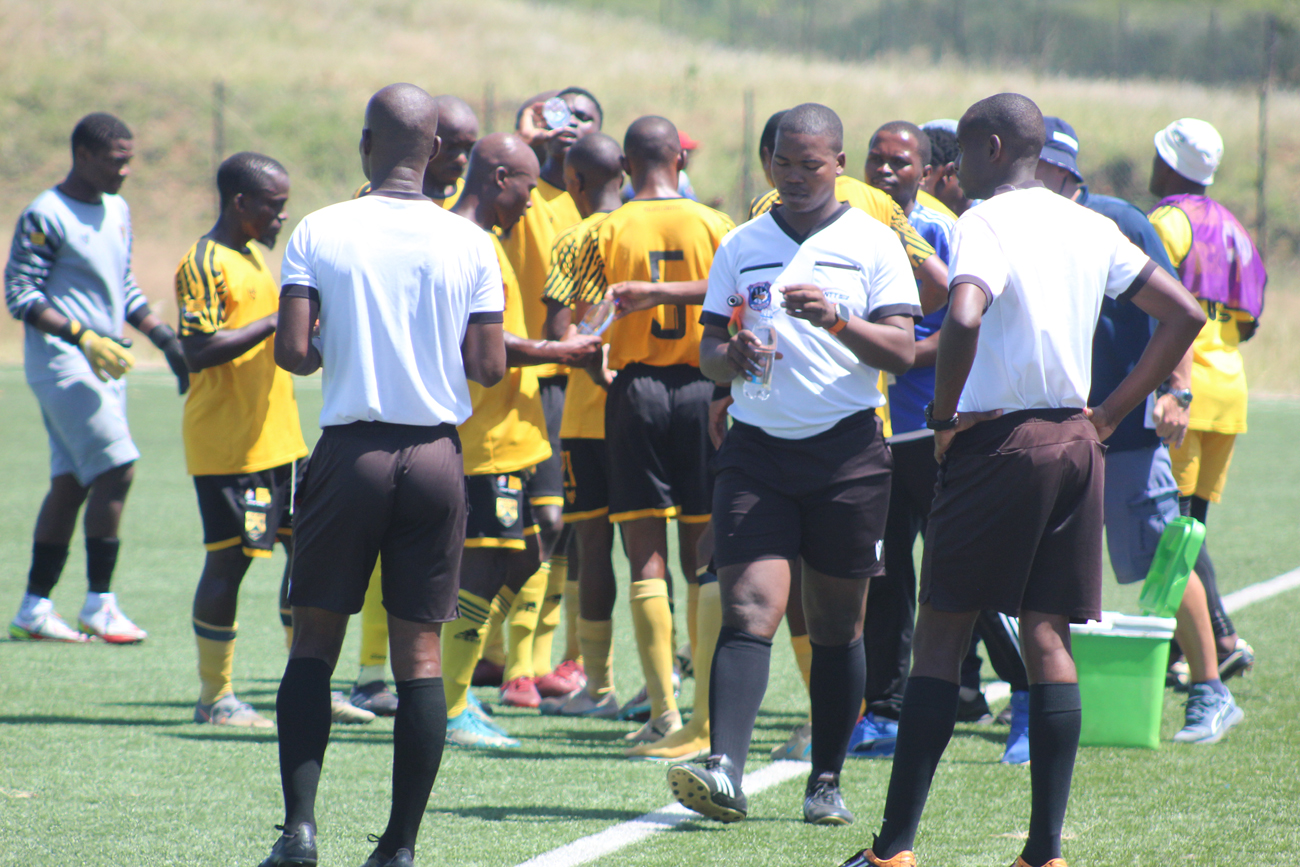
Eswatini PLE, ERA: Eswatini PLE ERA Remuneration Agreement Reached
Summary
- Uncertainty surrounding the 2026/27 MTN Premier League season's opening has eased.
- The Premier League of Eswatini (PLE) and the Eswatini Referees Association (ERA) met yesterday to resolve a long-running dispute.
- The dispute centered on the remuneration of match officials.
- The day-long meeting successfully paved the way for the football games to proceed.
Resolution Reached in Eswatini Football Dispute
The successful Eswatini Referees Association dispute resolution carries significant implications for the broader landscape of sports governance in the country.
The cloud of uncertainty that had been hovering over the grand opening of the 2026/27 MTN Premier League season has now dissipated, clearing the way for the commencement of football games. This significant development follows a crucial meeting held yesterday between the Premier League of Eswatini (PLE) and the Eswatini Referees Association (ERA).
The extensive discussions, which occupied the majority of the day, were specifically convened to address a protracted disagreement concerning the remuneration of match officials. The successful conclusion of this meeting marks a pivotal moment, effectively resolving the long-running Eswatini football referee pay dispute and paving the way for the league's operations to proceed as planned. This Premier League of Eswatini settlement underscores the commitment of both parties to ensure the smooth running of the nation's premier football competition.
The Critical Role of Remuneration Agreements
The resolution of the Eswatini PLE ERA remuneration agreement dispute highlights the fundamental importance of clear and robust contractual frameworks within sports governance. Remuneration for match officials, who are integral to the fair conduct of any sporting event, frequently emerges as a point of contention if terms are not meticulously defined and regularly reviewed.
The fact that this particular disagreement was described as "long-running" suggests that previous agreements or compensation structures for Eswatini match officials contracts may have lacked the necessary clarity or adaptability to prevent prolonged operational uncertainty. Such situations underscore the need for sports bodies to establish transparent and equitable compensation models that are mutually agreed upon and legally sound, thereby safeguarding the interests of all parties involved and preventing disruptions to the sporting calendar. This incident serves as a pertinent example for broader Eswatini sports law developments, emphasizing the need for proactive legal and administrative oversight in drafting and maintaining such critical agreements.
Implications for Sports Governance and Dispute Resolution
The successful Eswatini Referees Association dispute resolution carries significant implications for the broader landscape of sports governance in the country. A prolonged Eswatini football referee pay dispute could have severely impacted the integrity and scheduling of the 2026/27 MTN Premier League season, potentially leading to match postponements, cancellations, or even boycotts by officials. Such disruptions not only damage the league's reputation but also affect fan engagement, sponsorship deals, and the overall financial health of the sport.
The day-long meeting between the PLE and ERA demonstrates the critical role of effective dispute resolution mechanisms in preventing such adverse outcomes. It underscores that direct, sustained engagement between stakeholders is paramount for achieving a Premier League of Eswatini settlement that ensures operational continuity. This outcome reinforces the principle that robust protocols for negotiation and mediation are essential components of sound sports administration, allowing conflicts to be addressed constructively and efficiently, thereby securing the future stability of Eswatini's football ecosystem.
Practical Implications
This development underscores the critical role of robust contractual frameworks and effective dispute resolution mechanisms in sports governance. Lawyers advising sports bodies, associations, or individual officials should review existing remuneration agreements and dispute protocols to prevent similar operational disruptions.
Source
How does this affect you?
Get an AI analysis of this article grounded in your jurisdictions, practice areas, and any policy documents you've uploaded to Wansom.
Finish Reading the Full Story and the Expert Analysis.
Get the latest legal & regulatory intelligence in Eswatini
Wansom is AI and can make mistakes.