
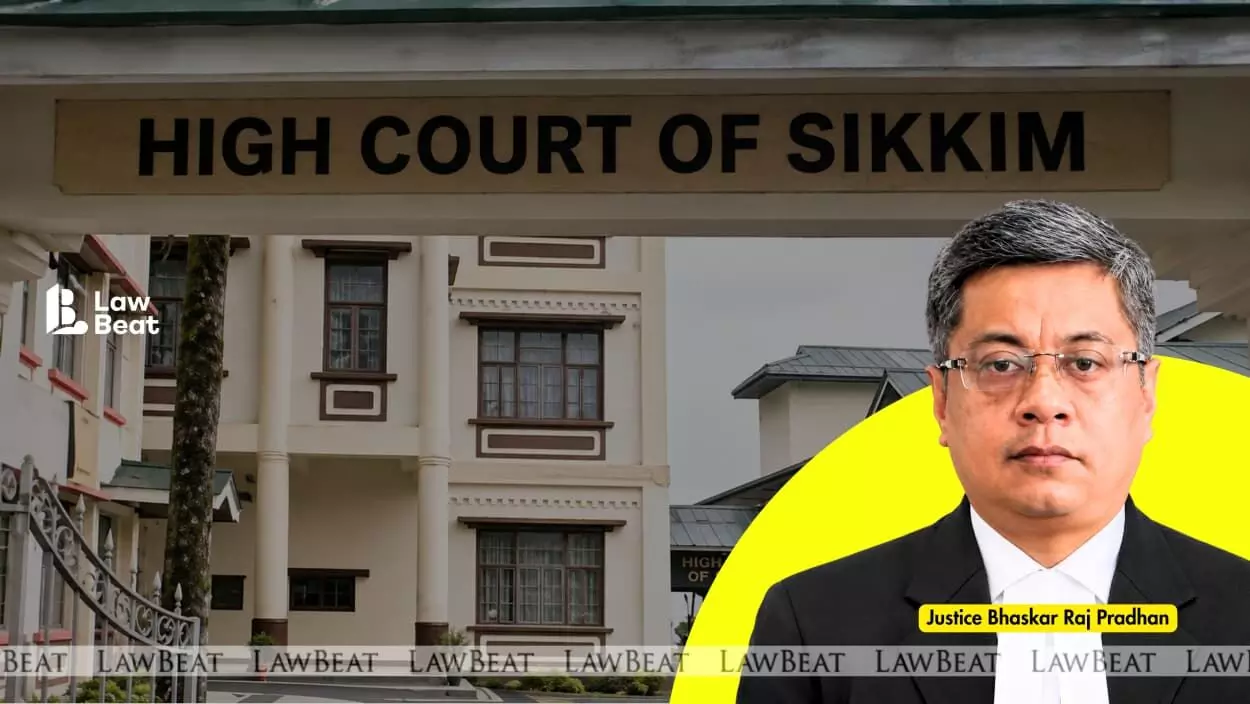
Sikkim High Court: Quashes Darjeeling-Sikkim Unification FIR, Cites No Enmity
Summary
- The Sikkim High Court quashed an FIR against Gorkha Seva Sena members regarding an event discussing Darjeeling-Sikkim unification legality.
- The court ruled that inviting public consultation on a constitutional issue does not automatically constitute promoting enmity under Section 196 of the Bharatiya Nyaya Sanhita.
- The FIR, lodged by the Principal Secretary to the Chief Minister of Sikkim, also cited unauthorized use of the state's 50th Statehood commemorative logo.
- Justice Bhaskar Raj Pradhan clarified that while unauthorized logo use is "mischievous," it falls outside the scope of promoting enmity.
- The decision emphasizes freedom of speech for public debate on constitutional matters, referencing Supreme Court guidance on assessing the impact of words.
What Happened
The core principle established is that merely inviting public discourse on a sensitive constitutional matter, such as the Darjeeling-Sikkim unification legality, does not automatically equate to promoting enmity in India.
The Sikkim High Court recently quashed a criminal case initiated against three members of the Darjeeling-based Gorkha Seva Sena, ruling that an invitation for public dialogue on the constitutional legality of Darjeeling-Sikkim unification does not, by itself, constitute the offense of promoting enmity. The court's decision specifically addressed an FIR lodged on June 6, 2025, by the Principal Secretary to the Chief Minister of Sikkim, which targeted Bikram Rai alias Bikramadi Rai, Subash Mani Singh, and Noel Sharma. These individuals had organized an event titled "50th Sikkim State Day Celebration and Constitutional Consultation," scheduled for June 15, 2025, at Town Hall, Naya Bazar, Kurseong, inviting public participation to discuss the "Constitutional Legality of Darjeeling-Sikkim Unification."
The initial complaint alleged that the Gorkha Seva Sena members had improperly used the Sikkim Government’s official 50th Statehood commemorative logo and theme without authorization in their event invitation. The FIR further contended that this unauthorized use could mislead the public into believing the Sikkim Government endorsed the organization's agenda, potentially provoking animosity between the people of Sikkim and Darjeeling, disrupting public order, and eroding trust in the state government. While Justice Bhaskar Raj Pradhan of the Sikkim High Court acknowledged the "mischievous" nature of using the official emblem without permission, noting it could lead to separate legal repercussions, the court firmly clarified that such an act does not bring the matter within the purview of Section 196 of the Bharatiya Nyaya Sanhita (BNS).
Legal Context
The criminal proceedings against the Gorkha Seva Sena members involved multiple charges under the Bharatiya Nyaya Sanhita (BNS), specifically Sections 152, 196, and 336, alongside a reference to Section 3 of the Emblems and Names (Prevention of Improper Use) Act, 1950. Following the FIR, a charge-sheet was filed under BNS Sections 152, 196(1), 336(4), and 61(2). However, during the High Court hearing, the Additional Public Prosecutor conceded that there was insufficient material to substantiate the allegations under Sections 152, 336(4), and 61(2) BNS, narrowing the state's opposition primarily to the charge under Section 196 BNS.
The petitioners, represented by Bikram Rai alias Bikramadi Rai, Subash Mani Singh, and Noel Sharma, sought the quashing of the 2025 FIR, the subsequent charge-sheet, and the ongoing criminal proceedings by filing petitions under Section 528 BNSS. They argued that their invitation was for a public discussion on a constitutional issue, a right protected under Article 19(1)(a) of the Constitution, which guarantees freedom of speech and expression. The Sikkim High Court, in its examination of Section 196 BNS, which penalizes the promotion of disharmony or feelings of enmity between groups, referenced the Supreme Court's judgment in Imran Pratapgadhi v. State of Gujarat. This precedent emphasizes that the impact of spoken or written words must be evaluated by the standards of "reasonable, strong-minded, firm and courageous individuals," rather than those who might be overly sensitive or perceive criticism as a threat.
Why It Matters
This significant ruling by the Sikkim High Court clarifies the threshold for what constitutes an offense of promoting enmity under Section 196 of the Bharatiya Nyaya Sanhita. The court explicitly stated that debates and deliberations during a public consultation concerning the constitutional legality of a proposed unification should not inherently incite sentiments extreme enough to trigger this provision. The core principle established is that merely inviting public discourse on a sensitive constitutional matter, such as the Darjeeling-Sikkim unification legality, does not automatically equate to promoting enmity in India.
The decision underscores the importance of freedom of speech and public consultation in a democratic society, affirming that the right to discuss even contentious issues is protected. While the court did not condone the unauthorized use of official emblems, treating it as a separate "mischievous" act with potential for other legal consequences, it drew a clear distinction between such administrative impropriety and the severe charge of inciting hatred. This precedent is crucial for understanding the scope of Section 196 BNS, suggesting that a higher bar must be met to prove intent to promote enmity, thereby safeguarding legitimate public debate on matters of constitutional significance.
Practical Implications
This ruling clarifies that inviting public discussion on a constitutional issue, even a sensitive one like regional unification, does not automatically constitute the offense of promoting enmity under Section 196 of the Bharatiya Nyaya Sanhita. Lawyers advising clients on public discourse, advocacy, or event organization should note this precedent, understanding that the threshold for 'promoting enmity' requires more than merely proposing a debate, though unauthorized use of official emblems remains a separate legal concern.
Source
How does this affect you?
Get an AI analysis of this article grounded in your jurisdictions, practice areas, and any policy documents you've uploaded to Wansom.
Finish Reading the Full Story and the Expert Analysis.
Get the latest legal & regulatory intelligence in India
Wansom is AI and can make mistakes.