
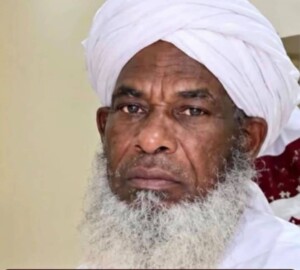
Sudan: Sheikh Ali Abdelrahman El Kajjam Death After El Obeid Detention
Summary
- Sheikh Ali Abdelrahman El Kajjam, an elderly tribal leader, died in El Obeid, North Kordofan, three days after being detained by a security force.
- Eyewitnesses reported uniformed security personnel abducted him and two workers, releasing the workers after beating them.
- His body was found in the city's morgue, with officials stating uniformed personnel brought it but never returned for procedures.
- Human rights lawyer Osman Saleh described the incident as an unlawful abduction, attributing death to torture and holding the state government responsible.
- Saleh also questioned the morgue and hospital's complicity for accepting the body without proper documentation.
What Transpired
Saleh asserted that the government bears complete accountability for Sheikh El Kajjam's abduction, subsequent torture, and death.
Sheikh Ali Abdelrahman El Kajjam, an elderly tribal leader and livestock trader in his seventies, was taken into custody by a security force at a livestock market located northeast of El Obeid, North Kordofan. This incident occurred three days before his body was subsequently discovered in the city's morgue. Prior to his detention, Sheikh El Kajjam was reportedly in good health and had no known illnesses.
Eyewitnesses described uniformed security personnel, dressed in military attire and traveling in a pickup truck, arriving at the market. They specifically called out Sheikh Ali Abdelrahman by name before taking him and two of his workers. Inside El Obeid, the two workers were ordered out of the vehicle, subjected to beatings with rifle butts, and then released. Sheikh El Kajjam, however, was transported to an undisclosed location. His family immediately began searching for him, contacting various authorities including police stations, military intelligence offices, security cells, and General Intelligence Service (GIS) offices, but all denied having him in their custody.
Legal and Procedural Breaches
Human rights lawyer Osman Saleh characterized the event as an illegal abduction, emphasizing that the security force involved failed to identify themselves, present an arrest warrant, or transport Sheikh El Kajjam to a police station. Saleh highlighted that police stations are the sole legally authorized entities for handling civilian arrests and investigations. He placed direct and full responsibility for the safety and security of citizens squarely on the state government, describing its inability to identify the detaining authority as a "catastrophe." Saleh asserted that the government bears complete accountability for Sheikh El Kajjam's abduction, subsequent torture, and death.
Furthermore, Saleh raised critical questions regarding the conduct of the morgue and hospital. He argued that a body should not be accepted from an unidentified party without an official report or an order from the public prosecution. Accepting the body under such irregular circumstances, he contended, indicated either negligence or complicity on the part of the morgue and hospital staff. Saleh concluded that Sheikh El Kajjam's death was a result of torture, citing his good health before detention and his demise within 48 hours of abduction as evidence of severe mistreatment. The Kordofan Observatory also condemned the death of Ali Abdelrahman El Kajjam and called for the immediate disclosure of the circumstances surrounding his detention.
Wider Societal Impact
The incident has generated significant apprehension among the residents of North Kordofan, fostering widespread fear, alarm, and anxiety. This public sentiment stems from the brutal and inhumane manner in which the victim was treated by the authorities. The Kordofan Observatory has additionally reported other instances of arbitrary detention and torture within El Obeid, underscoring a pattern of human rights abuses in the region.
The circumstances surrounding Sheikh El Kajjam's death highlight a profound breakdown of due process and the rule of law in North Kordofan. The failure of state institutions to adhere to legal procedures, coupled with the potential complicity of medical facilities, points to a systemic crisis where citizens are vulnerable to arbitrary actions by security forces without accountability. Lawyer Osman Saleh has urged authorities to identify those responsible for Sheikh El Kajjam's death and bring them to justice swiftly.
Practical Implications
This incident highlights severe human rights violations and a complete breakdown of due process in Sudan, particularly North Kordofan. Lawyers advising clients or involved in human rights advocacy in the region must be aware of the extreme risks of arbitrary detention, torture, and extrajudicial killings, and the systemic failure of state institutions to adhere to legal procedures, including the potential complicity of medical facilities.
Source
How does this affect you?
Get an AI analysis of this article grounded in your jurisdictions, practice areas, and any policy documents you've uploaded to Wansom.
Finish Reading the Full Story and the Expert Analysis.
Get the latest legal & regulatory intelligence in Sudan
Wansom is AI and can make mistakes.