
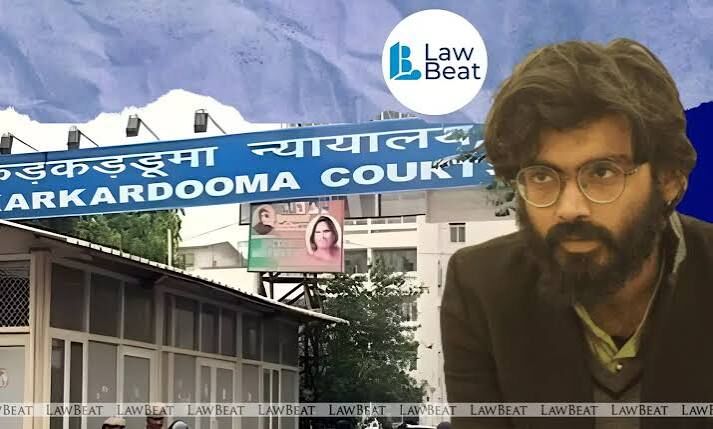
Delhi Police: Sharjeel Imam Interim Bail Cancellation Sought
Summary
- Delhi Police has moved to cancel Sharjeel Imam's interim bail, alleging a violation of court conditions.
- The police claim Imam interacted with media persons during his temporary release, which was prohibited.
- Imam was granted seven-day interim bail from October 4-10 to attend a cousin's wedding, with strict media interaction prohibitions.
- The plea, citing a video as evidence, will be heard by Additional Sessions Judge Sameer Bajpai at Karkardooma Courts.
- Imam faces charges under the Unlawful Activities (Prevention) Act (UAPA) for his alleged role in the 2020 Delhi riots.
Police Seek Bail Cancellation
The police's application explicitly seeks the cancellation of his interim bail on the grounds of this alleged breach, emphasizing the importance of upholding the integrity of the judicial process and the conditions imposed for temporary release.
The Delhi Police have initiated proceedings to revoke the interim bail previously granted to student leader Sharjeel Imam, citing an alleged breach of court-mandated conditions. Authorities approached the Karkardooma Court, asserting that Imam engaged with media personnel during his temporary release, which directly contravened the stipulations set for his liberty. This action targets the seven-day interim bail, which was effective from October 4 to October 10, specifically allowing Imam to attend his cousin's wedding.
The interim relief, sanctioned by the court on September 22, came with explicit directives, including a strict prohibition against any interaction with the media or use of social media platforms. The police's application, presented by Special Public Prosecutor (SPP) Madhukar Pandey, refers to a video purportedly circulating in public domains, which allegedly depicts Imam in conversation with media representatives. This plea is slated for review before Additional Sessions Judge (ASJ) Sameer Bajpai at the Karkardooma Courts in Delhi.
Legal Context and Prior Proceedings
Sharjeel Imam's legal entanglements stem from his arrest on January 28, 2020, under the stringent Unlawful Activities (Prevention) Act (UAPA). Prosecutors have accused him of being a pivotal intellectual architect behind the alleged conspiracy that led to the communal riots in northeast Delhi in February 2020. These violent events resulted in the deaths of 53 individuals and left hundreds more injured, marking a significant chapter in recent Indian history.
This current move by the police follows earlier attempts by Imam to secure bail. On July 5, ASJ Bajpai had previously denied fresh bail applications filed by both Imam and co-accused Umar Khalid. That decision referenced a Supreme Court order from January 5, which had not only denied them bail but also established specific criteria for any future reconsideration of their applications. In their arguments for bail, Imam and Khalid had invoked a Supreme Court judgment from May 18, which granted bail to Syed Iftikhar Andrabi in a narco-terror case investigated by the National Investigation Agency. Notably, the bench comprising Justices BV Nagarathna and Ujjal Bhuyan, in the May 18 ruling, had expressed "serious reservations" regarding the rationale underpinning the Supreme Court's January 5 order.
Why It Matters
The Delhi Police have characterized Imam's alleged interaction with the media as a "wilful and deliberate" transgression, arguing that he intentionally misused the temporary freedom granted by the court. This perspective underscores the gravity of violating bail conditions, particularly in cases involving serious charges like those under the UAPA, where strict adherence to judicial directives is paramount. The police's application explicitly seeks the cancellation of his interim bail on the grounds of this alleged breach, emphasizing the importance of upholding the integrity of the judicial process and the conditions imposed for temporary release.
The outcome of this application will have significant ramifications, potentially leading to Imam's immediate return to custody and setting a precedent for how strictly bail conditions, especially those related to media interaction, are enforced in high-profile cases. It highlights the critical responsibility of individuals granted interim bail to meticulously observe all court-imposed restrictions, as any perceived deviation can prompt swift legal challenges and further complicate their legal standing. The Karkardooma Court's decision will therefore be closely watched for its implications on the enforcement of bail conditions in sensitive cases across India.
Practical Implications
Lawyers must advise clients granted interim bail, especially in high-profile cases or those under stringent acts like UAPA, to strictly adhere to all court-imposed conditions, particularly regarding media interaction, as any perceived violation can lead to immediate applications for bail cancellation and further legal complications.
Source
How does this affect you?
Get an AI analysis of this article grounded in your jurisdictions, practice areas, and any policy documents you've uploaded to Wansom.
Finish Reading the Full Story and the Expert Analysis.
Get the latest legal & regulatory intelligence in India
Wansom is AI and can make mistakes.