
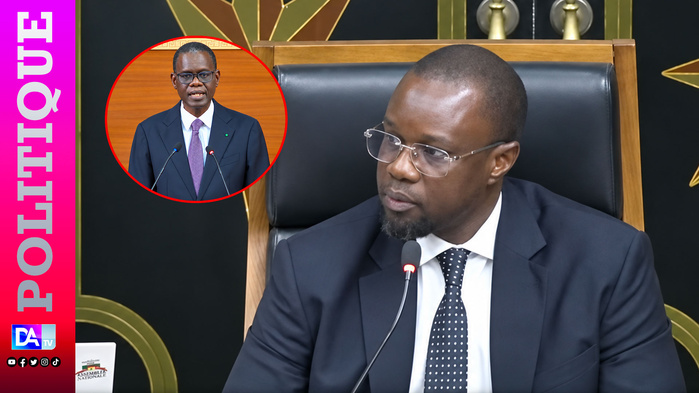
Senegal: Sonko Reveals Restricted Debt Management Process
Ousmane Sonko, President of the National Assembly in Senegal, revealed during a session at the National Assembly that during his tenure as head of government, the management of national debt was restricted to a small group of five officials and was not formally reviewed by the Council of Ministers.
This disclosure, made during the Prime Minister Al Aminou Lo's General Policy Statement, detailed that the restricted group included the Prime Minister, the Minister of Finance, the Minister of Economy, and Al Aminou Lo himself, then Secretary General. Sonko asserted that no other officials participated in these discussions, a claim that contrasts with a statement made by Abdourahmane Diouf in September 2026, who suggested Sonko had approved debt restructuring in the Council of Ministers. Sonko further emphasized that the country's economic and financial situation necessitates a collective effort, noting ongoing discussions and agreements nearing finalization, with the ultimate decision resting with the National Assembly. He also mentioned that these critical meetings initially took place at the Primature before moving to the Presidency.
This revelation carries significant legal implications for transparency, accountability, and adherence to constitutional and statutory procedures governing public finance management in Senegal. For legal practitioners, it highlights potential governance risks and raises questions about the legality and procedural validity of past debt management decisions. The alleged circumvention of the Council of Ministers, a key deliberative body, could expose previous financial agreements to scrutiny regarding their legitimacy and proper authorization. This situation may prompt future legislative inquiries, audits, or even legal challenges concerning the validity of certain debt instruments or agreements if proper procedures were indeed not followed, potentially impacting investor confidence and the state's financial standing.
The legal context for this matter is rooted in the Senegalese Constitution and public finance laws. The Constitution of Senegal outlines the roles and responsibilities of the executive and legislative branches, including the Council of Ministers (Article 53), the Prime Minister (Article 54), and the National Assembly (Article 60). Article 53 typically mandates the Council of Ministers to deliberate on general policy and government bills, while Article 60 empowers the National Assembly to vote on laws, control government action, and evaluate public policies. Public finance legislation further dictates the processes for managing national debt, including requirements for parliamentary approval for significant borrowing or restructuring. Sonko's statements underscore the principle of separation of powers and the National Assembly's critical role in ensuring executive accountability, particularly in matters of national financial sovereignty.
Key parties involved include Ousmane Sonko, in his capacity as President of the National Assembly and former head of government, Prime Minister Al Aminou Lo, the Minister of Finance, the Minister of Economy, the Council of Ministers, the National Assembly, and the Presidency/Primature. Attorneys advising government entities, financial institutions, or international creditors involved in Senegalese public debt should closely monitor parliamentary debates and any potential investigations into past debt management practices. Businesses engaging with the Senegalese state on large-scale projects or financing arrangements must ensure their due diligence extends to verifying the procedural regularity and constitutional compliance of all relevant approvals, particularly concerning public debt. The ongoing discussions and finalization of agreements mentioned by Sonko suggest potential shifts in debt management policy and oversight, requiring careful attention from legal professionals to navigate the evolving regulatory and political landscape.
How does this affect you?
Get an AI analysis of this article grounded in your jurisdictions, practice areas, and any policy documents you've uploaded to Wansom.
Finish Reading the Full Story and the Expert Analysis.
Wansom is AI and can make mistakes.