
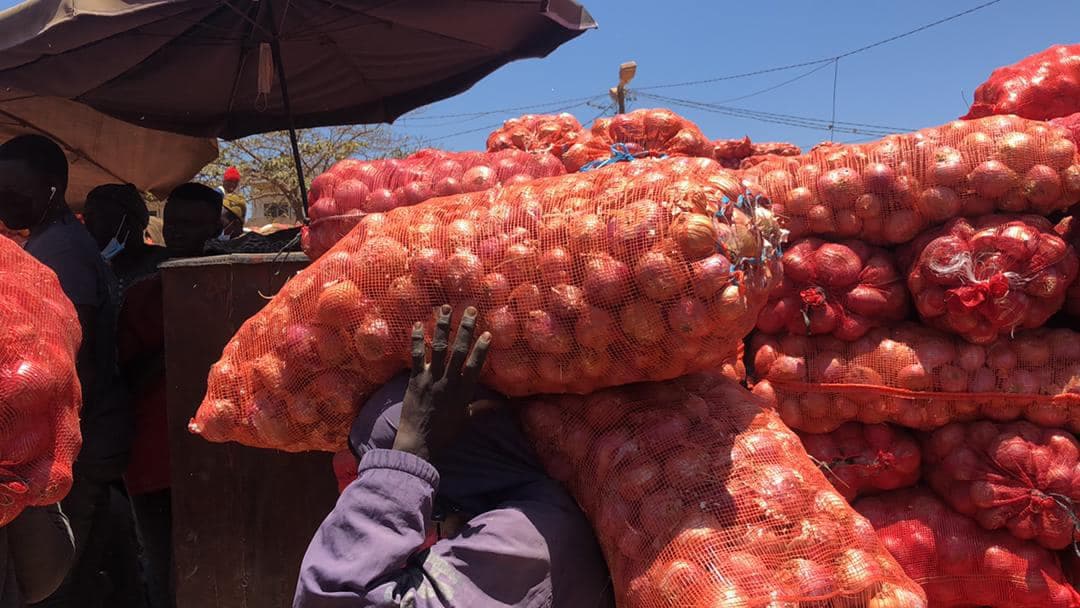
Senegal: Onion Import Quotas ARM IPOS Implemented
Summary
- Senegal has reopened its onion market to imports under a new quota system valid until December 31, 2026, as announced by the Ministry of Industry and Commerce.
- This decision follows a prior suspension of onion and potato imports, implemented to protect national production, particularly for an anticipated abundant 2025-2026 agricultural campaign.
- The Agence de Régulation des Marchés (ARM) and Interprofession Oignon du Sénégal (IPOS) collaborated on the market reopening and are responsible for monitoring the sector.
- Domestic producers faced challenges, including the risk of harvest degradation in Bakel and complaints against a 9,000 FCFA price ceiling set by ARM for a 25 kg onion bag on July 27, 2026.
- The controlled resumption of imports aims to prevent supply disruptions and balance national production with consumer needs, with all import authorizations remaining quota-bound.
Senegal Reopens Onion Market with Strict Quotas
The Ministry of Industry and Commerce has emphasized that the carefully managed resumption of imports is a direct response to recent price volatility and is designed to proactively avert potential supply disruptions in the future.
Senegal has officially reopened its onion market to importers, implementing a new, stringent quota system for all incoming shipments. This significant policy shift was announced by the Ministry of Industry and Commerce Senegal import, clarifying that all import authorizations will be subject to these quotas, which are valid until a strict deadline of December 31, 2026. The decision to lift a prior import freeze comes after a period of suspension that had temporarily halted the entry of both potatoes and onions into the country.
This earlier suspension was put in place to protect and bolster domestic agricultural output, specifically in anticipation of a particularly abundant 2025-2026 agricultural campaign. National potato production was expected to become available from January 15, 2026, with national onion harvests following from February 15, 2026. The reopening of the market, which allows operators to resume activities under this controlled framework, follows the conclusion of the most recent onion marketing campaign, which commenced on January 16 and officially wrapped up on August 31, spanning just over seven months. This strategic move to reintroduce imports was developed in close collaboration with key industry stakeholders, including the Agence de Régulation des Marchés (ARM) and the Interprofession Oignon du Sénégal (IPOS), underscoring a coordinated approach to Senegal onion market regulation.
Domestic Market Pressures and Producer Grievances
Despite the protective measures and the anticipated abundance, the domestic market experienced considerable strain leading up to the commercialization phase. The projected bumper harvest for the 2025-2026 season, while intended to secure national supply, paradoxically generated significant tensions among producers. A stark example of these challenges emerged in Bakel, where a substantial portion of the onion harvest faced the imminent risk of degradation before it could even be sold. This situation threatened to force local market gardeners into selling their produce at a loss, undermining their economic viability. Producer Djibril Konaté, for instance, reported a yield of nearly six tons from a mere quarter-hectare, illustrating the scale of the domestic production.
Compounding these issues, price levels became a major point of friction within the Senegal onion market. On July 27, 2026, the Agence de Régulation des Marchés (ARM) intervened by setting a price ceiling of 9,000 FCFA for a 25 kg bag of onions, which translates to 360 FCFA per kilogram. This regulatory decision, however, was met with strong opposition; some producers announced their intention to file a complaint, asserting that the imposed cap was inconsistent with prior directives and failed to adequately account for their production costs and efforts.
The New Regulatory Landscape for Onion Imports
The collaborative efforts of the Agence de Régulation des Marchés (ARM) and the Interprofession Oignon du Sénégal (IPOS) have been central to establishing the new Senegal onion import quotas ARM IPOS framework. These two critical entities are tasked with the ongoing oversight of the entire onion sector, playing a pivotal role in navigating the complex balance between fostering robust national production, ensuring equitable remuneration for domestic producers, and meeting the consumption demands of the Senegalese population.
The Ministry of Industry and Commerce has emphasized that the carefully managed resumption of imports is a direct response to recent price volatility and is designed to proactively avert potential supply disruptions in the future. Consequently, all import authorizations granted to operators will continue to be strictly governed by these quota limitations, a policy that remains in effect until the specified date of December 31, 2026. This comprehensive Senegal trade policy onions approach aims to stabilize the market while supporting local agriculture, requiring all stakeholders, including those involved in Senegal import authorizations onions, to adhere to the new regulatory environment.
Practical Implications
Lawyers advising clients on agricultural imports into Senegal must inform them of the new quota system for onions, valid until December 31, 2026, and the requirement for specific import authorizations managed by ARM and IPOS. Compliance officers in importing firms need to understand these new restrictions to avoid supply chain disruptions and legal penalties.
Source
How does this affect you?
Get an AI analysis of this article grounded in your jurisdictions, practice areas, and any policy documents you've uploaded to Wansom.
Finish Reading the Full Story and the Expert Analysis.
Wansom is AI and can make mistakes.