
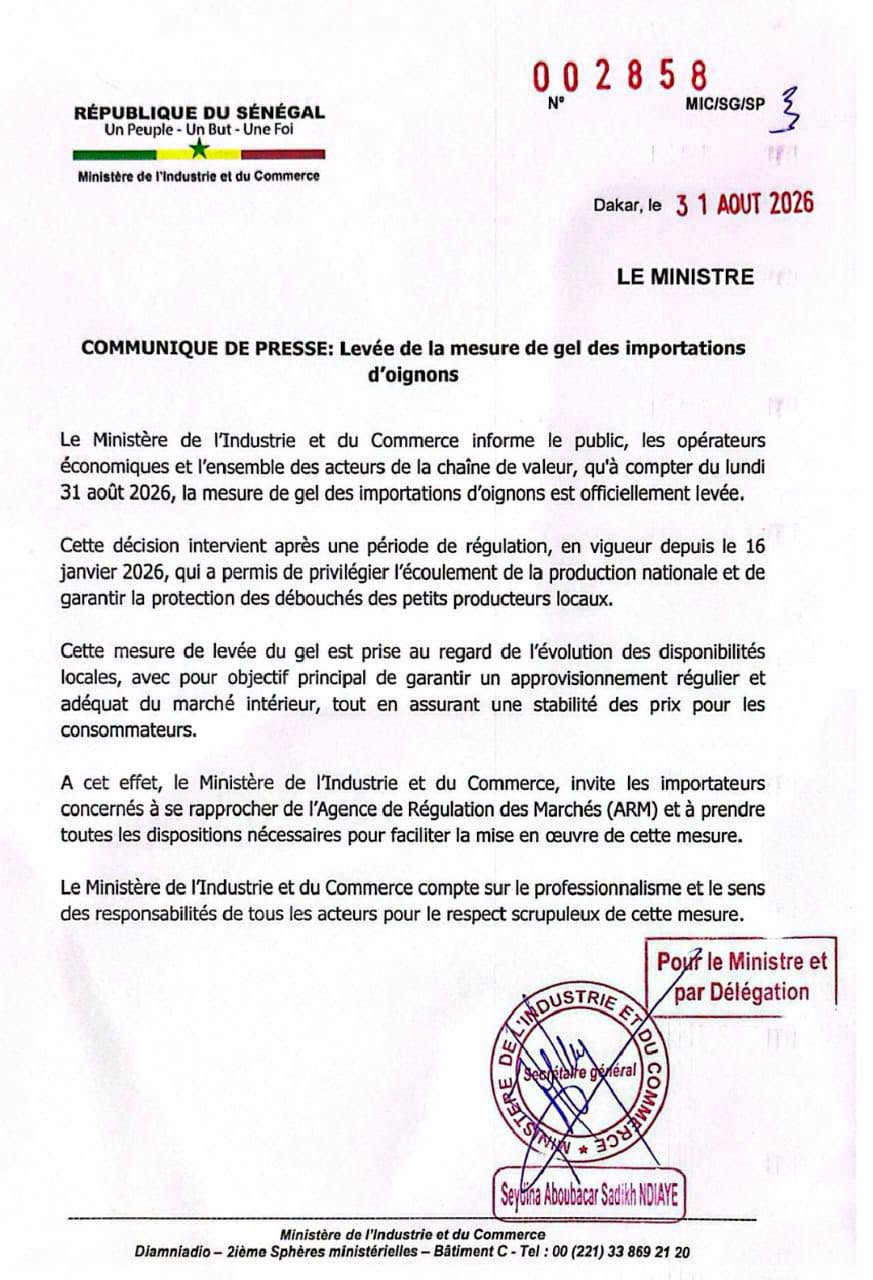
Senegal: Onion Import Freeze Lifted August 2026
Summary
- Senegal's Ministry of Industry and Commerce announced the lifting of its onion import freeze.
- The policy change will be effective from August 31, 2026.
- The initial ban, implemented on January 16, 2026, aimed to support local producers.
- The freeze is being lifted to ensure regular domestic supply and stable consumer prices.
- Importers must contact the Agence de Régulation des Marchés (ARM) to prepare for the resumption of imports.
Senegal Lifts Onion Import Freeze Effective August 2026
The government's objective is to guarantee a consistent and sufficient provision of onions to the internal market, thereby aiming to stabilize consumer prices.
The Senegalese Ministry of Industry and Commerce has officially announced the termination of its temporary ban on onion imports, a significant policy reversal set to take effect on August 31, 2026. This decision marks the end of a restrictive period that began earlier in the year, on January 16, 2026, impacting businesses involved in the agricultural trade sector. The move is expected to reshape the dynamics of the domestic onion market and influence Senegal's broader agricultural import policy.
This strategic shift by the Ministry of Industry and Commerce regarding onion imports is primarily driven by an assessment of the evolving local supply conditions. The government's objective is to guarantee a consistent and sufficient provision of onions to the internal market, thereby aiming to stabilize consumer prices. This adjustment in Senegal's food supply regulation for 2026 reflects a balancing act between supporting local agriculture and ensuring national food security and affordability for its citizens.
Rationale Behind the Initial Ban and Subsequent Reversal
The initial imposition of the import freeze on January 16, 2026, was a deliberate measure designed to bolster Senegal's domestic agricultural sector. At the time, the Ministry of Industry and Commerce implemented the ban with the explicit aim of facilitating the sale of locally grown onions and safeguarding the market access for small-scale national producers. This protectionist stance was intended to shield local farmers from foreign competition, allowing them to offload their harvests without being undercut by imported goods.
However, the recent evaluation of local availability has prompted a re-evaluation of this policy. The decision to lift the freeze on August 31, 2026, indicates that the domestic market is now perceived to be in a position where it can accommodate imports without undermining local production, or perhaps that local supply alone is insufficient to meet demand consistently. This change in Senegal's agricultural import policy underscores the government's dynamic approach to managing food supplies and market stability, adapting regulations as internal conditions evolve.
Directives for Importers and Regulatory Compliance
With the impending lifting of the import freeze, the Ministry of Industry and Commerce has issued clear directives for all affected importers. These businesses are now required to engage directly with the Agence de Régulation des Marchés (ARM) to ensure a smooth transition and compliance with the updated Senegal food supply regulation for 2026. This engagement is crucial for understanding any new or reinstated procedural requirements that will govern onion imports once the ban is officially rescinded.
Importers are advised to proactively take all necessary steps to prepare for the resumption of trade, which may involve reviewing existing trade agreements and ensuring adherence to the revised Senegal trade law concerning onion imports. The Ministry has emphasized the importance of professionalism and a sense of responsibility from all stakeholders in meticulously observing this policy change. This call to action highlights the government's expectation that market participants will contribute to an orderly and efficient reintroduction of imported onions into the Senegalese market.
Practical Implications
This decision directly impacts import/export businesses in Senegal. Lawyers and compliance officers advising these entities must update their clients on the resumption of onion imports, review existing trade agreements, and ensure compliance with any new or reinstated regulatory requirements from the Ministry of Industry and Commerce and the Agence de Régulation des Marchés (ARM) as of August 31, 2026. This could involve advising on new permits, quotas, or logistical arrangements.
Source
How does this affect you?
Get an AI analysis of this article grounded in your jurisdictions, practice areas, and any policy documents you've uploaded to Wansom.
Finish Reading the Full Story and the Expert Analysis.
Wansom is AI and can make mistakes.