
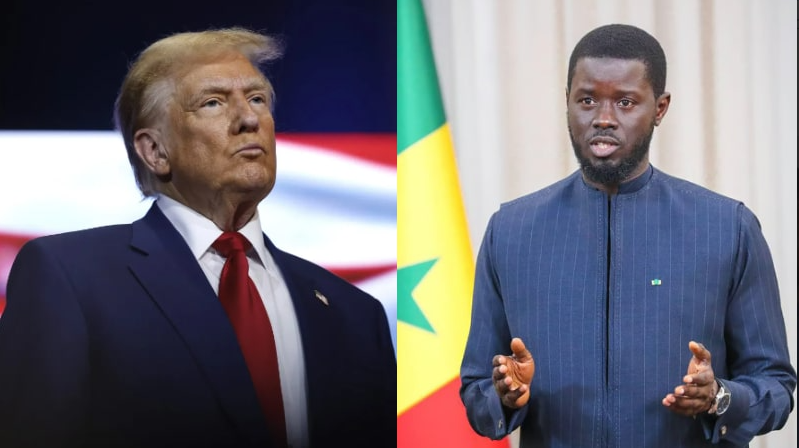
Senegal Navigates US Pressure Amid Trump-ICC Conflict
Donald Trump's administration escalated its confrontation with the International Criminal Court (ICC) by publicly denouncing it as "illégitime" during his address to the United Nations General Assembly's 81st session, signaling a new phase in the strained relationship between the United States and the international tribunal. This high-profile condemnation by a sitting US President represents a significant verbal assault on the ICC's authority and operational integrity, delivered on a global stage and implying further unspecified criticisms regarding the ICC's "treatment" of matters. The excerpt highlights the political nature of international justice and the potential for powerful states to challenge the legitimacy of global institutions.
This public denunciation carries substantial legal and political significance, potentially undermining the ICC's credibility and operational effectiveness, particularly in regions where US influence is strong. For legal practitioners, it signals a challenging environment for international criminal justice, as it could embolden states to resist cooperation with the ICC or even withdraw from the Rome Statute. The article's mention of "Sénégal à la croisée des chemins" (Senegal at a crossroads) suggests that such US pressure could compel signatory states, like Senegal, to re-evaluate their commitments to the ICC, potentially impacting their domestic legal frameworks for cooperation and the enforcement of international criminal law. This geopolitical tension underscores the delicate balance between state sovereignty and universal jurisdiction.
The International Criminal Court (ICC), established by the Rome Statute in 2002, is mandated to prosecute individuals for genocide, crimes against humanity, war crimes, and the crime of aggression. Senegal is a state party to the Rome Statute, having ratified it and thus accepting the ICC's jurisdiction and obligations to cooperate. In contrast, the United States is not a state party, having famously "unsigned" the treaty, and has historically expressed strong reservations about the ICC's jurisdiction over non-member nationals. This fundamental disagreement forms the backdrop of the current confrontation. The UN General Assembly, while primarily a political forum, serves as a critical platform for shaping international discourse and perceptions of global institutions. The key parties involved are the administration of then-US President Donald Trump and the International Criminal Court, with the UN General Assembly as the venue and Senegal representing other ICC member states potentially facing diplomatic pressure.
Attorneys advising governments, international organizations, or individuals involved in international criminal law must closely monitor the evolving dynamics between major global powers and the ICC. This includes assessing the potential for increased political and diplomatic pressure on ICC member states, particularly those with strong ties to the US, regarding their cooperation with the Court's investigations and prosecutions. Practitioners should be aware of the implications for the principles of universal jurisdiction, the enforcement of international humanitarian law, and the potential for domestic legislative or policy shifts in response to such geopolitical developments. The long-term impact on the ICC's ability to effectively investigate and prosecute cases, especially those involving nationals of non-member states or in regions where US influence is significant, remains a critical area of observation for legal professionals.
How does this affect you?
Get an AI analysis of this article grounded in your jurisdictions, practice areas, and any policy documents you've uploaded to Wansom.
Finish Reading the Full Story and the Expert Analysis.
Get the latest legal & regulatory intelligence in Senegal
Wansom is AI and can make mistakes.