
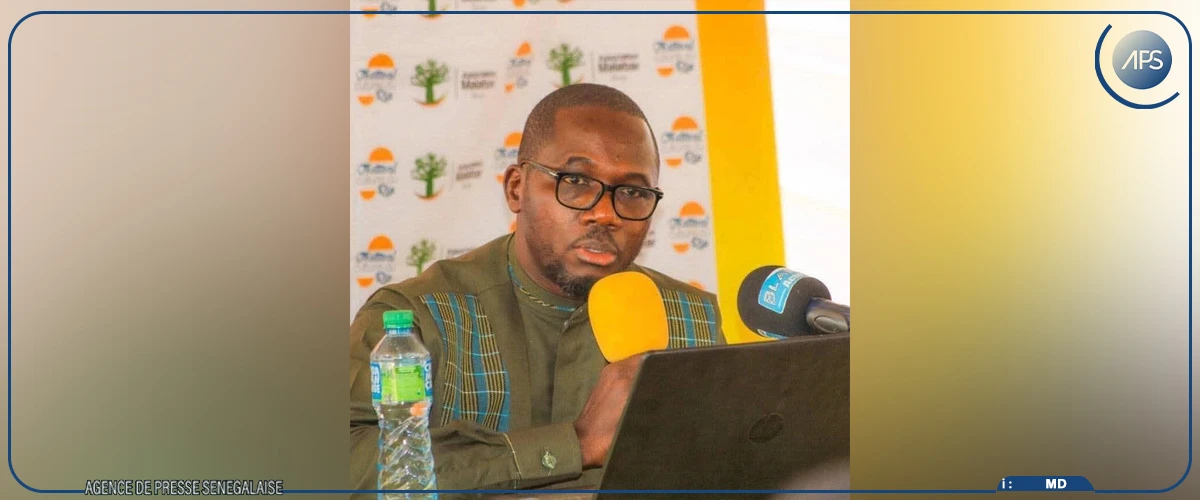
Aliou Gori Diouf: Sénégal PLFR 2026 Rejet "Excessive"
Summary
- On October 27, Senegal's Minister of Environment and Ecological Transition, Aliou Gori Diouf, criticized the parliamentary majority's stance.
- Minister Diouf labeled the parliamentary majority's potential rejection of the 2026 revised finance bill (PLFR) as "excessive and unreasonable."
- The parliamentary majority has not ruled out rejecting the `projet de loi de finances rectificative Sénégal` for 2026.
- Diouf acknowledged the legitimacy of the legislature's desire to properly regulate the use of `fonds spéciaux Sénégal`.
- The debate highlights a significant tension between the executive and legislative branches over fiscal policy and special funds legislation.
Executive Branch Expresses Disquiet Over Legislative Stance
Minister Aliou Gori Diouf characterized this legislative position as both "excessive" and "unreasonable," signaling a notable divergence in perspective between the executive and legislative branches concerning a pivotal financial instrument.
On October 27, Aliou Gori Diouf, who holds the portfolio of Minister of Environment and Ecological Transition within the Senegalese government, publicly articulated significant reservations regarding the stance adopted by the parliamentary majority. Minister Diouf specifically characterized this legislative position as both "excessive" and "unreasonable," signaling a notable divergence in perspective between the executive and legislative branches concerning a pivotal financial instrument. His remarks serve to highlight the intensity of the ongoing debate.
The central point of contention that has drawn Minister Diouf's public disapproval is the parliamentary majority's declared openness to rejecting the `projet de loi de finances rectificative Sénégal` for the year 2026. This potential rejection of the revised finance bill, known as the PLFR 2026, represents a serious challenge to the government's proposed fiscal adjustments and expenditure plans for the upcoming period. The minister's strong language underscores the gravity with which the executive views this legislative threat.
The Legislative Challenge to the 2026 Revised Finance Bill
The contemplation of a `rejet loi de finances Sénégal` for 2026 by the `majorité parlementaire Sénégal PLFR` signifies a substantial legislative hurdle for the current administration. This parliamentary group's willingness to consider such a drastic measure indicates a profound level of concern that has prompted a direct and public response from a key cabinet member. The legislative body's power to reject the bill could significantly alter the government's financial trajectory.
Despite his firm critique of the potential rejection of the entire bill, Minister Aliou Gori Diouf did offer a crucial acknowledgment regarding the underlying motivations of the parliamentary majority. He conceded that the legislature's fundamental desire to establish more robust oversight and implement proper regulation for the utilization of `fonds spéciaux Sénégal législation` is, in itself, a legitimate and understandable objective. This recognition suggests a shared principle of accountability, even amidst disagreement over the means.
This nuanced perspective from the Minister of Environment and Ecological Transition reveals that while the proposed action—the outright rejection of the revised finance bill—is deemed problematic and disproportionate, the core principle advocating for enhanced transparency and accountability in the management of special funds resonates even within the executive branch. The debate, therefore, is not about the principle of oversight but rather the method of enforcing it.
Implications of a Potential Budgetary Rejection
The prospect of the `Sénégal PLFR 2026 rejet` by the parliamentary majority carries with it potentially far-reaching implications for the nation's financial framework and the operational capacity of governmental departments. Such a decisive legislative action would inevitably disrupt the carefully planned adjustments to the national budget for the upcoming fiscal year, potentially leading to uncertainty in public spending and project implementation.
Minister Diouf's assertion that the parliamentary majority's position is "excessive et non raisonnable" directly addresses the potential negative ramifications of their contemplated action. His statement implies that while legislative scrutiny and debate are integral to democratic governance, an outright rejection of the `projet de loi de finances rectificative Sénégal` might be an overly severe response, despite the acknowledged legitimacy of the concerns surrounding the management of special funds.
The ongoing public discourse, ignited by the `Aliou Gori Diouf ministre Environnement`'s candid comments, brings into sharp focus the inherent dynamic tension between the executive and legislative branches in the process of financial governance. The ultimate outcome of this parliamentary deliberation concerning the revised finance bill will undoubtedly be a critical indicator of the political landscape and fiscal direction for Senegal in the lead-up to 2026.
Practical Implications
Lawyers and compliance officers in Senegal should closely monitor the parliamentary debate and outcome regarding the 2026 revised finance bill (PLFR). Its potential rejection or amendment could significantly impact fiscal policy, budgetary allocations, and regulations concerning special funds, necessitating adjustments to client financial planning and compliance strategies.
Source
Source: Original reporting via APS
How does this affect you?
Get an AI analysis of this article grounded in your jurisdictions, practice areas, and any policy documents you've uploaded to Wansom.
Finish Reading the Full Story and the Expert Analysis.
Wansom is AI and can make mistakes.