
Sénégal: Rejet PLFR 2026 By Assemblée Nationale; Continuity Assured
Summary
- Senegal's National Assembly rejected the 2026 Rectified Finance Bill (PLFR).
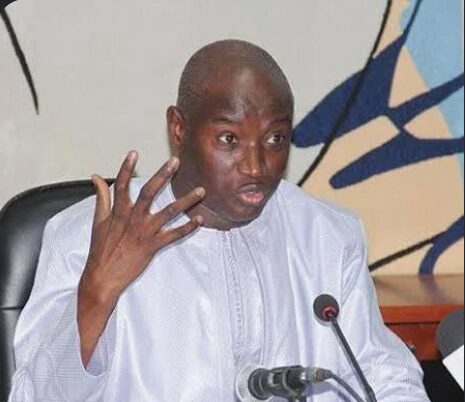
- Former Minister Aly Ngouille Ndiaye stated this rejection does not threaten government continuity.
- Ndiaye affirmed the President possesses legal mechanisms to continue planned expenditures and projects.
- This implies that government spending and project execution are not automatically halted by the legislative decision.
Legislative Setback
For legal professionals advising on public finance, government contracts, or project financing in Senegal, understanding these inherent executive powers becomes paramount.
The recent rejection of the `projet de loi de finances rectificative 2026` (PLFR 2026) by the National Assembly in Senegal represents a notable legislative event, potentially sparking discussions about the nation's financial management. This decision by the `Assemblée nationale Sénégal budget` concerns a crucial financial instrument designed to adjust the state's budgetary allocations during the fiscal year. Despite this legislative non-approval, former minister `Aly Ngouille Ndiaye PLFR` has moved to reassure the public, stating that the `rejet PLFR 2026 Sénégal` does not threaten the continuity of government operations.
Ndiaye, a seasoned public administrator, publicly affirmed that the executive branch possesses the necessary tools to navigate such a situation without disrupting essential services or planned initiatives. His comments aim to mitigate any immediate concerns that might arise from the legislative body's refusal to adopt this significant financial bill. This perspective suggests that the government's capacity to fund its operations and implement its agenda is not solely contingent on the immediate passage of every financial legislative proposal.
Executive Powers and Fiscal Continuity
A core tenet of `Aly Ngouille Ndiaye`'s argument is the assertion that the President of the Republic is endowed with specific `mécanismes juridiques dépenses gouvernementales Sénégal` to ensure the uninterrupted execution of public spending and projects. These legal provisions are vital for maintaining the stability of state functions, even when a supplementary finance bill encounters legislative opposition. The existence of such legal avenues implies that the government's ability to fund its operations and implement its agenda extends beyond the immediate approval of every financial legislative proposal.
For legal professionals advising on public finance, government contracts, or project financing in Senegal, understanding these inherent executive powers becomes paramount. The rejection of the `projet de loi de finances rectificative 2026` does not automatically translate into a halt in government spending or project execution. Instead, it necessitates a thorough investigation into the precise legal instruments available to President Diomaye to ensure the `continuité action gouvernementale Diomaye`. This includes examining how these mechanisms might influence existing client interests or ongoing transactions, ensuring that legal advice remains robust and informed by the full scope of the nation's financial and constitutional framework.
Broader Implications for Governance
The former minister's clarification highlights a fundamental aspect of governance: the executive branch's resilience in upholding state functions despite legislative challenges. While the `rejet PLFR 2026 Sénégal` by the `Assemblée nationale Sénégal budget` clearly signifies a legislative stance, the executive's capacity to proceed with planned expenditures through alternative legal means underscores a critical balance of power. This scenario emphasizes the importance of a comprehensive understanding of Senegal's constitutional and administrative law for all stakeholders, particularly those involved in economic activities linked to government initiatives.
The assurance provided by `Aly Ngouille Ndiaye` regarding the President's ability to maintain the `continuité action gouvernementale Diomaye` is designed to alleviate uncertainty. It suggests that the foundational work of the government, including critical projects and services, can continue to advance. This perspective is crucial for investor confidence and for ensuring that the administrative machinery of the state remains operational, irrespective of specific legislative outcomes concerning financial adjustments.
Practical Implications
Lawyers advising on public finance, government contracts, or project financing in Senegal should understand that the rejection of the PLFR 2026 does not automatically halt government spending. They must investigate the specific legal mechanisms available to the President to ensure the continuity of public expenditures and projects, and how these might impact client interests or ongoing transactions.
Source
How does this affect you?
Get an AI analysis of this article grounded in your jurisdictions, practice areas, and any policy documents you've uploaded to Wansom.
Wansom is AI and can make mistakes.