
Sénégal LFR 2026: Subventions Énergie Triplées à 790.3 Milliards FCFA
Summary
- Senegal's Rectified Finance Law 2026 (LFR 2026) significantly increases energy subsidies to 790.3 billion FCFA.
- This represents an additional 540.3 billion FCFA, more than tripling the initial budget, due to rising international energy prices and geopolitical tensions.
- Effective August 15, 2026, supercarburant and gasoil prices increased by 70 FCFA and 75 FCFA respectively, while domestic gas and pirogue fuel remained unchanged.
- The LFR 2026 also revises economic growth forecasts downwards and projects the budget deficit to reach 7.6% of GDP.
- The government aims to protect purchasing power and ensure energy service continuity, despite the fiscal strain on public finances.
Significant Increase in Energy Subsidies
These substantial increases in energy subsidies are placing pressure on public finances, which were already subject to extensive revisions within the Loi de finances rectificative 2026 Sénégal.
The Senegalese government has substantially increased its allocation for energy subsidies within the proposed Loi de finances rectificative 2026 Sénégal. This revised budget, transmitted to the National Assembly on September 18, 2026, now earmarks 790.3 billion FCFA for energy support, a significant jump from the 250 billion FCFA initially budgeted. This represents an additional 540.3 billion FCFA, effectively more than tripling the original provision for subventions énergie.
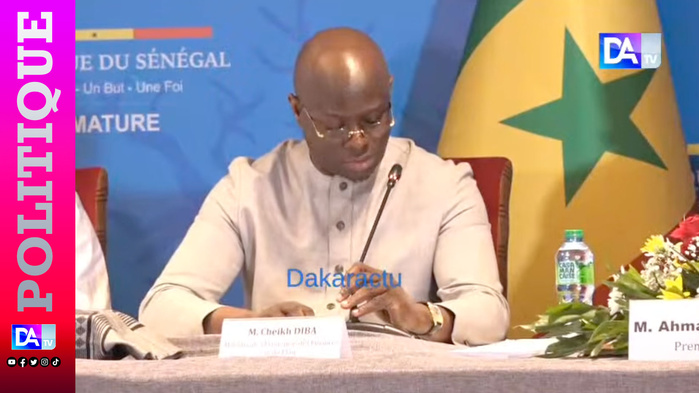
This substantial budgetary adjustment, confirmed by the Ministre de l’Économie, des Finances et du Plan during a government press conference, aligns with earlier statements from Prime Minister Ahmadou Al Aminou Lo, who indicated that the state would absorb a shock of approximately 540 billion FCFA rather than passing the burden directly to consumers. The primary drivers behind this reevaluation are the escalating international energy prices and the prevailing geopolitical tensions, which have exerted considerable pressure on the national economy.
Broader Economic Revisions and Fuel Price Adjustments
Beyond the increased energy subsidies, the LFR 2026 also signals a broader recalibration of Senegal's economic outlook. The rectified budget includes revised growth forecasts, which are now projected downwards, alongside an anticipated decline in both tax revenues and public investments. Consequently, the national budget deficit is expected to widen significantly, reaching 7.6% of the Gross Domestic Product. This comprehensive budget rectificatif Sénégal énergie reflects a challenging fiscal environment.
In response to the global market dynamics, the government implemented adjustments to the prix carburant Sénégal 2026. Effective August 15, 2026, the price of supercarburant increased by 70 FCFA, bringing it to 990 FCFA per liter, while gasoil saw a 75 FCFA rise, settling at 755 FCFA per liter. Officials justified these increases by citing the global surge in crude oil prices, noting that a barrel traded at $88 on August 3, significantly higher than the $64 assumed in the initial budget forecasts. The government framed these adjustments as a necessary return to price levels observed prior to December 6, 2025. Notably, domestic gas and fuel designated for traditional fishing pirogues were explicitly exempted from these price hikes.
Fiscal Strategy and Economic Stability
The government's strategy behind the augmented Sénégal LFR 2026 subventions énergie is primarily to mitigate the impact of external economic shocks on its citizens and ensure essential services. According to the Ministre de l’Économie, des Finances et du Plan, this budgetary effort is crucial to prevent adverse repercussions on pump prices, the transport sector, the overall cost of living, and the continuity of energy supply. The ministry explicitly stated that these subsidies are designed to "protect purchasing power and ensure the continuity of the energy service."
While the state has made a considerable commitment to cushion the blow, the adjustments to automotive fuel prices indicate that the government is not fully absorbing the entirety of the global price increases. This balancing act underscores the delicate position of public finances. These substantial increases in energy subsidies are placing pressure on public finances, which were already subject to extensive revisions within the Loi de finances rectificative 2026 Sénégal. The significant rise in the déficit budgétaire Sénégal to 7.6% of GDP highlights the fiscal challenges associated with maintaining such extensive public support.
Practical Implications
Lawyers and compliance officers advising businesses in Senegal should monitor the implications of the revised 2026 budget, particularly the increased energy subsidies and fuel price adjustments, as these reflect the government's fiscal strategy and could impact operational costs, supply chain stability, and future regulatory or tax policies related to energy and transportation sectors.
Source
Source: Original reporting via dakaractu
How does this affect you?
Get an AI analysis of this article grounded in your jurisdictions, practice areas, and any policy documents you've uploaded to Wansom.
Finish Reading the Full Story and the Expert Analysis.
Wansom is AI and can make mistakes.