
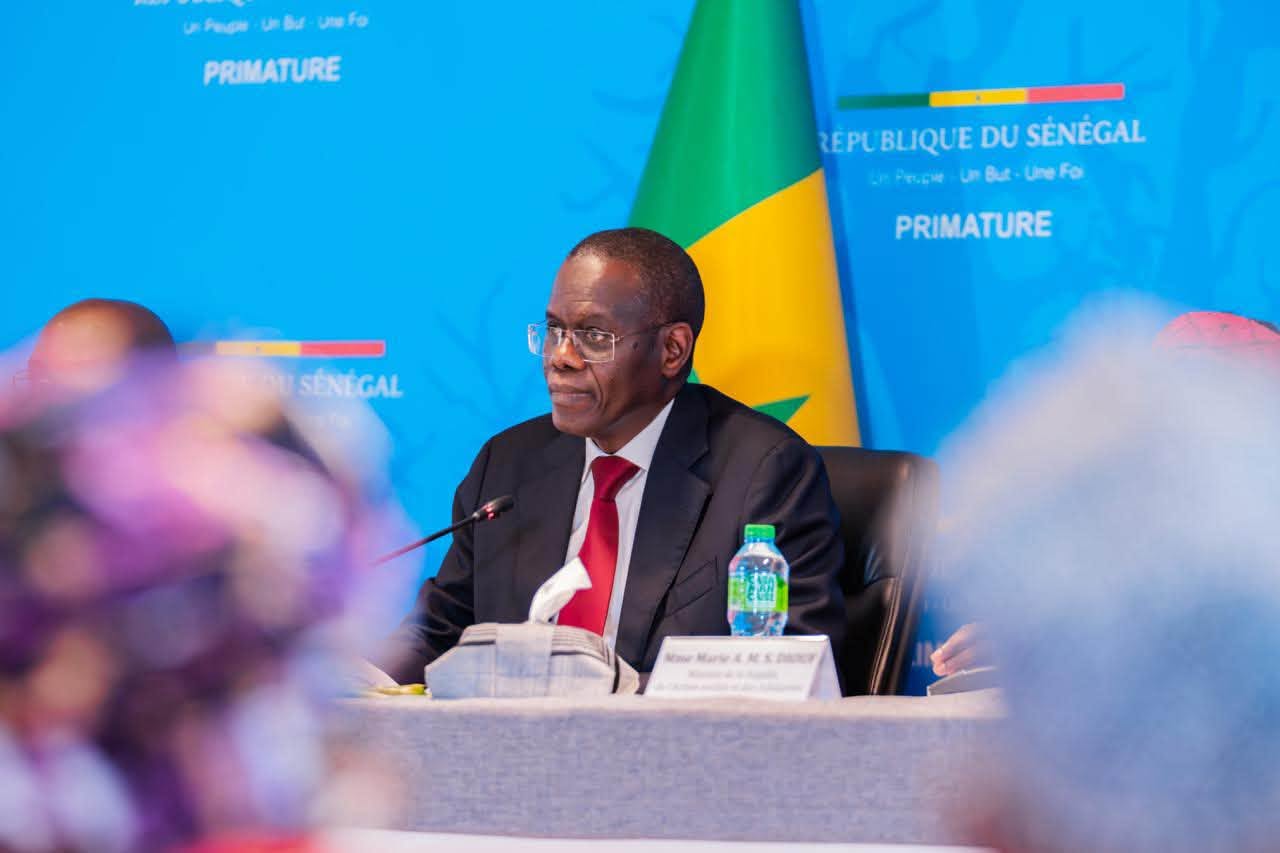
Senegal: PM Seeks Dialogue on LFR 2026 Before Plenary Vote
In Senegal, Prime Minister Ahmadou Alhaminou Mohamed Lô, on an unspecified date, expressed his intention to resume dialogue with PASTEF deputies before the plenary examination of the Rectified Finance Law (LFR) 2026, following its rejection in commission.
This development underscores the critical role of inter-party dialogue and consensus-building in the Senegalese legislative process, particularly concerning crucial financial legislation like the LFR. The Prime Minister's proactive efforts to engage with the opposition highlight the potential for legislative gridlock and the imperative for political negotiation to ensure the passage of government bills, which carry significant economic and social implications. The LFR is presented as a vital tool for economic recovery, enabling businesses to recover debts, settle arrears, and manage the substantial energy shock, demonstrating its broad impact across various sectors.
The central legal instrument is the Loi de finances rectificative (LFR) 2026, a supplementary budget law that requires a multi-stage legislative process, including examination in commission and a subsequent plenary vote in the National Assembly. The rejection in commission signifies the legislative body's power to scrutinize, amend, or reject government proposals. The Prime Minister attributes the need for the LFR to discrepancies in revenue forecasts made under the previous government, led by Ousmane Sonko, now President of the National Assembly, specifically regarding the Programme de redressement économique et social (PRES). His acknowledgment of the National Assembly's role and belief in an agreement if parties are open, alongside a mention of the Constitution in case of failed discussions, indicates an awareness of the constitutional framework governing executive-legislative relations and potential mechanisms for resolving impasses.
Key parties involved include Prime Minister Ahmadou Alhaminou Mohamed Lô, the PASTEF deputies whose support is sought, and implicitly the government proposing the LFR and the National Assembly as the legislative body. Former Prime Minister Ousmane Sonko, now President of the National Assembly, is also a significant figure, given the Prime Minister's comments on past financial forecasts. The proposed LFR aims to address a 550 billion CFA franc energy shock, which the government intends to absorb rather than pass on to consumers, further illustrating its economic significance.
Legal professionals and businesses operating in Senegal should closely track the ongoing legislative negotiations surrounding the LFR 2026, as its passage is presented as vital for economic recovery, corporate financial health, and managing energy costs. The outcome of these discussions will directly influence the fiscal environment, government spending priorities, and the stability of the business climate. Attorneys should advise clients on potential delays or changes to economic policies depending on the success of these political dialogues. The outcome of these discussions and the LFR vote is not yet reported, necessitating continuous monitoring of parliamentary proceedings and government announcements.
How does this affect you?
Get an AI analysis of this article grounded in your jurisdictions, practice areas, and any policy documents you've uploaded to Wansom.
Finish Reading the Full Story and the Expert Analysis.
Wansom is AI and can make mistakes.