
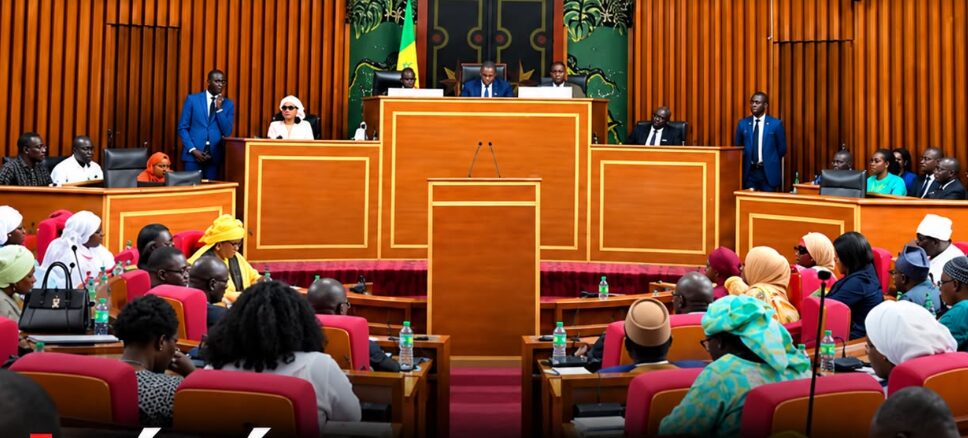
Sénégal Commission: LFR 2026 Rejeted Twice, Bacary Diédhiou Explains
Summary
- Sénégal's draft Loi de Finances Rectificative (LFR) for 2026 has been rejected twice by the Assemblée nationale's Commission des Finances et du Contrôle budgétaire.
- PASTEF député Bacary Diédhiou, a member of the commission, justified the rejections due to disagreements over the government's budgetary choices.
- Diédhiou clarified that the commission's aim is not to block the entire budget but to address concerns regarding price increases.
- The parliamentary commission is actively exercising its oversight role in scrutinizing the proposed Sénégal budget 2026.
Legislative Setback for Sénégal's Budget
Bacary Diédhiou has provided a clear explanation for the commission's decision to reject the LFR 2026, emphasizing that the primary concern is not to obstruct the overall state budget but rather to address specific issues related to price increases.
The proposed Loi de Finances Rectificative (LFR) for 2026 in Sénégal has encountered significant parliamentary resistance, having been rejected on two separate occasions. This repeated refusal by the Commission des Finances et du Contrôle budgétaire of the Assemblée nationale has raised questions regarding the government's fiscal strategy and the legislative process. The rejection of the Sénégal LFR 2026, particularly its double occurrence, underscores a notable divergence between the executive and legislative branches concerning the nation's financial direction.
Bacary Diédhiou, a prominent député representing the PASTEF party and an active member of the aforementioned parliamentary commission, has publicly articulated the rationale behind this decision. His statements clarify that the commission's stance stems from fundamental disagreements with the government's proposed budgetary allocations and priorities. The ongoing scrutiny of the Sénégal budget 2026 highlights the robust nature of parliamentary oversight in the country's financial governance.
The Role of Parliamentary Oversight
The Commission des Finances et du Contrôle budgétaire of the Assemblée nationale Sénégal holds a critical mandate in reviewing and approving the state's financial legislation, including the annual budget and any subsequent rectifying finance laws. This body is tasked with ensuring fiscal responsibility and alignment with national development objectives. The double rejection of the Loi de Finances Rectificative 2026 Sénégal demonstrates the commission's exercise of its constitutional powers to scrutinize governmental financial proposals.
The involvement of figures like PASTEF député Bacary Diédhiou in this process underscores the political dimension of budgetary approvals. As a member of the commission, Diédhiou's perspective reflects a segment of the legislative body's concerns regarding the economic implications of the proposed LFR. The rigorous process of contrôle budgétaire Sénégal is designed to prevent unchecked government spending and to ensure that public funds are utilized in a manner consistent with the public interest.
Justification for the Rejection
Bacary Diédhiou has provided a clear explanation for the commission's decision to reject the LFR 2026, emphasizing that the primary concern is not to obstruct the overall state budget but rather to address specific issues related to price increases. He explicitly stated that the commission's intention is not to "block the Budget" but to challenge "the increase in prices," indicating a targeted objection to certain aspects of the government's financial plan that could exacerbate economic pressures on citizens. This distinction is crucial, as it frames the rejection as a corrective measure rather than an outright opposition to the government's fiscal framework.
The disagreements center on the fundamental budgetary choices put forth by the government, suggesting that the commission believes alternative fiscal approaches are necessary to mitigate the impact of rising costs. This stance by PASTEF député Bacary Diédhiou highlights a legislative effort to influence economic policy directly through budgetary review, aiming to protect the populace from adverse economic effects. The ongoing scrutiny of the Sénégal budget 2026 through this lens reflects a commitment to ensuring that fiscal policies are responsive to the economic realities faced by the population.
Implications for Fiscal Planning
The repeated rejection of the Loi de Finances Rectificative 2026 Sénégal carries significant implications for the government's fiscal planning and the broader economic outlook. Such parliamentary resistance can lead to delays in implementing crucial financial measures, potentially impacting public services, infrastructure projects, and other government initiatives that rely on the revised budgetary framework. The need for the government to revise its proposals and secure legislative approval could prolong uncertainty in financial markets and among economic actors.
Furthermore, the firm stance taken by the Commission des Finances et du Contrôle budgétaire, championed by figures like Bacary Diédhiou, signals a strong legislative desire to exert greater influence over national economic policy. This dynamic could necessitate more extensive negotiations between the executive and legislative branches to reach a consensus on the Sénégal budget 2026. The outcome of these deliberations will ultimately shape the country's financial trajectory and its capacity to address pressing economic challenges, particularly those related to price stability.
Practical Implications
Lawyers advising clients on fiscal matters or government contracts in Senegal should closely monitor the legislative process for the LFR 2026. The ongoing rejection indicates potential delays or significant amendments to the state budget, which could impact tax obligations, public procurement, or economic policies relevant to business operations.
Source
How does this affect you?
Get an AI analysis of this article grounded in your jurisdictions, practice areas, and any policy documents you've uploaded to Wansom.
Wansom is AI and can make mistakes.