
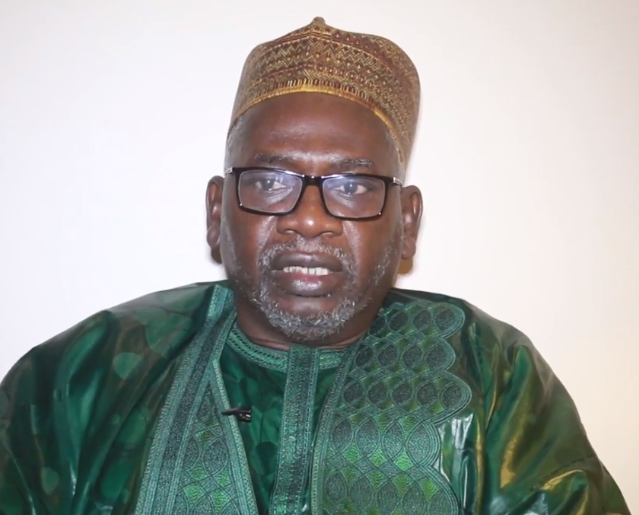
Sénégal: Institutional Impasse Between Parliament and Executive Deepens
Summary
- Senegal is experiencing a severe political crisis marked by deep institutional fractures.
- The National Assembly, led by Ousmane Sonko and holding a Pastef majority, is actively blocking the executive branch.
- This confrontation represents an unprecedented institutional impasse at the highest levels of government.
- Tensions leading to this standoff have been escalating for several months.
- An analysis by Cheikh Ibrahima Diallo has issued a 'red alert' regarding the gravity of the situation.
What Happened
The scenario of the Assemblée Nationale, with its Pastef majority, actively blocking the executive branch is a critical development in the ongoing Sénégal political crisis, signaling a severe disruption in the normal mechanisms of state administration and decision-making.
Senegal is currently experiencing a political crisis of exceptional intensity, which has brought to light deep-seated institutional fractures within the nation's governance structure. This period of heightened instability is the culmination of tensions that have been simmering for many months, now manifesting as a direct and unprecedented confrontation at the highest levels of state power. The current situation represents a significant challenge to the traditional functioning of government, as the legislative and executive branches find themselves in a profound standoff, contributing to a widespread sense of uncertainty.
The epicenter of this Sénégal institutional impasse is the National Assembly, where the Pastef party commands a solid majority. Under the leadership of its president, Ousmane Sonko, this parliamentary body has taken decisive actions that effectively impede the executive's ability to govern. The scenario of the Assemblée Nationale, with its Pastef majority, actively blocking the executive branch is a critical development in the ongoing Sénégal political crisis, signaling a severe disruption in the normal mechanisms of state administration and decision-making. This legislative obstruction has transformed long-standing political friction into an overt governmental paralysis, demanding urgent attention.
Legal Context
The current institutional impasse in Senegal directly implicates fundamental principles of democratic governance, particularly the concept of the separation of powers. In systems designed to prevent the concentration of authority, distinct branches of government—legislative, executive, and judicial—are intended to operate with checks and balances, ensuring accountability and preventing overreach. When one branch, such as the parliament, actively blocks the executive, it signifies a breakdown in this delicate balance, potentially leading to legislative gridlock and an inability for the state to effectively implement policy or administer its functions.
The situation, as described by Cheikh Ibrahima Diallo in his analysis, has reached a 'red alert' level, indicating a severe departure from the expected operational harmony between state institutions. Such a sustained blockage by the Assemblée Nationale against the executive suggests that the mechanisms intended to facilitate cooperation and resolution between branches may be failing. This type of governmental paralysis, where the legislative body with its Pastef majority Senegal actively obstructs the executive, challenges the very framework of governmental efficiency and the rule of law, raising questions about the stability of the nation's constitutional order and the efficacy of Sénégal séparation des pouvoirs.
Why It Matters
The ongoing Sénégal political crisis and the resulting institutional impasse carry significant implications for the nation's stability and its operational environment. For lawyers and compliance officers, this situation signals a period of heightened uncertainty and potential disruption. Legislative gridlock, a direct consequence of the parliament blocking the executive, can lead to delays in the passage of crucial laws and regulations, creating an unpredictable legal landscape for businesses and citizens alike.
Furthermore, the inability of the executive to effectively implement policies due to parliamentary obstruction could result in significant delays in governmental projects and services. This regulatory uncertainty can impact contract enforceability, investment decisions, and the overall ease of doing business in Senegal. The 'red alert' issued in Cheikh Ibrahima Diallo's analysis underscores the gravity of this situation, suggesting that the current breakdown in the Sénégal séparation des pouvoirs could have far-reaching consequences, affecting not only political stability but also economic predictability and the integrity of the legal framework.
Practical Implications
Lawyers and compliance officers operating in Senegal should closely monitor this institutional impasse, as it could lead to legislative gridlock, delays in policy implementation, and increased regulatory uncertainty, potentially impacting business operations, contract enforceability, and the overall stability of the legal framework.
Source
How does this affect you?
Get an AI analysis of this article grounded in your jurisdictions, practice areas, and any policy documents you've uploaded to Wansom.
Finish Reading the Full Story and the Expert Analysis.
Wansom is AI and can make mistakes.