
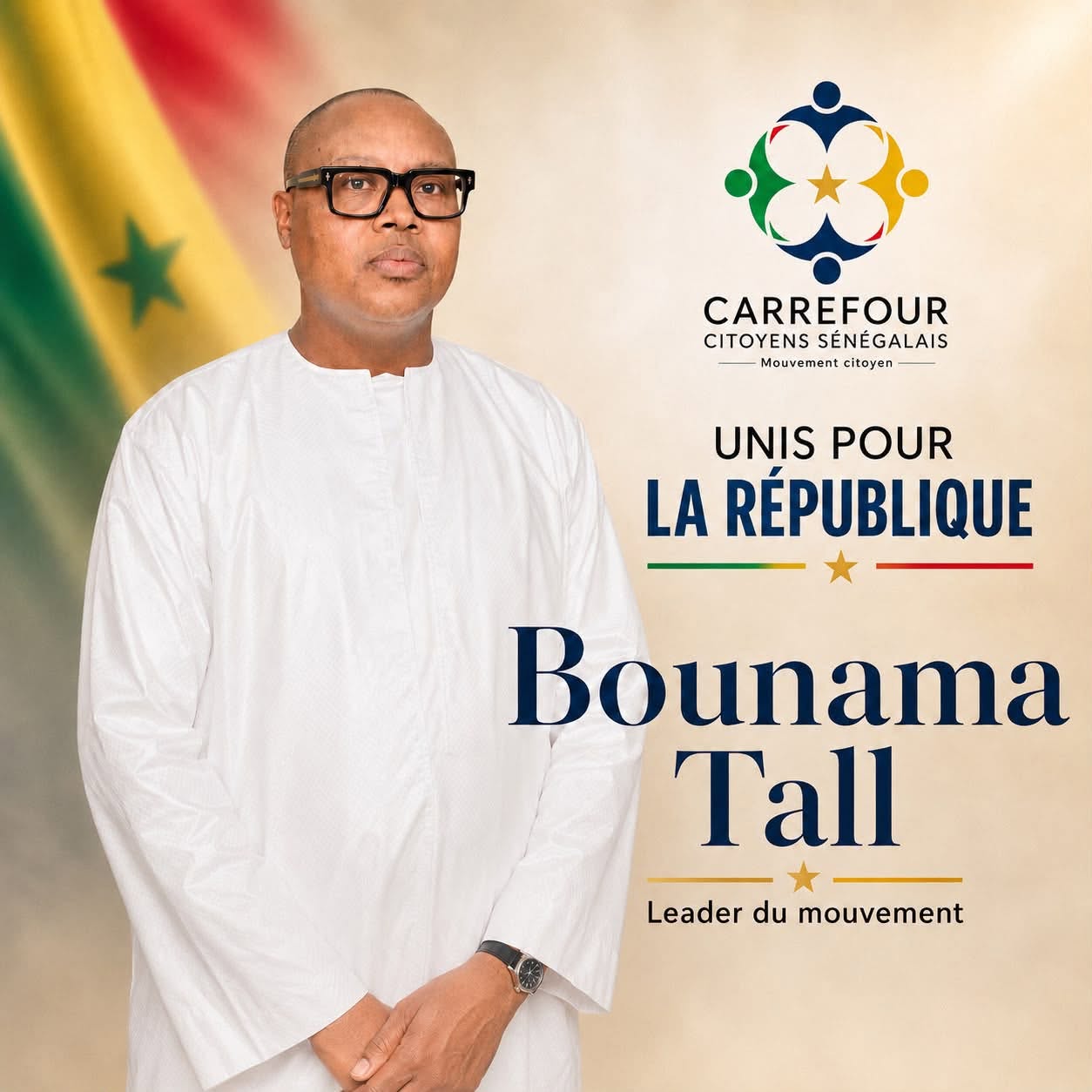
Sénégal FMI Accord: Carrefour Citoyen Welcomes $2.2 Billion Deal
Summary
- The Carrefour citoyen movement, led by Bounama Tall, has welcomed Senegal's new $2.2 billion agreement with the IMF, viewing it as a return to normalized relations with international financial institutions.
- The accord follows an IMF mission led by Mercedes Vera Martin and addresses a challenging economic outlook, including a revised 2.2% growth forecast and a 6.2% current account deficit for 2026.
- This new agreement comes nearly three years after a previous $1.8 billion program was suspended due to concerns over public finances and alleged undeclared debt.
- Carrefour citoyen prioritizes the resumption and expansion of family security scholarships for household protection and praises the partial settlement of state debts to businesses.
- The movement emphasizes that external financing is just the beginning, calling for clearer rules, greater transparency, and a competitive framework to attract and protect private and foreign investment in Senegal.
New IMF Agreement Welcomed Amidst Economic Challenges
The movement firmly asserts that a national economy cannot sustain itself effectively when the government accumulates significant debts to those who produce, invest, and employ within the country.
The Carrefour citoyen movement, a political group within the Républicains unis led by Bounama Tall, has publicly welcomed a new financial accord between Senegal and the International Monetary Fund (IMF). This significant Sénégal FMI accord is viewed by the movement as a crucial step towards re-establishing normalized relations between Dakar and key international financial institutions, including the Bretton Woods institutions Sénégal.
The agreement follows an intensive mission by an IMF delegation to Dakar, which took place from August 19 to September 1, 2026. The discussions, led by Mercedes Vera Martin, the IMF's mission chief for Senegal, centered on the nation's budgetary trajectory, its financing requirements, and essential measures to bolster the economy. This new phase of collaboration comes at a time when Senegal faces considerable economic pressures, making the $2.2 billion agreement particularly vital.
Despite the positive reception, the economic outlook remains challenging. The IMF has adjusted its growth forecast for Senegal downwards to 2.2% for 2026, while the current account deficit is projected to reach 6.2% of the Gross Domestic Product in the same year. In this context, the resumption of social payments and the resolution of outstanding public arrears are highlighted as critical economic and social imperatives.
Addressing Past Financial Instability
The current Sénégal FMI accord is not the first of its kind, but it emerges from a period of financial turbulence. Carrefour citoyen recalls that a previous program, valued at approximately $1.8 billion, was initially signed with the IMF under the former administration. However, this earlier agreement was subsequently suspended following revelations and inquiries into the true state of public finances and allegations of undeclared debt.
Nearly three years after the suspension of the prior arrangement, Senegal has now secured this new $2.2 billion agreement. The movement underscores that this renewed partnership occurs within a difficult economic and financial landscape, marked by the aforementioned modest growth projections and a significant current account deficit. Bounama Tall and his supporters emphasize the need for a clear-eyed approach, acknowledging the time lost and the costs incurred due to uncertainty, but stressing that the focus must now shift decisively towards economic recovery.
Prioritizing Household Protection and Public Arrears
A key demand from Carrefour citoyen, central to the Sénégal IMF agreement household protection, is the immediate restart of payments for family security scholarships. Furthermore, the movement advocates for the expansion of these scholarships, particularly in anticipation of the upcoming school year, viewing this as direct and tangible support for households most vulnerable to economic hardship.
The Carrefour citoyen also commends the partial settlement of outstanding debts owed by the state to various businesses. According to the Républicains unis, the apurement des arriérés publics, or the clearing of these public arrears, is essential for injecting liquidity back into economic actors, helping to preserve jobs, and fostering a gradual resurgence of economic activity. The movement firmly asserts that a national economy cannot sustain itself effectively when the government accumulates significant debts to those who produce, invest, and employ within the country.
Fostering Investment and Transparency
While welcoming the external financing, Carrefour citoyen views the new Sénégal FMI accord as merely a starting point. The movement strongly advocates for fundamental changes designed to reassure investors, enhance the protection of Sénégal investissement privé FMI, and actively encourage the inflow of foreign direct investment. Senegal, they argue, possesses substantial economic resources whose full potential can only be unlocked under specific conditions.
To truly capitalize on its economic strengths, the nation must offer investors a framework characterized by clearer regulations, increased transparency, and a genuinely competitive environment. This imperative for improved governance and a more predictable investment climate is considered paramount for sustainable growth and long-term economic stability.
Practical Implications
Lawyers advising businesses in Senegal should note the renewed focus on clearing public arrears and improving the investment climate through greater transparency and competitive frameworks. This signals potential regulatory reforms and improved financial stability for companies dealing with the state, requiring vigilance on evolving contractual terms and investment conditions.
Source
Source: Original reporting via xalimasn
How does this affect you?
Get an AI analysis of this article grounded in your jurisdictions, practice areas, and any policy documents you've uploaded to Wansom.
Finish Reading the Full Story and the Expert Analysis.
Wansom is AI and can make mistakes.