
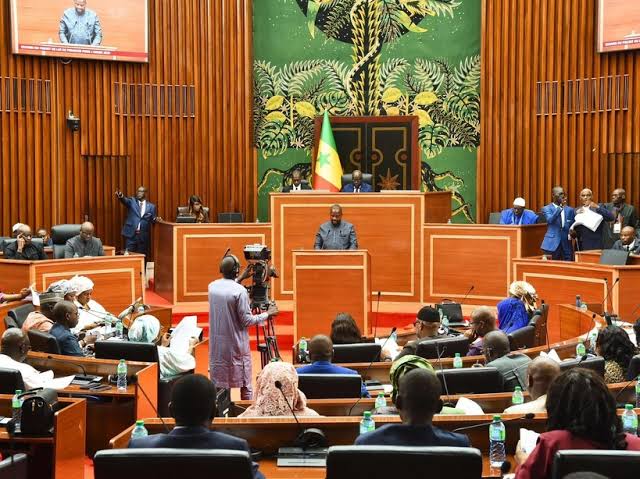
Sénégal Assemblée Nationale: LFI 2027 Rejetée Via Question Préalable
Summary
- Senegal's National Assembly rejected the Initial Finance Law (LFI) 2027 on November 18, 2026, by approving a "question préalable."
- This procedural vote halted the examination of the budget without any debate on its content.
- The decision followed commission votes on November 17, 2026, which blocked 26 ministerial budgets totaling 5,572 billion CFA francs.
- The parliamentary majority, Pastef, justified its opposition by citing a lack of "sincerity budgétaire" from the executive.
- The governmental camp accused Pastef, which holds 130 of 165 seats, of parliamentary obstruction.
The Rejection of LFI 2027
The abrupt rejet budget Sénégal 2027 without a comprehensive debate introduces substantial uncertainty for both businesses and individuals operating within Senegal.
On Wednesday, November 18, 2026, the Senegalese National Assembly experienced a pivotal moment as deputies approved a "question préalable," effectively halting the legislative process for the Initial Finance Law (LFI) 2027. This procedural vote meant that the proposed budget for the upcoming fiscal year would not undergo a detailed discussion of its specific provisions or content. The decision by the Sénégal Assemblée nationale to enact this LFI 2027 rejet without a substantive debate marks a significant development in the country's legislative calendar, setting the stage for considerable uncertainty regarding the nation's financial framework for the coming year.
Procedural Maneuver and Preceding Events
The "question préalable" is a parliamentary mechanism designed to conclude the examination of a legislative document before its specific articles and clauses can be debated. Its adoption during the plenary session on November 18, 2026, followed a series of unfavorable votes that had occurred at the commission level. Just one day prior, on November 17, 2026, parliamentary commissions had already blocked the budgets for 26 different ministries. These preliminary rejections in commission represented a substantial financial sum, totaling 5,572 billion CFA francs. However, it is crucial to note that these earlier commission votes, while significant, did not constitute a definitive rejet budget Sénégal 2027 for the entire proposed financial law. The plenary vote on the "question préalable" was the decisive action that brought the LFI 2027 process to an abrupt halt.
Political Standoff and Accusations
The parliamentary majority, represented by the Pastef party, was instrumental in the decision to reject the LFI 2027. This political bloc, which commands a significant presence with 130 out of the 165 seats in the National Assembly, justified its Pastef opposition budget stance by accusing the executive branch of a fundamental lack of "sincerity budgétaire." This accusation suggests a deep-seated disagreement over the transparency and integrity of the proposed financial plan. Conversely, the governmental camp swiftly condemned Pastef's actions, characterizing them as a deliberate strategy of obstruction parlementaire Sénégal. This exchange highlights a tense political environment, where procedural maneuvers are being utilized in a broader struggle over fiscal policy and governmental accountability.
Uncharted Fiscal Territory
The abrupt rejet budget Sénégal 2027 without a comprehensive debate introduces substantial uncertainty for both businesses and individuals operating within Senegal. This legislative outcome leaves a void regarding the nation's fiscal and regulatory landscape for the upcoming year, as the framework for government spending, revenue collection, and economic policy remains undefined. Legal and compliance professionals are now faced with the critical task of advising their clients to closely monitor all subsequent legislative developments. The eventual adoption of a new finance law, which will inevitably follow this rejection, will directly impact financial planning, tax obligations, and various compliance requirements across all sectors, necessitating careful attention to its provisions once they are established.
Practical Implications
The rejection of the LFI 2027 without debate creates significant uncertainty for businesses and individuals regarding Senegal's fiscal and regulatory landscape for the upcoming year. Lawyers and compliance officers should advise clients to closely monitor the legislative developments for the eventual adoption of a new finance law, as its provisions will directly impact financial planning, tax obligations, and compliance requirements.
Source
How does this affect you?
Get an AI analysis of this article grounded in your jurisdictions, practice areas, and any policy documents you've uploaded to Wansom.
Finish Reading the Full Story and the Expert Analysis.
Get the latest legal & regulatory intelligence in Senegal
Wansom is AI and can make mistakes.