
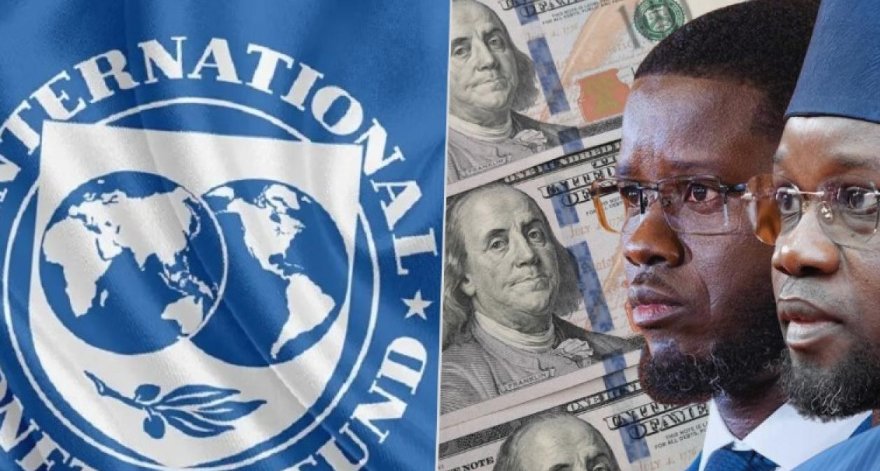
Sénégal FMI Accord Conditions: $2.2 Billion Deal Hinges on 3 Terms
Summary
- Senegal needs to meet three conditions to finalize a $2.2 billion agreement with the International Monetary Fund.
- The National Assembly rejected the revised finance bill (PLFR 2026), complicating a key budgetary condition.
- Corrective measures are required for erroneous declarations concerning "hidden debt," which damaged market perception.
- The FMI also demands financing assurances from official creditors to ensure debt sustainability.
- Discussions have led to a technical agreement, but final budgetary steps and creditor assurances are still pending.
Senegal's Path to IMF Funding
The revelation of this hidden debt by Ousmane Sonko significantly damaged market perception of Senegal and exacerbated existing political tensions within the country.
Senegal is currently working to secure the final validation of a significant 2.2 billion dollar agreement with the Fonds monétaire international (FMI). This crucial financial package hinges on the fulfillment of three specific conditions, which remain outstanding following recent legislative setbacks. The country's National Assembly notably rejected the revised finance bill, known as the PLFR 2026 Sénégal, indicating ongoing challenges in aligning domestic policy with international financial requirements.
The broader context involves a national debt burden estimated at 132% of GDP, making the FMI's support vital for economic stability. Discussions surrounding the 2.2 billion dollars are deeply intertwined with debates over who will bear the costs of the nation's indebtedness and the terms of international assistance. These conditions are essential for the FMI to present the program to its Executive Board for approval, underscoring the urgency of addressing these requirements.
Legislative and Budgetary Challenges
A primary condition set by the FMI requires Senegal to establish a budgetary framework that aligns with the commitments outlined in the program. This has proven challenging, as evidenced by the National Assembly's rejection of the PLFR 2026. Furthermore, the initial finance bill for 2027 (PLFI 2027) has not yet received approval from the Finance and Budget Control Commission, highlighting persistent difficulties in legislative consensus.
Political disagreements surrounding debt management have complicated the adoption of these budgetary texts. Prime Minister Ahmadou Al Aminou Mohamed Lô had urged the Pastef party, which commands a substantial majority with 130 out of 165 seats in the Assembly, to support the revised budget. However, Pastef contributed to the bill's rejection in committee due to a lack of consensus, not contesting the principle of revision itself, but rather its specific budgetary choices, financing methods, and the guarantees offered to Parliament. Julie Kozack, Director of the FMI's Communications Department, emphasized on November 12 that the agreed budgetary steps must be finalized before the program can be presented to the Board, while also clarifying that the FMI does not intervene in the relationship between the government and the National Assembly.
Addressing Hidden Debt and Transparency
The second key condition from the FMI focuses on implementing corrective measures to rectify erroneous declarations related to what has been termed "dette cachée Sénégal FMI." The revelation of this hidden debt by Ousmane Sonko significantly damaged market perception of Senegal and exacerbated existing political tensions within the country. This issue underscores the critical need for enhanced transparency in public finances and greater reliability in budget execution reports.
The existence of undisclosed debt not only eroded investor confidence but also made the allocation of budgetary responsibilities a more sensitive and contentious issue. The FMI's requirement aims to ensure that future financial reporting accurately reflects the nation's fiscal health, thereby rebuilding trust and providing a clearer picture for both domestic stakeholders and international partners. These measures are crucial for fostering a stable and predictable economic environment.
Securing Creditor Assurances
The third condition mandates that Senegal obtain financing assurances from its official creditors, particularly concerning the treatment of the nation's existing debt. This requirement is not necessarily about immediately unlocking new funds but rather about ensuring that the proposed debt treatment will contribute to restoring its long-term sustainability. The Fonds monétaire international seeks confirmation that the resources provided through its program will not merely be used to repay other creditors, but rather to support a comprehensive strategy for fiscal health.
Zeine Zeidane, head of the FMI's Africa Department, clarified on October 16 that approval from the members of the Official Creditors Committee for Senegal's proposal is a prerequisite for the FMI to submit the program to its Board of Directors. While discussions between the FMI and Senegal have been described as constructive, leading to a technical agreement on September 1st after an eighth mission since the presidential election, these crucial budgetary steps and necessary assurances have not yet been fully finalized.
Practical Implications
Lawyers advising clients on public finance, investment, or compliance in Senegal should closely monitor the government's progress in meeting the IMF's conditions, particularly regarding budgetary transparency and the resolution of 'hidden debt' issues. These developments directly impact the country's financial stability, regulatory environment, and potential for future economic reforms, which could affect contractual obligations and investment risks.
Source
How does this affect you?
Get an AI analysis of this article grounded in your jurisdictions, practice areas, and any policy documents you've uploaded to Wansom.
Finish Reading the Full Story and the Expert Analysis.
Get the latest legal & regulatory intelligence in Senegal
Wansom is AI and can make mistakes.