
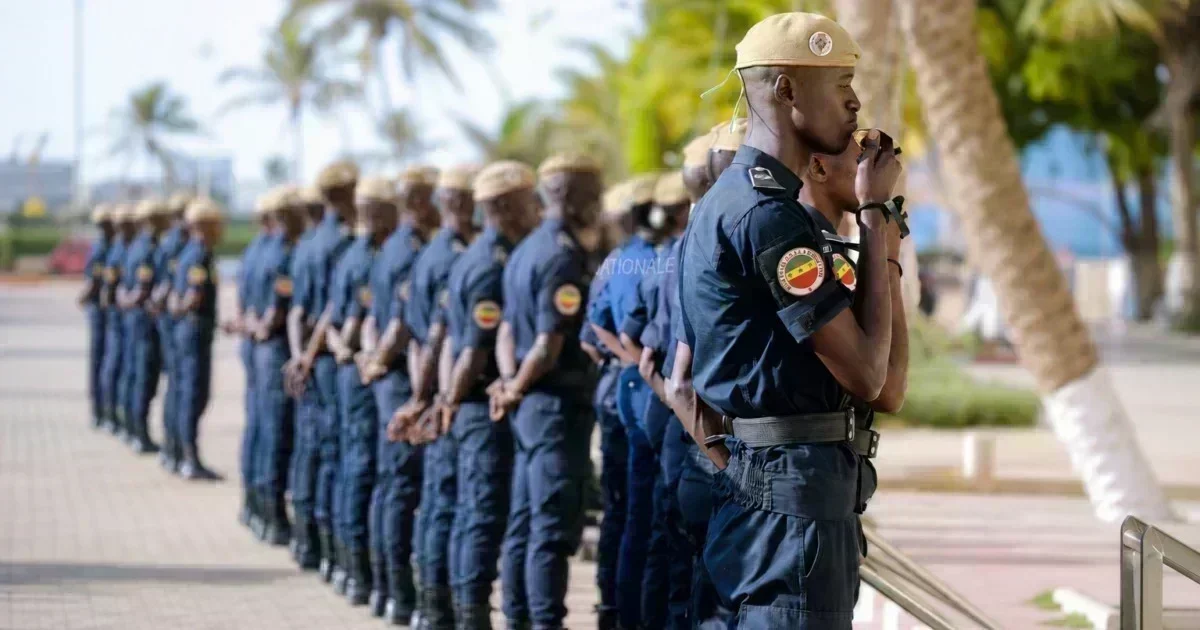
Sénégal: 49e Promotion Police Licenciement Affects 86 Agents
Summary
- Nearly a hundred agents from the 49th promotion of Senegal's National Police School have been dismissed.
- These agents reportedly endured nearly two years without salary during their two-year training period.
- The official reason for dismissal, insufficient grades, is disputed by the affected individuals.
- The 49th promotion initially consisted of 261 graduates, including commissioners, officers, and non-commissioned officers, presented on May 12, 2026.
- Minister of Interior Mouhamadou Bamba Cissé had previously described wearing the police uniform as a "sacerdoce."
What Happened
The combination of disputed dismissal grounds and a significant period of unpaid service underscores the potential for legal and social ramifications, prompting scrutiny of the state's obligations towards its trainees and employees.
A significant number of recruits from the 49th promotion of Senegal's National Police School have reportedly been dismissed from service. These agents, who had completed two years of training, were informed of their termination after enduring a period of nearly two years without receiving any salary. According to reports from SeneNews, the decision affects close to a hundred individuals from this particular cohort, highlighting a critical issue for the Sénégal 49e promotion police licenciement.
The official reason communicated for these dismissals points to inadequate academic performance, specifically an insufficiency of grades achieved during their training period. However, the affected agents vehemently contest this justification, suggesting a potential dispute over the validity of the grounds for their termination. This development raises questions about the process and fairness of public sector employment termination within the Senegalese police force, particularly concerning the Police nationale Sénégal licenciement.
Background and Context
The 49th promotion, which is now at the center of this controversy, was initially presented as a substantial reinforcement for the nation's security apparatus. Upon its graduation on May 12, 2026, a total of 261 new graduates from the École nationale police 49e promotion were publicly introduced, poised to integrate into the police public service. This cohort was diverse in its composition, comprising 27 commissioners, 73 officers, and 161 non-commissioned officers, reflecting a broad spectrum of future leadership and operational roles.
At the time of their graduation, the then Minister of Interior, Mouhamadou Bamba Cissé, underscored the profound responsibility associated with police work. He characterized the act of wearing the uniform not merely as a profession but as a "sacerdoce," emphasizing the gravity and dedication required of those entering the force. This initial high expectation and formal recognition stand in stark contrast to the current predicament faced by a significant portion of this very promotion, whose careers have now been abruptly cut short.
Legal and Human Implications
Beyond the immediate issue of job loss, the circumstances surrounding these dismissals present several layers of concern, particularly regarding the legal framework governing public service employment in Senegal. The agents' contention of the stated reason for their termination—insufficient grades—suggests a potential challenge to the administrative decision, possibly on grounds of due process or the objective assessment of their performance. This situation could set a precedent for future cases involving licenciement fonction publique Sénégal.
Furthermore, the revelation that these agents endured nearly two years without receiving any salary during their training period adds a critical dimension to their plight. A member of the promotion highlighted the severe personal toll, stating that families were disrupted and dislocated as a direct consequence of the prolonged lack of income. Despite these immense hardships, the same individual noted that the agents navigated this challenging period with remarkable dignity. The combination of disputed dismissal grounds and a significant period of unpaid service underscores the potential for legal and social ramifications, prompting scrutiny of the state's obligations towards its trainees and employees, especially for the 86 agents police sans salaire Sénégal.
Practical Implications
This case highlights potential legal challenges regarding public sector employment termination in Senegal, particularly concerning due process, grounds for dismissal (e.g., performance vs. pay issues), and the rights of public agents to remuneration. Lawyers should monitor the outcome for precedents on administrative appeals and labor disputes within the Senegalese public service.
Source
Source: Original reporting via SeneNews
How does this affect you?
Get an AI analysis of this article grounded in your jurisdictions, practice areas, and any policy documents you've uploaded to Wansom.
Finish Reading the Full Story and the Expert Analysis.
Get the latest legal & regulatory intelligence in Senegal
Wansom is AI and can make mistakes.