
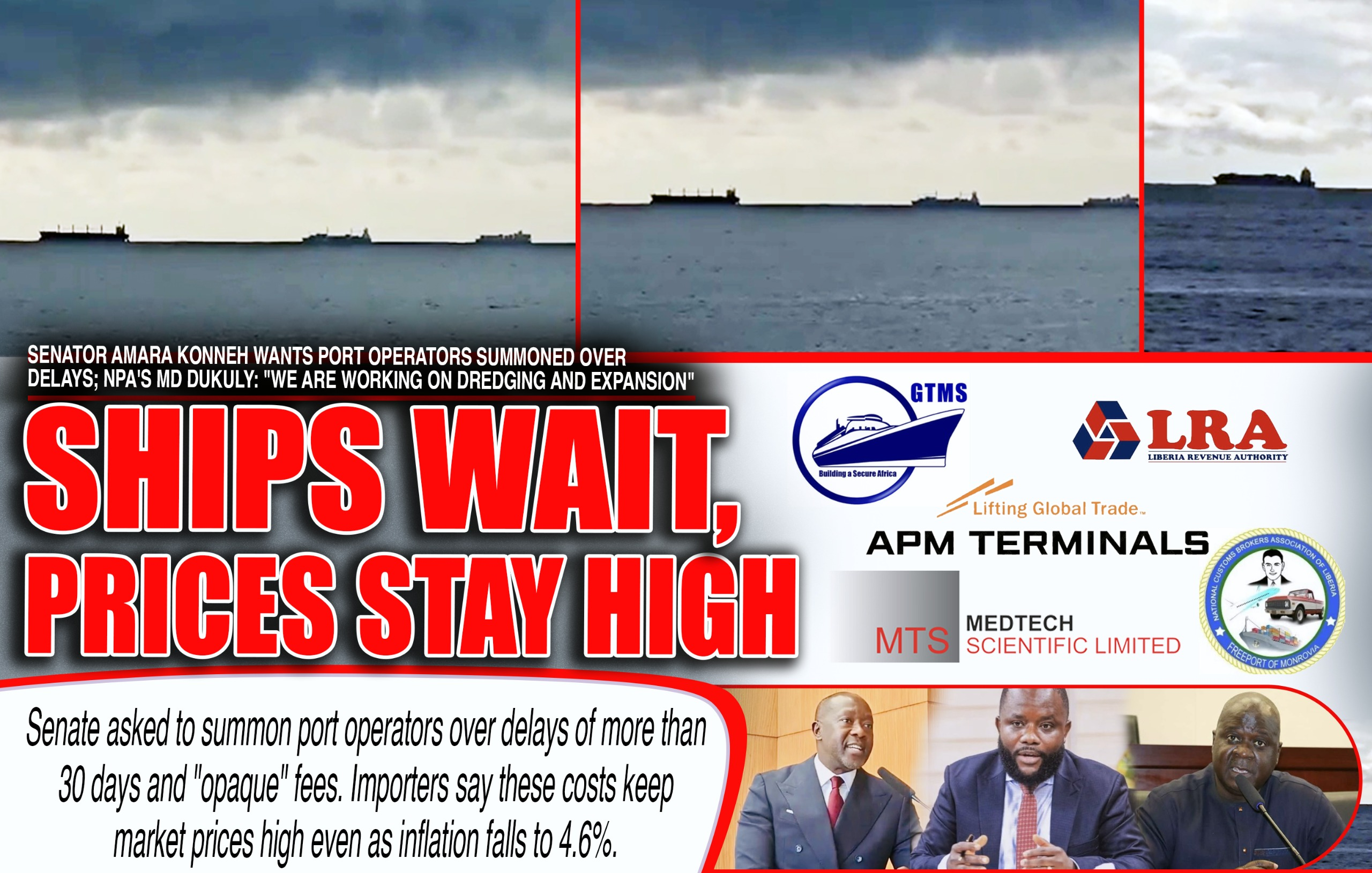
Senator Konneh: Liberia Port Inquiry Targets Delays, High Costs
Summary
- Senator Amara M. Konneh has requested the Liberian Senate to summon port operators and government agencies to address severe delays and high costs at the Freeport of Monrovia.
- Importers report containers spend over 30 days at sea before berthing, leading to significant demurrage fees and stock-outs.
- The delays are attributed to a lack of yard space and prolonged dredging operations, which prevent larger vessels from docking.
- NPA Managing Director Sekou Dukuly confirmed ongoing dredging and expansion efforts without providing a timeline or cost.
- These port issues contribute to stubbornly high consumer prices in Liberia, potentially undermining national economic stabilization efforts despite falling inflation.
What Happened
The continuous passing of demurrage fees and other opaque charges from importers to consumers effectively negates the benefits of the national reform program.
The Freeport of Monrovia, Liberia's primary entry point for essential imports including food, fuel, and construction materials, is currently experiencing significant operational challenges. Multiple cargo vessels have been observed anchored offshore, awaiting berths, a situation visually evident from the city's beaches. This backlog directly impacts Liberian importers, who face escalating costs as their goods remain at sea, expenses that are ultimately passed on to the nation's consumers.
In response to these persistent issues, Senator Amara M. Konneh of Gbarpolu County initiated a formal inquiry. On October 25, 2026, Senator Konneh, a former Minister of Finance and Development Planning, addressed a letter to President Pro-Tempore Nyonblee Karnga-Lawrence, requesting the Liberian Senate to summon key port operators and government agencies. The objective of this summons, to be conducted before the full Senate sitting as a Committee of the Whole, is to obtain explanations regarding "protracted delays of containers, high transaction costs, and their impact on businesses and consumer prices."
Senator Konneh's call for a comprehensive inquiry stems from months of "serious and persistent complaints" received from the business community, particularly small and medium-sized enterprises (SMEs). These businesses report that containers destined for Liberia now routinely spend more than 30 days at sea before they can berth in Monrovia. Many of these vessels are reportedly being diverted to and held at ports in neighboring Côte d'Ivoire and Ghana, exacerbating the delays and associated costs for Liberian imports.
Operational and Financial Strain
The extended waiting periods for vessels at the Freeport of Monrovia are attributed to two primary factors, according to Senator Konneh. Firstly, there is a reported lack of adequate yard space within the Freeport to accommodate the volume of incoming containers. Secondly, the prolonged nature of dredging operations for the port basin and channel prevents larger vessels from berthing, further contributing to the congestion. National Port Authority (NPA) Managing Director Sekou Dukuly acknowledged these concerns, stating that the authority is "working on dredging and expansion," though he did not provide specific timelines or cost estimates for these projects.
These operational inefficiencies impose substantial financial burdens on businesses. Senator Konneh highlighted that the delays severely impact business inventories, tie up crucial working capital, and lead to stock-outs of essential goods. A significant component of these costs is demurrage, which represents the daily penalties levied by shipping lines when containers are held beyond their agreed-upon free period. Given Liberia's import-dependent economy, these demurrage charges, alongside other transaction costs, are rarely absorbed by businesses and are instead transferred directly to consumers through higher retail prices.
Beyond demurrage, importers also contend with a "multiplicity of opaque fees" once their goods arrive at the dock. Senator Konneh specifically identified several entities involved in charging these fees within the cargo-clearance chain. These include APM Terminals, which operates the Freeport's container terminal under a long-term concession agreement with the Liberian government, as well as MEDTECH Scientific Limited and Global Tracking and Maritime Solutions (GTMS), among other actors in the supply chain. These additional charges further inflate the cost of goods for Liberian consumers.
Broader Economic Implications
The ongoing challenges at the Freeport of Monrovia, as highlighted by the Senator Konneh Liberia port inquiry, pose a direct threat to Liberia's broader economic stability. Senator Konneh pointed out a perplexing economic paradox: despite positive macroeconomic indicators, consumer prices remain stubbornly high. Official data indicates that headline inflation has decreased to 4.6 percent, and the Liberian dollar has strengthened against the US dollar. These developments are generally seen as signs of progress under the government's economic stabilization program, which is supported by an International Monetary Fund (IMF) Extended Credit Facility.
However, the persistent high consumer prices suggest that these macroeconomic gains are not translating into tangible relief for ordinary Liberians. Senator Konneh argues that the inefficiencies and escalating costs at the port are a significant underlying cause of these "sticky prices." The continuous passing of demurrage fees and other opaque charges from importers to consumers effectively negates the benefits of the national reform program.
The Senator's letter warned that if these port-related problems are not addressed with urgency, they will continue to undermine the progress achieved through economic reforms. The inquiry aims to shed light on these critical issues, seeking solutions to mitigate the financial strain on businesses and consumers and to ensure that the gains from economic stabilization efforts are not eroded by operational bottlenecks at the nation's most vital port.
Practical Implications
Lawyers advising clients engaged in Liberian import/export should review supply chain contracts for clauses addressing demurrage and unexpected port-related costs, as the ongoing delays and opaque fees at the Freeport of Monrovia present significant financial risks. Compliance officers should monitor the Liberian Senate's inquiry into port operations for potential regulatory changes or increased enforcement actions against port operators and service providers.
Source
How does this affect you?
Get an AI analysis of this article grounded in your jurisdictions, practice areas, and any policy documents you've uploaded to Wansom.
Wansom is AI and can make mistakes.