
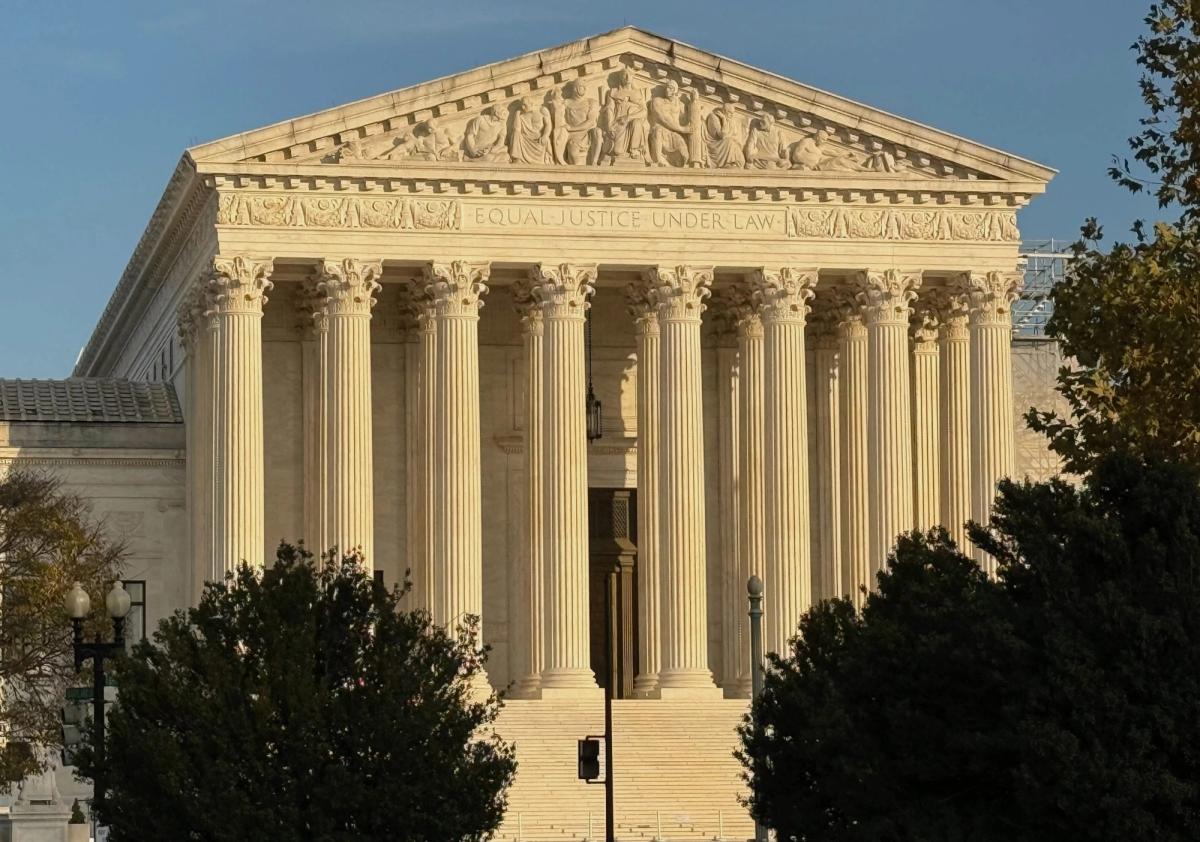
SCOTUS to Hear Montgomery Race-Neutral Affirmative Action Case
Summary
- The Supreme Court granted certiorari on October 19 in Association for Education Fairness v. Montgomery County Board of Education.
- This case could be a definitive ruling on the future legality of "race-neutral affirmative action" policies.
- The Students for Fair Admissions ruling previously outlawed direct racial preferences in university admissions.
- "Race-neutral affirmative action" involves using characteristics correlated with race, such as specific zip codes or language, to achieve diversity.
- Legal scholars and practitioners hold differing views on the legality of these race-proxy methods.
What Happened
The Association for Education Fairness v. Montgomery County Board of Education case will compel the Supreme Court to directly address the legality of policies that use race-neutral criteria to achieve racial diversity.
The Supreme Court recently agreed to hear a pivotal case, Association for Education Fairness v. Montgomery County Board of Education, on October 19. This decision to grant certiorari has significant implications for the future of affirmative action in the United States, potentially serving as a definitive ruling on the practice. While some might assume the high court already settled the matter with its Students for Fair Admissions, Inc. v. President & Fellows of Harvard College decision, that ruling specifically targeted direct racial preferences in university admissions, declaring them unlawful at institutions like Harvard and the University of North Carolina.
However, the legal landscape surrounding diversity initiatives remains complex. Following the SFFA judgment, many academic experts have begun advocating for strategies termed "race-neutral affirmative action." These approaches aim to foster diversity by focusing on characteristics that correlate with racial identity, rather than explicitly using race as a selection criterion. The Montgomery case is poised to scrutinize the legality of these indirect methods, which have become a focal point for institutions seeking to maintain diverse student bodies or workforces within the new legal framework.
The Evolving Landscape of Diversity Initiatives
"Race-neutral affirmative action" refers to programs designed to increase the representation of specific racial groups by prioritizing attributes that are statistically linked to those groups. Instead of directly considering an applicant's race, these programs might favor individuals from particular geographic areas, such as zip codes with predominantly Black populations, or those who grew up in environments like Indian reservations. Another common example involves giving preference to applicants for whom English is not their primary language. These are not hypothetical scenarios; universities that were previously prohibited from using race in their admissions processes have already implemented such policies.
A considerable number of proponents of affirmative action view these indirect, race-neutral methods as entirely permissible under existing law. They argue that by avoiding explicit racial classifications, these programs successfully navigate the legal restrictions imposed by prior court decisions. However, this perspective is not universally shared, and the Montgomery case will likely provide much-needed clarity on this contentious issue.
Legal Scrutiny of Race Proxies
The debate over whether these race-correlated characteristics constitute illegal proxies for race has a history. Critics, including some legal scholars, have long contended that selecting for attributes highly correlated with race is functionally equivalent to selecting for race itself, and therefore should be considered equally unlawful. This argument, however, became less prominent after the Supreme Court's 2003 ruling in Grutter v. Bollinger, which affirmed the legality of considering race as one factor in university admissions.
With the SFFA decision now prohibiting direct racial preferences, the legal spotlight has returned to these indirect methods. The Association for Education Fairness v. Montgomery County Board of Education case will compel the Supreme Court to directly address the legality of policies that use race-neutral criteria to achieve racial diversity. The outcome could significantly impact how educational institutions and other organizations approach diversity, equity, and inclusion efforts, potentially narrowing the scope of permissible strategies even further than the SFFA ruling. This review will determine if the court views these "race-neutral" approaches as legitimate tools for diversity or as impermissible workarounds for racial preferences.
Practical Implications
Lawyers advising educational institutions or employers on diversity, equity, and inclusion (DEI) initiatives must closely monitor the Association for Education Fairness v. Montgomery County Board of Education case. This SCOTUS review of 'race-neutral affirmative action' could significantly narrow permissible diversity strategies, requiring a re-evaluation of policies that use proxies for race to avoid potential legal challenges and compliance exposure.
Source
How does this affect you?
Get an AI analysis of this article grounded in your jurisdictions, practice areas, and any policy documents you've uploaded to Wansom.
Wansom is AI and can make mistakes.