
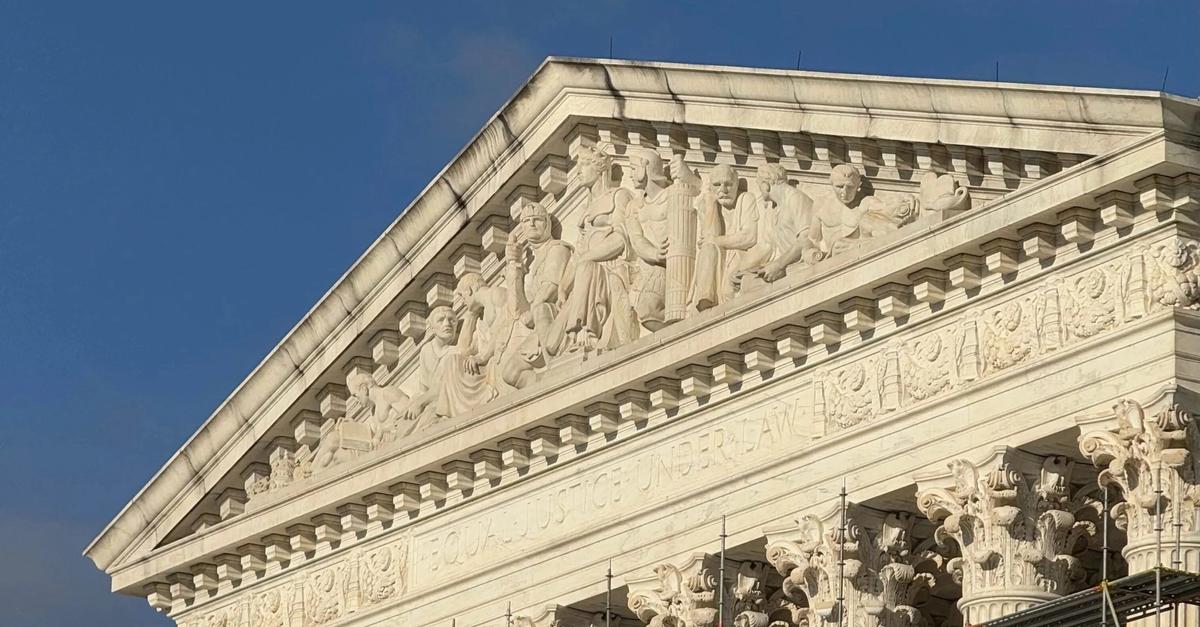
SCOTUS: DHS SAVE Voter Rolls Database Use Fully Briefed
Summary
- The Trump administration has asked the Supreme Court to allow the use of the Department of Homeland Security's SAVE database.
- This federal database, known as Systematic Alien Verification for Entitlements, would be used to identify noncitizens on state voter rolls.
- Groups challenging the administration's plan have filed their response, making the dispute fully briefed before the Supreme Court.
- A decision from the Supreme Court on this matter, which could impact election integrity challenges, is expected at any time.
Supreme Court Considers Federal Data for Voter Rolls
The Supreme Court is currently considering a request from the Trump administration to utilize the Department of Homeland Security's Systematic Alien Verification for Entitlements (SAVE) database to identify noncitizens listed on state voter rolls.
The Supreme Court is currently considering a request from the Trump administration to utilize the Department of Homeland Security's Systematic Alien Verification for Entitlements (SAVE) database to identify noncitizens listed on state voter rolls. This initiative seeks to leverage federal data to scrutinize the eligibility of voters at the state level, a move that has drawn significant attention and opposition. The administration's petition asks the nation's highest court to clear the path for this proposed use of the federal database.
Groups challenging this plan have formally responded to the administration's request, submitting their arguments to the Supreme Court. With all necessary legal documents now filed, the dispute is fully briefed, indicating that the Court has all the information it needs to render a decision. Consequently, a ruling from the Supreme Court on this matter could be issued at any moment, potentially reshaping how voter eligibility is verified across states.
The SAVE Database and Its Proposed Application
The Department of Homeland Security's SAVE database, or Systematic Alien Verification for Entitlements, is a federal resource designed to assist agencies in determining the immigration status of applicants for various benefits. The Trump administration's proposal aims to repurpose this existing federal tool as a Supreme Court citizenship database, specifically for noncitizen voter identification. The objective is to cross-reference state voter rolls with the SAVE database to pinpoint individuals who may not be eligible to vote due to their citizenship status.
This proposed application of the SAVE database represents a significant effort to integrate federal data with state election administration. The administration's argument centers on the premise that this integration is necessary to maintain the integrity of voter rolls by ensuring only eligible citizens participate in elections. The legal challenge, now fully briefed before the Supreme Court, contests the legality and implications of using this federal data for state voter verification.
Implications for Election Integrity and Voter Management
The Supreme Court's impending decision on the use of the DHS SAVE database for voter rolls carries substantial implications for election integrity challenges and the future of voter management. Should the Court grant the Trump administration's request, it could establish a precedent for the widespread use of federal data in verifying voter eligibility, potentially leading to a new era of scrutiny over state voter rolls. This could introduce new complexities for state election officials tasked with maintaining accurate and lawful voter lists.
Conversely, a decision against the administration's request would reinforce existing boundaries between federal data resources and state-level election administration. Regardless of the outcome, the case highlights ongoing debates surrounding the accuracy of voter rolls and the methods employed to ensure that only eligible citizens cast ballots. The resolution of this dispute by the Supreme Court will undoubtedly influence future discussions and policies related to federal data state voter rolls and noncitizen voter identification.
Practical Implications
Compliance officers and election lawyers should prepare for potential changes in voter roll management and challenges to voter eligibility based on the Supreme Court's upcoming decision regarding the DHS SAVE database.
Source
How does this affect you?
Get an AI analysis of this article grounded in your jurisdictions, practice areas, and any policy documents you've uploaded to Wansom.
Finish Reading the Full Story and the Expert Analysis.
Get the latest legal & regulatory intelligence in United States
Wansom is AI and can make mistakes.