
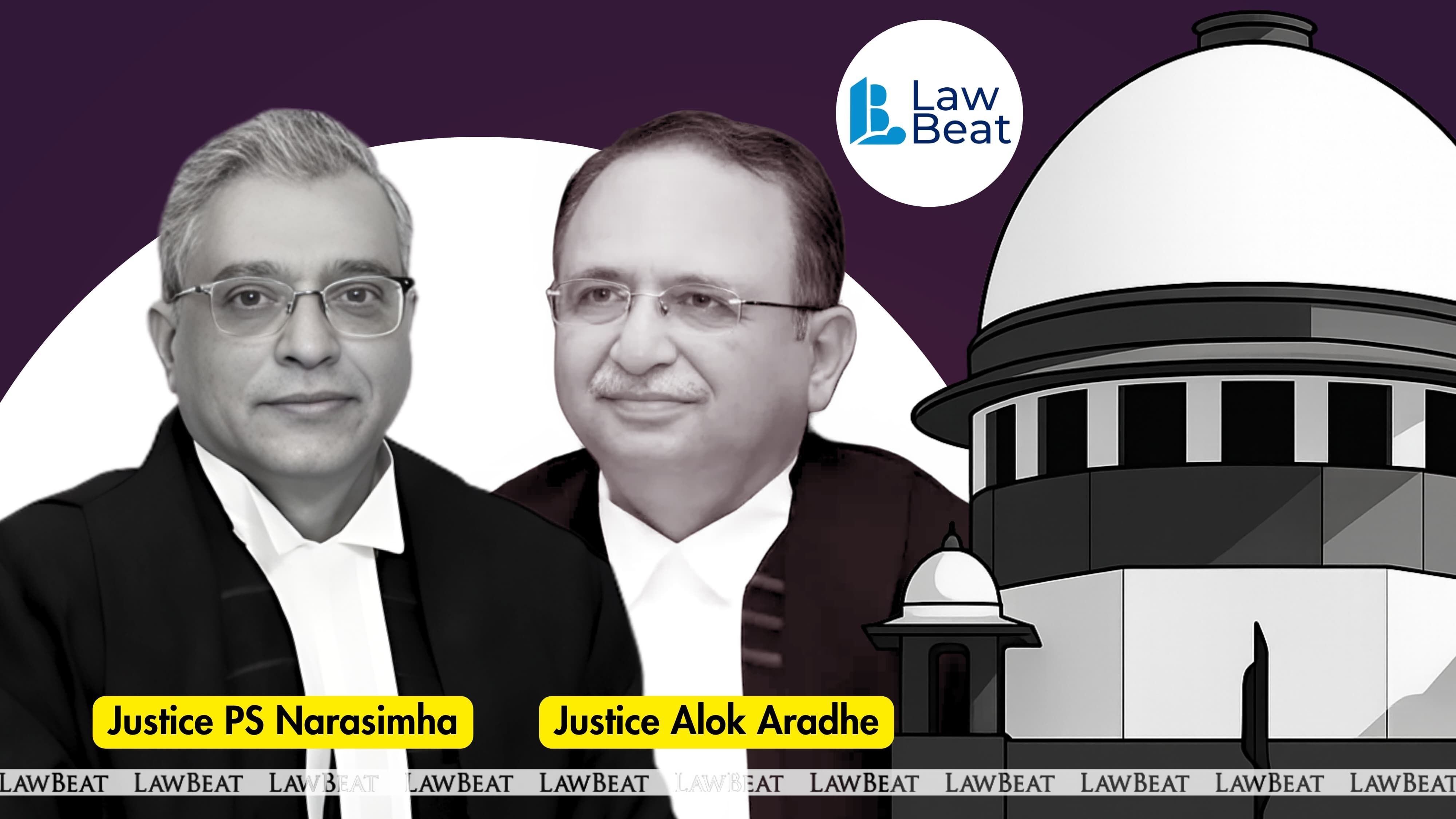
SC Refuses PIL: Journalist School Entry Restrictions in Rajasthan, UP Upheld
Summary
- The Supreme Court declined to entertain a PIL challenging restrictions on journalists and outsiders entering government schools in Rajasthan and Uttar Pradesh.
- The petition, filed by Priya Mishra, sought to overturn circulars requiring prior permission for entry and recording activities on school premises.
- Justices P.S. Narasimha and Alok Aradhe issued the order on September 1, 2026, refusing to intervene in the Article 32 writ petition.
- The petitioner argued the restrictions violated fundamental rights and hindered public interest reporting on school infrastructure deficiencies.
- The Court's decision means the prior permission requirements in these states for media and public access to government schools remain in effect.
Supreme Court Declines Intervention on School Access
Justices P.S. Narasimha and Alok Aradhe, presiding over the bench, explicitly stated their disinclination to entertain the writ petition filed under Article 32 of the Constitution.
The Supreme Court of India has declined to intervene in a Public Interest Litigation (PIL) that sought to challenge restrictions imposed by the education departments of Rajasthan and Uttar Pradesh on the entry of journalists and other outsiders into government schools. Justices P.S. Narasimha and Alok Aradhe, presiding over the bench, explicitly stated their disinclination to entertain the writ petition filed under Article 32 of the Constitution. This decision, rendered on September 1, 2026, leaves in place the state-level circulars that mandate prior permission for various activities within school premises.
The PIL, titled Priya Mishra v. Union of India, was brought by petitioner Priya Mishra and filed by Advocate Narendra Mishra. It aimed to overturn directives that regulate access for a broad spectrum of individuals, including journalists, YouTubers, social media users, and civil society representatives, while also restricting photography, videography, interviews, audio recording, and live-streaming on school grounds. The case had previously been brought before a bench led by Chief Justice of India Surya Kant on August 25 for an urgent hearing.
Details of Challenged Directives
At the heart of the legal challenge were two specific directives. One was an August 16, 2026 circular issued by Rajasthan's Director of Secondary Education. This circular stipulated that any outsider wishing to enter government school premises must first obtain permission from the school principal. Furthermore, it required separate prior written permission for any photography, videography, interviews, audio recording, or live-streaming activities.
The second directive was an August 19 order from the District Basic Education Officer of Ayodhya, Uttar Pradesh. This order explicitly prohibited outsiders, YouTubers, and individuals associated with social media from entering council schools or recording photos and videos without prior approval. The petition highlighted that this particular order had been subsequently replicated across several other districts in Uttar Pradesh, including Azamgarh, Ballia, Basti, Balrampur, Shamli, and Agra, indicating a broader implementation of such restrictions within the state.
Petitioner's Arguments and Context
The petitioner contended that these restrictions were arbitrary and disproportionate, arguing they infringed upon fundamental rights guaranteed by the Constitution. Specifically, the plea cited violations of Article 14 (equality before law), Article 19(1)(a) (freedom of speech and expression), Article 19(1)(g) (right to practice any profession or occupation), Article 21 (protection of life and personal liberty), and Article 21-A (right to education). A key distinction drawn by the petitioner was between recording identifiable children, which was acknowledged as potentially subject to restriction, and independently documenting the physical condition of government schools.
The latter, which included alleged deficiencies in essential infrastructure such as buildings, toilets, drinking water, and electricity, was argued to serve a legitimate public interest purpose. The litigation emerged amidst the "School Thik Karo" ("Fix the Schools") campaign, spearheaded by the Cockroach Janta Party (CJP), which aims to highlight infrastructure shortcomings in government schools across various states. The petition further supported its claims by referencing district-wise data from Rajasthan concerning schools operating without proper buildings, functional toilets, or drinking-water facilities, and also mentioned a student protest in Alwar in mid-August over similar demands. The plea ultimately sought the quashing of these orders to the extent they imposed blanket restrictions and a declaration that any regulation of public documentation related to schools must adhere to constitutional standards of reasonableness, necessity, and proportionality.
Legal Context of the Refusal
The Supreme Court's refusal to entertain the writ petition, filed under Article 32 of the Constitution, signifies its decision not to exercise its extraordinary jurisdiction in this matter. Article 32 allows individuals to directly approach the Supreme Court for the enforcement of fundamental rights. However, the bench, comprising Justices P.S. Narasimha and Alok Aradhe, was unequivocal in its stance, stating, "We are not inclined to entertain the writ petition filed under Article 32 of the Constitution of India." This outcome means that the circulars imposing restrictions on journalist school entry in Rajasthan and Uttar Pradesh remain unchallenged at the apex court level, at least through this specific legal avenue.
Practical Implications
Lawyers advising media houses, journalists, or NGOs involved in public interest reporting on education must note that the Supreme Court has declined to intervene against Rajasthan and UP circulars restricting access to government schools. This means the prior permission requirements for entry and recording remain in force in these states, and alternative legal avenues or strategies may be necessary for future challenges to such restrictions.
Source
How does this affect you?
Get an AI analysis of this article grounded in your jurisdictions, practice areas, and any policy documents you've uploaded to Wansom.
Finish Reading the Full Story and the Expert Analysis.
Wansom is AI and can make mistakes.