
SC Notice: Ligimol George PIL On Private Teacher Welfare Board
Summary
- The Supreme Court has issued notice on a Public Interest Litigation seeking a national welfare board for private school teachers.
- The PIL, filed by Ligimol George, demands a uniform framework for pension, gratuity, medical, and post-retirement social security.
- Over 37.3 lakh teachers in recognized private unaided schools across India are affected by the lack of comprehensive welfare provisions.
- The petition argues that the current situation violates constitutional rights under Articles 14, 21, and 21A.
- Existing labor laws are deemed insufficient due to eligibility conditions, leaving many private school teachers without adequate social security.
Supreme Court Action Initiated
The absence of such a framework is framed as a direct violation of constitutional rights, specifically Articles 14 and 21, when read in conjunction with Article 21A.
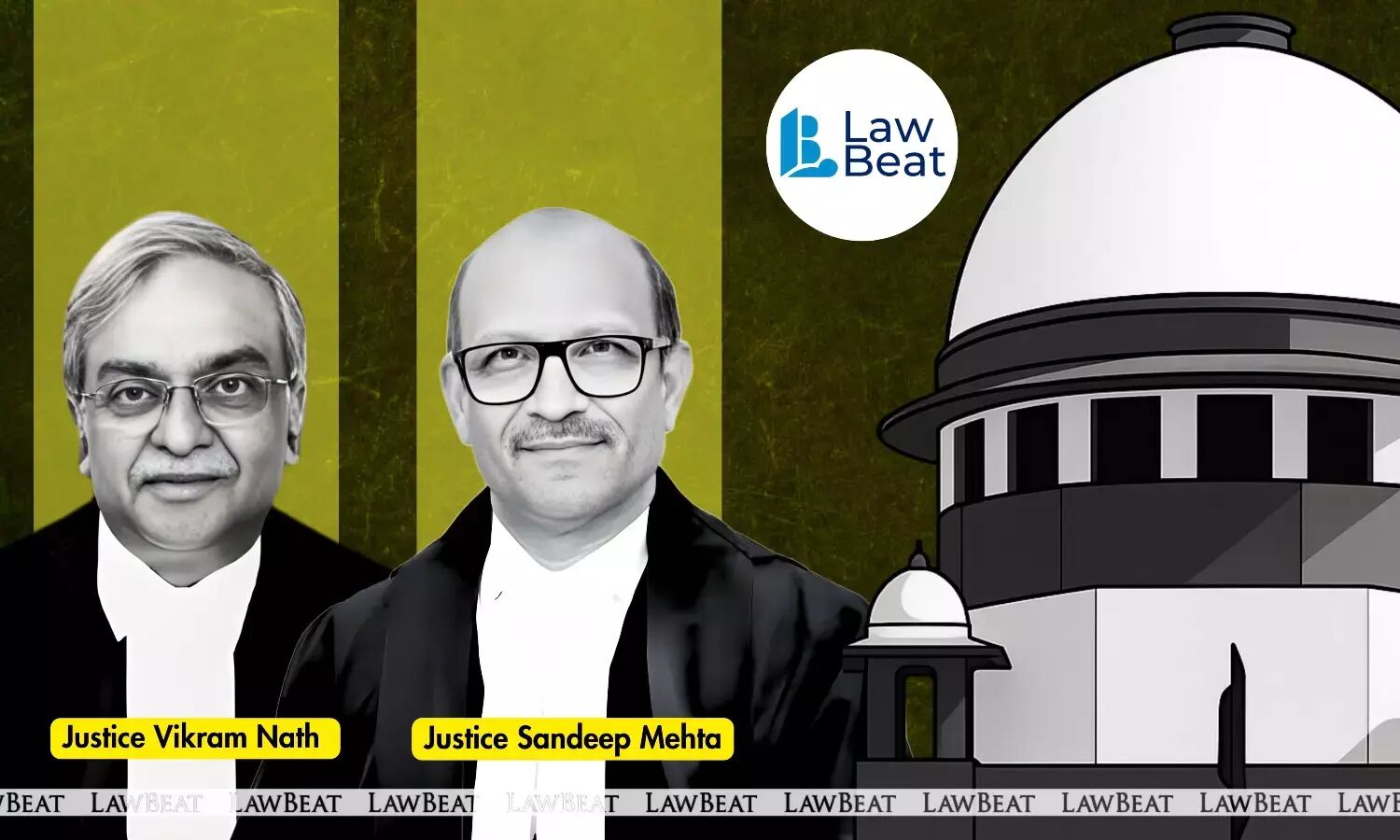
The Supreme Court of India recently issued a formal notice in response to a Public Interest Litigation (PIL) advocating for the establishment of a National Private School Teachers Welfare Board. This significant legal development occurred before a bench comprising Justices Vikram Nath and Sandeep Mehta. The petition, filed by Ligimol George, who serves as the National Coordinator for the All India Teachers Federation, seeks to implement a comprehensive statutory framework encompassing pension, gratuity, medical benefits, and post-retirement social security for private school educators nationwide.
Filed under Article 32 of the Constitution, the case, titled Ligimol George v. Union of India & Ors. (Writ Petition (Civil) No. 1116 of 2026), underscores a critical need for uniform welfare provisions. The petitioner's legal representative, AoR Deepak Prakash, has brought this matter forward, emphasizing the broader public interest in securing the fundamental rights and dignity of millions of private school teachers.
The Scale of the Issue
The PIL highlights the substantial demographic of educators currently operating without adequate statutory protections. According to data from the UDISE+ 2023–24 Report, a staggering 3,730,047 teachers are employed within recognized private unaided schools across India. This figure represents a significant portion of the nation's teaching workforce, operating within an educational landscape that includes approximately 14.72 lakh schools, 98 lakh teachers overall, and nearly 24.8 crore students.
Despite their crucial role in imparting education, these private school teachers, numbering over 37 lakh, continue to lack a comprehensive, uniform, and effective statutory welfare framework. The petition argues that while they perform an indispensable public function by implementing the constitutional guarantee of education, their service conditions and post-retirement security vary drastically, often leaving them deprived of essential benefits.
Legal and Constitutional Arguments
A central contention of the petition is the absence of a dedicated institutional framework for private school teachers, a disparity noted when compared to other occupational groups that benefit from specialized statutory welfare mechanisms established by Parliament and various State Legislatures. The PIL asserts that existing labor legislations, such as the Employees' Provident Funds and Miscellaneous Provisions Act, 1952, the Payment of Gratuity Act, 1972, the Employees' State Insurance Act, 1948, and the Code on Social Security, 2020, do not adequately address this gap. Their applicability is frequently contingent on statutory thresholds, institutional compliance, or salary structures, resulting in a large segment of private school teachers being either partially covered or practically denied meaningful social security and post-retirement protection.
The absence of such a framework is framed as a direct violation of constitutional rights, specifically Articles 14 and 21, when read in conjunction with Article 21A. The petition posits that millions of private school teachers serve and retire without sufficient pensionary benefits, medical assistance, insurance, or disability protection, thereby infringing upon their right to live with dignity. Furthermore, it points out the arbitrary disparity in service conditions and welfare measures for private school teachers across different states, despite their substantially identical educational functions in furtherance of the constitutional mandate under Article 21A.
Petitioner's Core Demands
The core objective of the Public Interest Litigation is to compel the establishment of a National Private School Teachers Welfare Board. This board would be tasked with overseeing the implementation of a standardized framework for pension, gratuity, and medical provisions, alongside broader post-retirement social security measures for all private school teachers in India. The petitioner emphasizes that this initiative is being pursued in the larger public interest, aiming to secure and enforce the constitutional rights, dignity, social security, and welfare of these educators. The proposed framework seeks to rectify the current situation where these teachers, despite their vital contributions, remain without adequate and uniform protections.
Practical Implications
Lawyers advising private educational institutions in India should closely monitor the progress of this Supreme Court PIL, as a favorable ruling could lead to the establishment of a National Private School Teachers Welfare Board and new statutory obligations for pension, gratuity, and social security for their teaching staff. Compliance officers should prepare for potential significant changes in employment law affecting private school teachers' benefits and post-retirement protections.
Source
How does this affect you?
Get an AI analysis of this article grounded in your jurisdictions, practice areas, and any policy documents you've uploaded to Wansom.
Finish Reading the Full Story and the Expert Analysis.
Get the latest legal & regulatory intelligence in India
Wansom is AI and can make mistakes.