
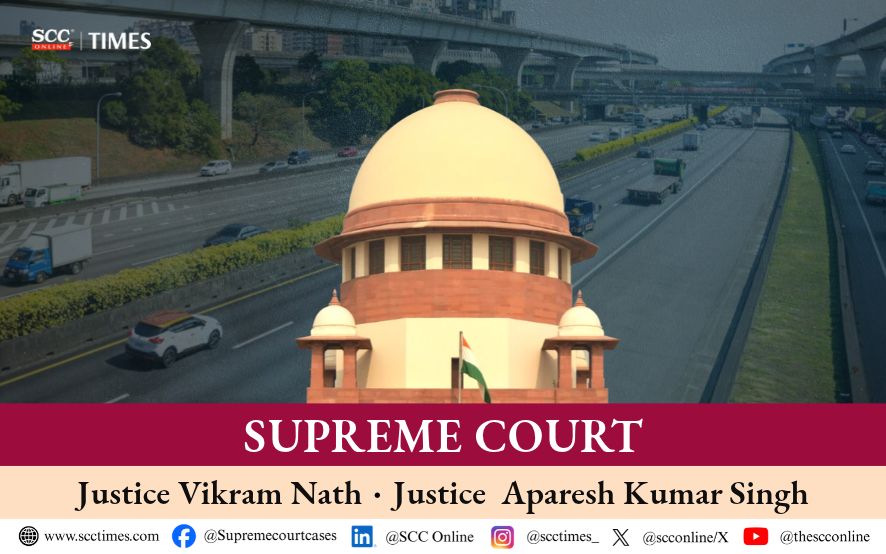
SC: National Highway Encroachment Safeguards Not Overridden by Court Directives
Summary
- The Supreme Court clarified that its April 2026 directives on National Highway encroachment removal do not create powers beyond existing statutory frameworks.
- These directions cannot bypass the safeguards established under the Control of National Highways (Land and Traffic) Act, 2002.
- The 2002 Act's provisions for due process and appeals remain paramount in all encroachment cases.
- National Highway demolition protection continues until a High Court makes a final decision on the matter.
- This ruling reinforces the importance of statutory safeguards in disputes concerning National Highway encroachments.
What Happened
The Supreme Court explicitly stated that its April 2026 directions cannot be invoked to bypass these statutory safeguards, thereby reaffirming the paramountcy of the 2002 Act.
The Supreme Court of India recently clarified the scope and authority of its own directives concerning the removal of encroachments from National Highways. The apex court underscored that its April 2026 instructions, which pertain to the process of clearing such encroachments, do not establish new powers that supersede existing legal frameworks. This ruling serves to reinforce the principle that judicial directions must operate within the established legislative boundaries, particularly when dealing with sensitive issues like property rights and public infrastructure.
This clarification is crucial for understanding the limits of judicial intervention in administrative processes. The Supreme Court emphasized that its earlier directions were not intended to create an alternative or superior mechanism for enforcement, but rather to guide the existing procedures. This ensures that any actions taken by authorities, even those prompted by judicial orders, remain consistent with the foundational laws governing National Highways and the protection of citizens' rights.
Legal Context
At the heart of this judicial pronouncement is the Control of National Highways (Land and Traffic) Act, 2002. This legislation provides a comprehensive encroachment removal statutory framework, outlining the specific procedures and safeguards that must be followed before any demolition or removal action can be undertaken on National Highways. The Supreme Court explicitly stated that its April 2026 directions cannot be invoked to bypass these statutory safeguards, thereby reaffirming the paramountcy of the 2002 Act.
The ruling highlights that the legislative intent behind the 2002 Act, which includes provisions for due process and appeals, cannot be overridden by general judicial instructions. This means that individuals or entities facing encroachment allegations on National Highways are still entitled to the protections afforded by the Act, regardless of any broader directives issued by the Supreme Court. The court's stance reinforces the separation of powers, ensuring that the judiciary respects the legislative domain in establishing procedural safeguards.
Why It Matters
This decision has significant implications for both property owners and the authorities responsible for maintaining National Highways. It firmly establishes that National Highway demolition protection remains in effect until a High Court demolition decision is rendered, following the due process stipulated by the Control of National Highways (Land and Traffic) Act, 2002. This provides a critical layer of security for those whose properties might be deemed encroachments, ensuring that immediate removal orders cannot be executed without adherence to the full legal process.
For legal practitioners, this ruling provides a strong basis to challenge any summary removal actions that do not fully comply with the 2002 Act, even if such actions are purportedly based on the Supreme Court April 2026 directions. The Supreme Court's emphasis on SC National Highway encroachment safeguards means that the detailed procedures and rights enshrined in the statute must be exhausted, including the right to appeal to a High Court, before any final demolition can occur. This ensures that the rule of law prevails in disputes over National Highway land.
Practical Implications
Lawyers advising clients on National Highway encroachment disputes should note that statutory safeguards under the Control of National Highways (Land and Traffic) Act, 2002, remain paramount. Demolition protection continues until High Courts make a final decision, providing a strong basis to challenge immediate removal orders despite the Supreme Court's April 2026 directions.
Source
Source: Original reporting via SCC Times
How does this affect you?
Get an AI analysis of this article grounded in your jurisdictions, practice areas, and any policy documents you've uploaded to Wansom.
Finish Reading the Full Story and the Expert Analysis.
Get the latest legal & regulatory intelligence in India
Wansom is AI and can make mistakes.