
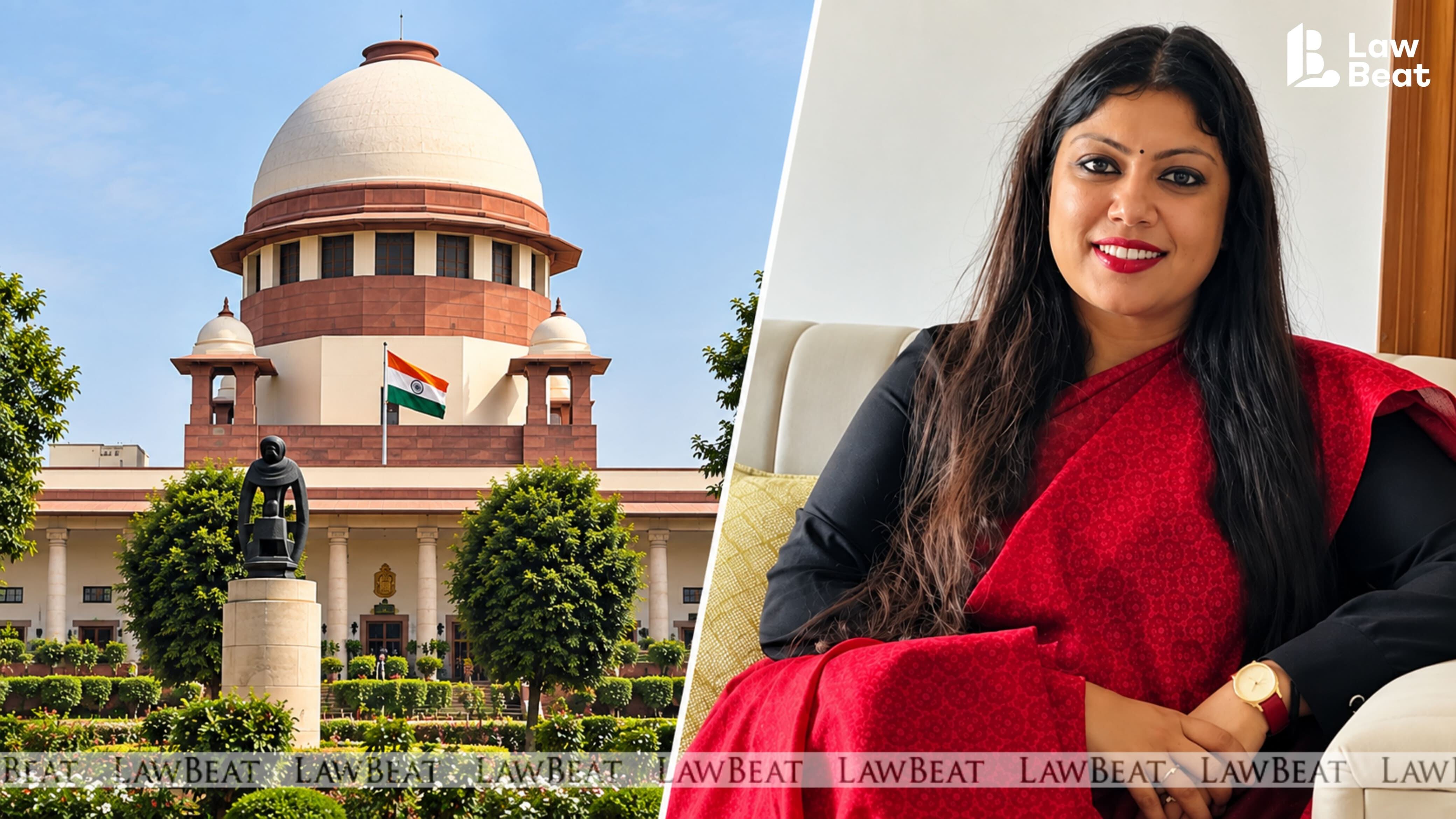
SC: Medha Roopam 5 Lakh Recovery For NSA Detention Order Reserved
Summary
- The Supreme Court has reserved its order on a plea by Gautam Buddh Nagar District Magistrate Medha Roopam.
- The plea challenges an Allahabad High Court directive to recover ₹5 lakh from officials' salaries for a quashed National Security Act detention.
- Arguments focused on the lack of prior notice to the DM and the legal distinction between overturning a detention order and assigning personal liability.
- Legal representatives highlighted the multi-layered administrative process involved in NSA detention decisions, originating from the SHO level.
- The Supreme Court's final decision will clarify the extent of personal liability for District Magistrates in cases where NSA detention orders are invalidated.
Supreme Court Reserves Judgment on DM's Liability
The Supreme Court's ultimate ruling in this case is anticipated to provide crucial clarity on the scope of personal accountability for public officials, particularly District Magistrates, when detention orders issued under the National Security Act are subsequently invalidated.
The Supreme Court has concluded hearings and reserved its order on a significant plea filed by Gautam Buddh Nagar District Magistrate Medha Roopam. The case centers on her challenge to a directive from the Allahabad High Court, which mandated the recovery of ₹5 lakh in compensation from the salaries of officials, including the District Magistrate, involved in the detention of Delhi University student Akriti Chaudhary under the National Security Act (NSA).
The Allahabad High Court had previously overturned Chaudhary's detention and ordered the payment of ₹5 lakh as compensation. This amount was to be recouped from the public servants implicated in the detention process, specifically naming the District Magistrate and the Station House Officer responsible for the initial report. The Supreme Court bench, comprising Justices Satish Chandra Sharma and N.K. Singh, heard extensive arguments from Solicitor General Tushar Mehta, representing Medha Roopam, and Senior Advocates Mukul Rohatgi, appearing for the State of Uttar Pradesh, alongside Colin Gonsalves. Notably, the audio feed for a substantial portion of the hearing was muted.
Arguments Against Personal Financial Recovery
Solicitor General Tushar Mehta, arguing on behalf of Medha Roopam, contended that the Allahabad High Court had imposed the ₹5 lakh financial obligation on the District Magistrate without providing her with prior notice. He emphasized that there is a clear legal distinction between the act of quashing a detention order and the subsequent imposition of personal liability on the official who issued it. Mehta further highlighted that the District Magistrate's decision is not an isolated one, but rather the culmination of a process involving numerous administrative and hierarchical layers.
Senior Advocate Mukul Rohatgi, representing the State of Uttar Pradesh, characterized the Allahabad High Court's order as entirely unwarranted. He underscored that the NSA detention procedure is a complex chain involving multiple authorities, beginning with police officials, progressing to the District Magistrate, then the NSA Advisory Board, and finally involving both state and central governments. Rohatgi asserted that the District Magistrate is merely one participant in this extensive sequence, with the initial proposal for detention originating at the Station House Officer level before reaching the District Magistrate for a final determination. He also referenced the detainee's alleged involvement in protests in Manesar, followed by unrest in Noida that reportedly included road blockages, arson, and stone-pelting incidents.
Challenging the High Court's Reasoning
Rohatgi also contested the High Court's rationale regarding the timeline between Chaudhary's arrest and the subsequent detention order. He pointed out that the detention order was issued approximately one month after her arrest, arguing that the High Court should have conducted an independent evaluation of the detention order itself. Rohatgi specifically addressed the High Court's observation that Chaudhary was arrested on April 11 after she ceased responding to WhatsApp messages that evening, suggesting a misapplication of legal principles in this assessment. He maintained that the detention order, in fact, demonstrated a thorough application of mind.
During the proceedings, the Supreme Court bench itself acknowledged that a District Magistrate might not be entirely separable from the broader decision-making framework, especially if the detention order had navigated through various statutory and administrative stages. The Court's ultimate ruling in this case is anticipated to provide crucial clarity on the scope of personal accountability for public officials, particularly District Magistrates, when detention orders issued under the National Security Act are subsequently invalidated.
Practical Implications
The Supreme Court's final order will clarify the extent of personal liability for public officials, specifically District Magistrates, when detention orders under the National Security Act are quashed. This is critical for lawyers advising on challenging administrative detention and assessing potential recourse or compensation claims against government functionaries.
Source
How does this affect you?
Get an AI analysis of this article grounded in your jurisdictions, practice areas, and any policy documents you've uploaded to Wansom.
Finish Reading the Full Story and the Expert Analysis.
Get the latest legal & regulatory intelligence in India
Wansom is AI and can make mistakes.