
Supreme Court: NCLAT 'Requests' Are Binding Directions, Admonishes Non-Compliance
Summary
- The Supreme Court has declared that its 'requests' to lower courts and tribunals must be treated as binding directions.
- This ruling followed the National Company Law Appellate Tribunal's (NCLAT) failure to comply with a Supreme Court request to hear a matter by July 23, 2026.
- The specific case involved a Section 7 IBC application by Sona Bansal, which the NCLAT had not addressed, even as the NCLT admitted the application.
- The Supreme Court emphasized that polite language does not diminish its judicial authority, citing the 1994 *Spencer and Co Ltd* judgment as precedent.
- The NCLAT has been directed to explain its non-compliance by November 19, 2026, with the Supreme Court warning of serious consequences for future disregard.
Judicial Rebuke and Clarification
The Supreme Court has now definitively clarified that any communication it issues, even if couched as a 'request' to a lower court or tribunal, must be interpreted as a binding direction.
The Supreme Court recently issued a stern admonition to the National Company Law Appellate Tribunal (NCLAT), emphasizing that any communication from the apex court, even if phrased as a 'request,' carries the weight of a binding direction. This significant clarification arose from the NCLAT's failure to adhere to a Supreme Court order dated July 15, 2026, which had requested the tribunal to hear and resolve a specific matter by July 23, 2026.
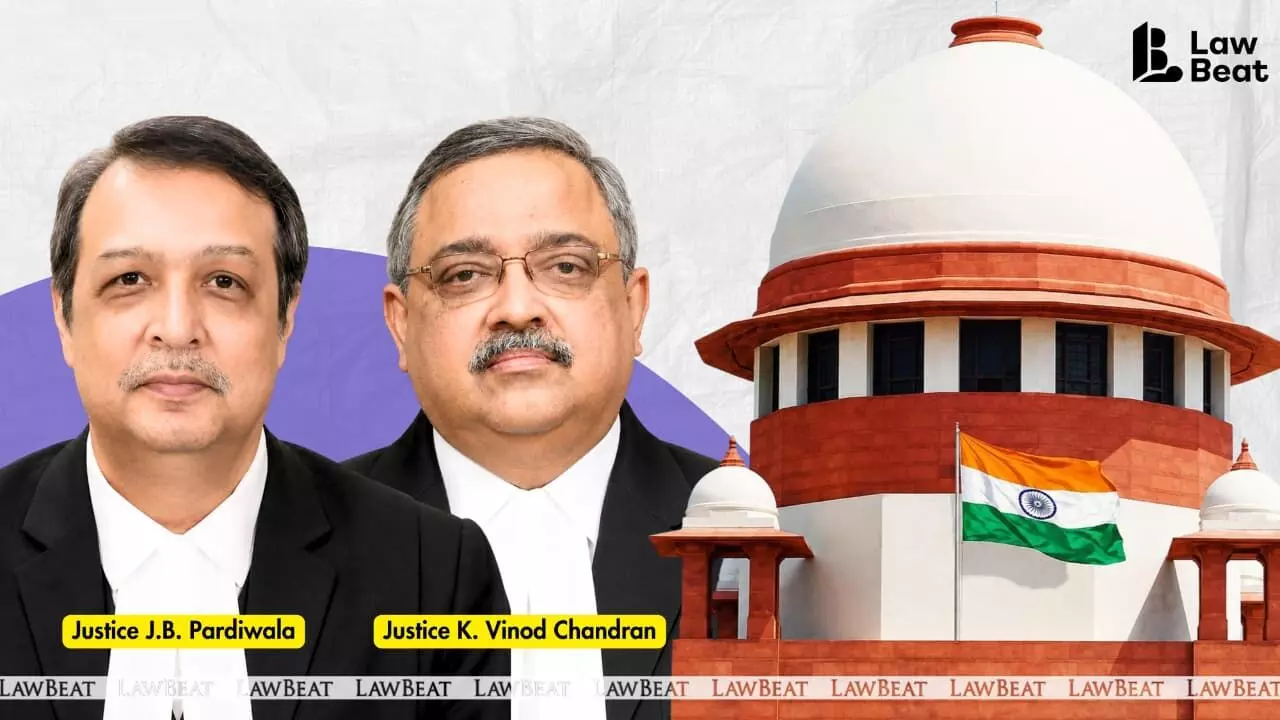
A bench comprising Justices J B Pardiwala and K Vinod Chandran expressed profound disapproval of the NCLAT's conduct, asserting that non-compliance with such directives would be viewed with extreme gravity. The Supreme Court has now definitively clarified that any communication it issues, even if couched as a 'request' to a lower court or tribunal, must be interpreted as a binding direction. This ruling underscores the Supreme Court's judicial authority and aims to prevent future instances of NCLAT non-compliance with Supreme Court mandates.
The Underlying Dispute
The specific case that triggered this judicial intervention involved an application filed by Sona Bansal. The Supreme Court's initial July 15, 2026, order had earnestly requested the NCLAT to prioritize and hear the main matter on July 23, 2026. This request was made in light of the fact that the National Company Law Tribunal (NCLT) had already reserved its decision on the application, which was filed under Section 7 of the Insolvency and Bankruptcy Code, 2016 (IBC).
Despite the Supreme Court's clear request, counsel for Bansal subsequently informed the apex court that the NCLAT had still not heard the matter. Compounding the issue, the NCLT, in the interim, had proceeded to pronounce its reserved order, admitting the Section 7 IBC application. The Supreme Court bench conveyed its considerable disturbance regarding the manner in which the NCLAT had handled the litigation, noting that the original request was made out of deference to the NCLAT's position and to uphold the integrity of the judicial office.
Precedent and Authority
The Supreme Court underscored that the specific language used in its orders does not diminish their binding nature. It clarified that while polite and respectful phrasing might be employed when addressing other judicial bodies, such courtesy does not reduce the imperative force of the directive. The Court explicitly stated that a polite expression enhances, rather than weakens, authority, and should never be misconstrued as a sign of weakness.
To support its stance on Supreme Court binding directions, the bench referenced its 1994 judgment in *Spencer and Co Ltd v Vishwadarshan Distributors Pvt Ltd* (1995 SCC (1) 259). In that landmark case, the Supreme Court had observed that when one superior constitutional authority communicates with another, the language, often described as 'sweet, soft and melodious,' is more suggestive of an obligation than a mere suggestion. This precedent reinforces the constitutional mandate that all authorities must act in aid of the Supreme Court, ensuring its judicial authority is universally respected.
Consequences of Non-Compliance
The Supreme Court made it unequivocally clear that from this point forward, any request it makes to any court or tribunal must be treated as a definitive direction. It warned that any non-compliance with such directions would be regarded with utmost seriousness, signaling a stricter enforcement of its mandates. The NCLAT's continued inaction was highlighted when the bench was informed that the tribunal had scheduled the matter for November 17, 2026, despite the Supreme Court's earlier order.
In response, the Supreme Court issued a notice, returnable on November 19, 2026, specifically directing the NCLAT to provide a comprehensive explanation for its failure to hear the matter. This action serves as a strong signal regarding the Supreme Court NCLAT requests directions dynamic, emphasizing that judicial courtesy does not equate to optional adherence.
Practical Implications
Lawyers and compliance officers must now treat all Supreme Court 'requests' to lower courts or tribunals as binding directions, irrespective of polite phrasing. Non-compliance can lead to serious judicial repercussions, necessitating strict adherence to such communications in all legal proceedings and client advisories.
Source
How does this affect you?
Get an AI analysis of this article grounded in your jurisdictions, practice areas, and any policy documents you've uploaded to Wansom.
Wansom is AI and can make mistakes.