
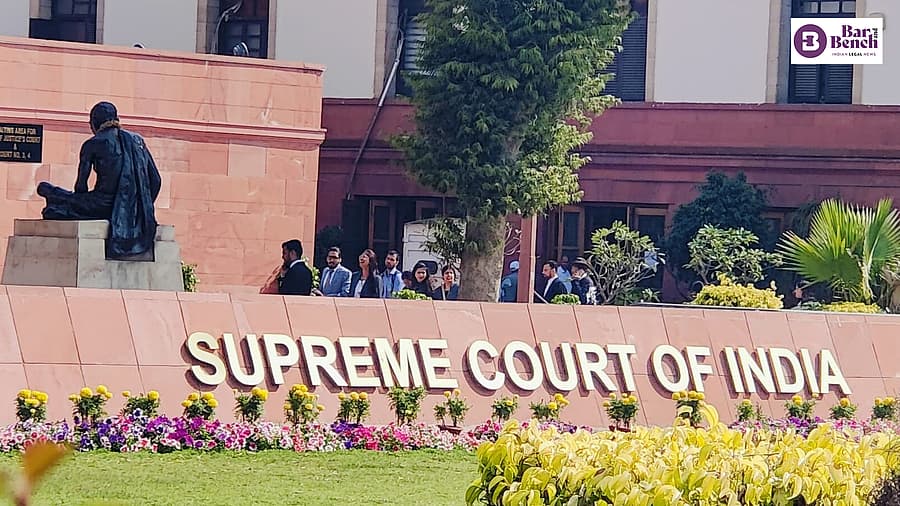
SC Averse High Court Case Deadlines: Declines to Impose Timelines
Summary
- The Supreme Court of India is generally averse to imposing strict deadlines on High Courts or district courts for case disposal.
- This stance was articulated by Justices BV Nagarathna and AG Masih, emphasizing respect for lower courts' heavy docket pressures.
- The observation was made while declining a petitioner's request for the Supreme Court to mandate a four-week timeline for a High Court case.
- Justice BV Nagarathna highlighted her past experience as a High Court judge, noting how such fixed-timeline orders were perceived by lower courts.
- The ruling reinforces judicial discretion in case disposal and suggests that requests for expeditious hearings should primarily be directed to the High Courts themselves.
Supreme Court Declines to Set Lower Court Deadlines
The apex court emphasized that appellate bodies must acknowledge the significant caseloads and demanding schedules confronting judges at the High Court and district levels, making it impractical and often counterproductive to mandate specific disposal dates.
The Supreme Court of India recently affirmed its general reluctance to impose strict timelines on High Courts or district courts for the resolution of pending cases. This position, articulated on a Friday by a bench comprising Justices BV Nagarathna and AG Masih, underscores a judicial philosophy that respects the operational autonomy and practical challenges faced by lower courts across the country. The apex court emphasized that appellate bodies must acknowledge the significant caseloads and demanding schedules confronting judges at the High Court and district levels, making it impractical and often counterproductive to mandate specific disposal dates.
This stance highlights the India Supreme Court's aversion to dictating High Court case deadlines, a principle it extends even to district courts. The justices made it clear that such directives could inadvertently undermine the judicial discretion necessary for judges to manage their dockets effectively and ensure thorough consideration of each matter. The ruling signals a consistent approach from the highest court, prioritizing the quality of justice and the independence of lower court proceedings over arbitrary time constraints.
Specific Case and Judicial Rationale
The Supreme Court's observation arose during the hearing of a plea from an individual involved in a matrimonial dispute. The petitioner had approached the apex court seeking the return of his passport and an expeditious hearing for a quashing petition that was currently pending before a High Court. Counsel for the petitioner specifically requested that the Supreme Court issue expeditious hearing directions to the High Court, mandating the disposal of the matter within a strict four-week timeline.
Justice Nagarathna, speaking for the bench, firmly declined to issue such a directive. She articulated the Court's position, stating that they are disinclined to even suggest disposal dates to district judges, a sentiment that extends equally to High Courts. Justice Nagarathna underscored that every judge operates with their own demanding docket, which must be managed daily, and suggested that the appropriate course of action for the petitioner was to make a request directly to the High Court itself, rather than seeking intervention from the Supreme Court.
Respecting Judicial Discretion and Lower Court Realities
Further elaborating on the rationale, Justice BV Nagarathna drew upon her own experience as a High Court judge. She candidly recalled how orders from higher courts imposing fixed timelines were often perceived by both trial and High Court benches. This personal insight informed her current perspective, as she expressed a desire not to replicate practices that, from a lower court's vantage point, could be seen as challenging or impractical. Her observation highlighted the importance of judicial discretion in case disposal, recognizing that judges on the ground are best positioned to manage their caseloads.
This approach reinforces the principle that appellate court timelines in India should not be rigidly imposed from above without considering the on-the-ground realities. The Supreme Court's decision to avoid setting High Court case deadlines reflects a deep understanding of the complexities of judicial administration and a commitment to preserving the independence and practical functioning of lower courts. It suggests that while the Supreme Court acknowledges the need for timely justice, it will generally refrain from direct intervention that could disrupt the established processes and discretion of High Court judges.
Practical Implications
This ruling clarifies that the Supreme Court will generally not impose strict deadlines on High Courts for case disposal, reinforcing judicial discretion and the practical realities of lower court dockets. Lawyers should manage client expectations regarding expedited hearings and understand that direct Supreme Court intervention for setting lower court timelines is unlikely, requiring them to focus on advocating for timely disposal within the High Court itself.
Source
How does this affect you?
Get an AI analysis of this article grounded in your jurisdictions, practice areas, and any policy documents you've uploaded to Wansom.
Finish Reading the Full Story and the Expert Analysis.
Get the latest legal & regulatory intelligence in India
Wansom is AI and can make mistakes.