
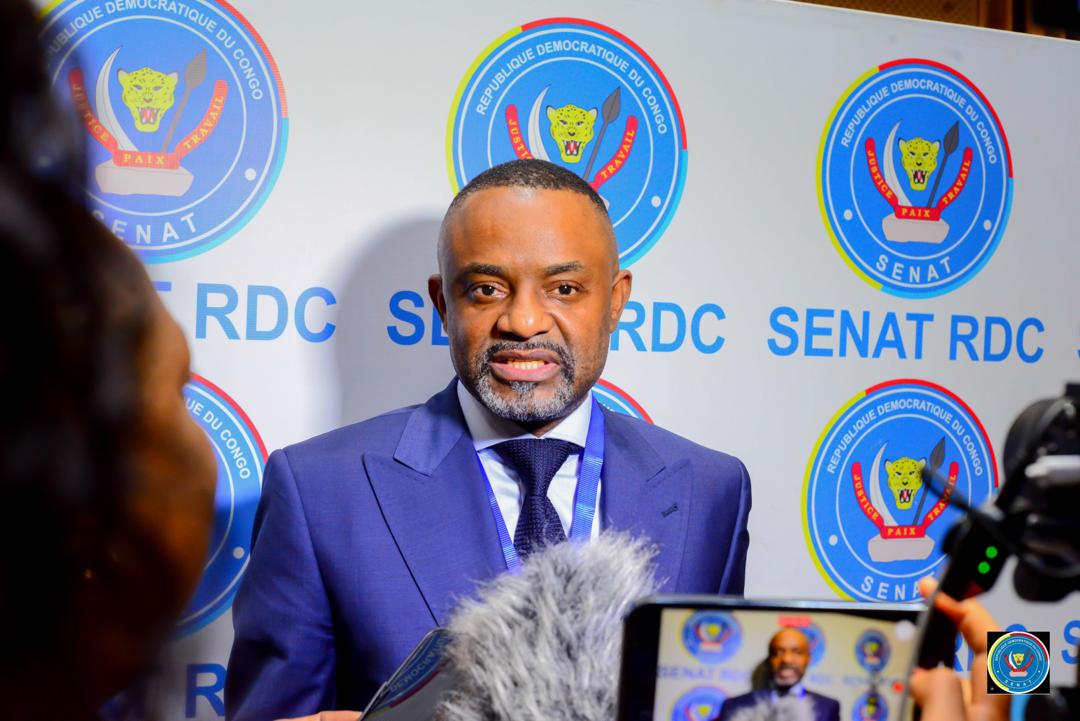
Salomon Kalonda: RDC Loi Référendaire Faces Senate Rejection Call
Summary
- Senator Salomon Kalonda Della has urged his fellow senators to reject a proposed law on organizing referendums in the RDC.
- The legislation was re-adopted by the National Assembly on Friday, October 23, and now awaits a second reading in the Senate.
- Kalonda believes the proposed law threatens the 2006 Constitution of the Democratic Republic of Congo.
- He fears the initiative could pave the way for President Félix-Antoine Tshisekedi to seek a third presidential term.
A Call to Reject Referendum Legislation
A significant fear articulated by the senator is that the passage of this law could inadvertently create a pathway for President Félix-Antoine Tshisekedi to seek a troisième mandat présidentiel Félix Tshisekedi.
Senator Salomon Kalonda Della has issued a strong appeal to his colleagues in the upper house of the Democratic Republic of Congo's parliament, urging them to reject a controversial legislative proposal. This proposition de loi référendum RDC aims to establish the procedural framework for organizing national referendums within the country. The call from Salomon Kalonda Della opposition figure comes as the bill approaches a critical juncture in its legislative journey.
The proposed legislation, which outlines the conditions under which a national referendum can be held, has already seen passage through the National Assembly. It was re-adopted by the lower chamber on Friday, October 23, signaling its progression despite underlying concerns. Following this re-adoption, the text is now slated for a crucial second reading before the Sénat RDC vote loi référendaire, where Senator Kalonda and others hope to block its final approval.
Constitutional Safeguards Under Threat
Senator Kalonda's primary objection centers on the potential for this RDC loi référendaire Salomon Kalonda opposes to undermine the foundational legal document of the nation. He articulates a profound concern that the initiative poses a direct threat to the integrity of the 2006 Constitution of the Democratic Republic of Congo. This apprehension stems from the belief that the law, if enacted, could be utilized to circumvent existing constitutional provisions, particularly those pertaining to presidential term limits, which are a cornerstone of democratic governance in the country.
A significant fear articulated by the senator is that the passage of this law could inadvertently create a pathway for President Félix-Antoine Tshisekedi to seek a troisième mandat présidentiel Félix Tshisekedi. The current constitutional framework, established in 2006, sets clear limits on the number of terms a president can serve, a safeguard designed to prevent the concentration of power. Any attempt to alter these fundamental aspects of droit constitutionnel RDC through a referendum, facilitated by this new law, would represent a substantial Constitution RDC 2006 amendement by indirect means, potentially destabilizing the nation's political landscape and democratic principles. Such a move could ignite widespread opposition and challenge the legitimacy of future electoral processes.
The Senate's Pivotal Role and Future Implications
The upcoming second reading in the Senate therefore carries significant weight, as the upper house now holds the power to either endorse or reject a piece of legislation that has generated considerable controversy. The Sénat RDC vote loi référendaire will be a pivotal moment, determining whether the concerns raised by Senator Kalonda Della and other opposition figures regarding the potential for constitutional overreach are heeded. The decision will reflect on the Senate's commitment to upholding the existing constitutional order against perceived threats of political maneuvering.
For legal professionals and compliance officers operating within the RDC, the progression of this proposed referendum law demands close monitoring. Its potential passage could introduce considerable uncertainty into the nation's political and legal environment, with direct implications for long-term legal and business planning. The debate surrounding this legislation underscores the delicate balance between legislative process and constitutional fidelity, a balance that the Senate is now tasked with maintaining.
Practical Implications
Lawyers and compliance officers in the RDC should closely monitor the Senate's vote on the proposed referendum law, as its potential passage could significantly alter constitutional term limits and introduce political uncertainty, impacting long-term legal and business planning.
Source
How does this affect you?
Get an AI analysis of this article grounded in your jurisdictions, practice areas, and any policy documents you've uploaded to Wansom.
Finish Reading the Full Story and the Expert Analysis.
Wansom is AI and can make mistakes.