
Salama Park man jailed 7 years for killing parents
Summary
- Bushimbwa Mwakacheya was sentenced to seven years' imprisonment with hard labour by the Lusaka High Court.
- The sentence was for causing the deaths of his parents in August 2022.
- Mwakacheya was initially charged with two counts of murder.
- Supreme Court Judge Gertrude Chawatama substituted the murder charges for a lesser offense, understood to be manslaughter.
- This judicial decision highlights the discretion available to courts in Zambia to reclassify serious charges.
What Happened
The Lusaka High Court's authority to oversee such substantial charge alterations is fundamental to ensuring that justice is administered fairly, balancing the severity of the act with the specific circumstances and the degree of culpability determined by the court.
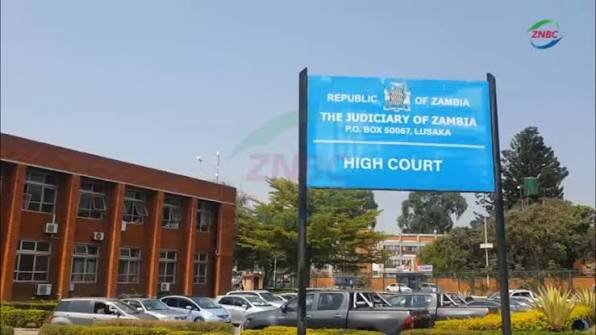
Bushimbwa Mwakacheya, a resident of Salama Park, has been sentenced by the Lusaka High Court to seven years' imprisonment with hard labour. This sentence follows his involvement in the deaths of his parents, a tragic incident that took place in August 2022. Initially, Mwakacheya faced two grave accusations of murder, charges that carry severe penalties under Zambian law. However, a significant procedural development occurred during the legal proceedings. Supreme Court Judge Gertrude Chawatama exercised judicial discretion, opting to substitute the original murder charges. This critical decision led to the conviction on a lesser offense, understood to be manslaughter, which ultimately resulted in the seven-year custodial sentence. The substitution of charges by Judge Chawatama marked a pivotal moment in the Bushimbwa Mwakacheya case, fundamentally altering the trajectory of the legal outcome from what was initially anticipated for a double murder accusation.
Judicial Discretion and Charge Substitution
The decision by Supreme Court Judge Gertrude Chawatama of the Lusaka High Court to substitute murder charges for a lesser offense, specifically manslaughter, in the Bushimbwa Mwakacheya case, underscores a vital aspect of Zambia's criminal justice system. This exercise of judicial discretion allows courts to critically re-evaluate the nature of the alleged crime based on the evidence presented during trial, potentially leading to a more nuanced and proportionate sentence. While murder convictions in Zambia typically attract extremely harsh penalties, including life imprisonment, or a lesser sentence where there are extenuating circumstances, a conviction for manslaughter provides the judiciary with a broader spectrum of sentencing options. The seven-year term imposed on Mwakacheya, a significant but not maximal sentence, reflects this flexibility. The Lusaka High Court's authority to oversee such substantial charge alterations is fundamental to ensuring that justice is administered fairly, balancing the severity of the act with the specific circumstances and the degree of culpability determined by the court.
Implications for Zambian Criminal Defense
The Bushimbwa Mwakacheya case, particularly the Lusaka High Court's decision to permit a charge substitution from murder to manslaughter, offers crucial insights for criminal defense lawyers operating in Zambia. This outcome exemplifies how meticulous legal strategy and the judicious application of court powers can lead to a reclassification of charges, which can profoundly impact a client's future. For attorneys representing individuals accused of serious violent crimes, this ruling by Supreme Court Judge Gertrude Chawatama underscores the paramount importance of thoroughly investigating all evidence for potential mitigating factors that could support a lesser charge. The resolution of this Salama Park parricide case demonstrates that even in the most grave situations, such as those involving the deaths of parents, there exists a pathway within the Zambian legal system for charges to be reduced. This can help clients avoid the most severe penalties typically associated with murder. This judicial discretion, as effectively exercised in this instance, provides a compelling example for defense teams to vigorously pursue charge reductions, aiming for outcomes that reflect a more precise legal classification of the offense.
Practical Implications
Criminal defense lawyers in Zambia should note this case as an example of judicial discretion in substituting murder charges for a lesser offense, which can significantly impact sentencing outcomes for clients facing similar accusations.
Source
How does this affect you?
Get an AI analysis of this article grounded in your jurisdictions, practice areas, and any policy documents you've uploaded to Wansom.
Finish Reading the Full Story and the Expert Analysis.
Get the latest legal & regulatory intelligence in Zambia
Wansom is AI and can make mistakes.