
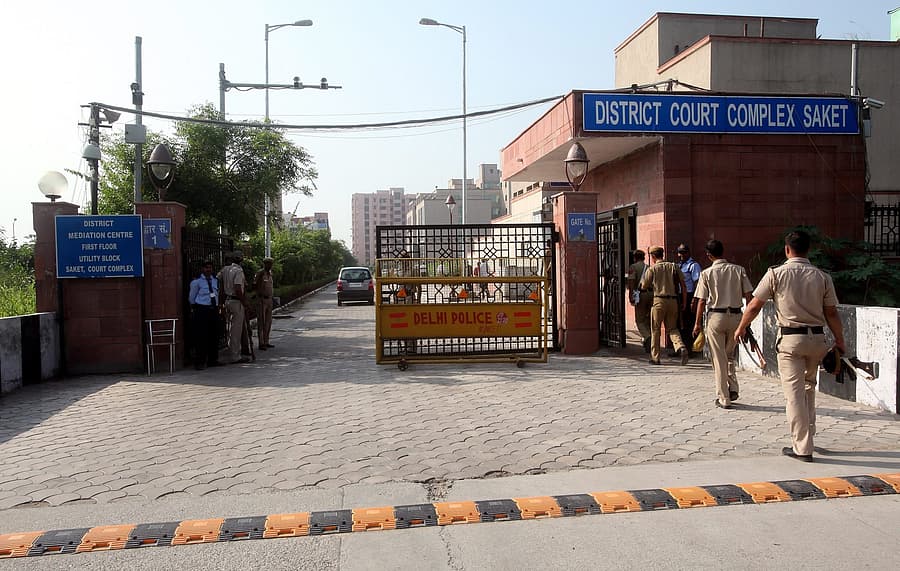
Saket Court Acquits My FM CEO Harish Bhatia of Sexual Harassment
Summary
- Harish M Bhatia, former CEO of My FM, was acquitted of sexual harassment charges by a Delhi court.
- Judicial Magistrate First Class Shivangi Vyas ruled that the prosecution failed to prove its case beyond a reasonable doubt.
- The court reiterated that conviction in sexual offense cases can rely solely on complainant testimony only if it is of "sterling quality," meaning wholly reliable and consistent.
- The complainant, a former National Programming Head, alleged harassment between 2008 and 2010, including a specific incident on May 7, 2010.
- The court noted three conflicting versions of the allegations, which prevented the testimony from meeting the required "sterling quality" standard.
What Happened
The ruling further clarified that when a prosecution's case hinges predominantly on the complainant's statement, the judiciary is obligated to examine it with exceptional diligence.
A Delhi court recently cleared Harish M Bhatia, the former Chief Executive Officer of My FM, the radio division of the Dainik Bhaskar Group, of charges related to outraging and insulting a woman's modesty. Judicial Magistrate First Class Shivangi Vyas, presiding over the Saket courts, concluded that the prosecution had not presented sufficient evidence to establish guilt beyond a reasonable doubt.
Consequently, Mr. Bhatia was acquitted of all accusations, which included offenses under Sections 74 and 79 of the Bharatiya Nyaya Sanhita (BNS), which replaced Sections 354 and 509 of the Indian Penal Code (IPC) respectively. These sections pertain to assault with intent to outrage modesty and acts intended to insult the modesty of a woman, respectively. This ruling marks the conclusion of the My FM CEO harassment case, with the court finding the evidence insufficient for conviction.
Legal Context
In delivering its verdict, the court underscored a critical legal principle concerning sexual offense cases. It affirmed that a conviction in such matters can be predicated solely on the testimony of the complainant, provided that this testimony possesses "sterling quality." This benchmark requires the evidence to be entirely reliable, consistent across different accounts, and capable of inspiring full confidence from the court.
The ruling further clarified that when a prosecution's case hinges predominantly on the complainant's statement, the judiciary is obligated to examine it with exceptional diligence. This rigorous scrutiny aims to identify any significant inconsistencies, subsequent embellishments, crucial omissions, or inherent implausibilities that might undermine the credibility of the narrative. In the specific instance of Mr. Bhatia's case, the court determined that the complainant's testimony did not meet this stringent standard, leading to the Harish M Bhatia sexual harassment acquittal.
The Allegations and Court's Findings
The allegations against Mr. Bhatia originated from the then-National Programming Head, who claimed to have experienced harassment over a period spanning from 2008 to 2010. These alleged incidents reportedly occurred in various settings, including the workplace, during office parties, and on official tours. A particularly serious accusation cited May 7, 2010, when Mr. Bhatia allegedly summoned the complainant to his office, physically held her hands, and solicited sexual favors.
However, a pivotal aspect of the court's decision rested on its finding of significant discrepancies in the complainant's account. The judicial review revealed three distinct and conflicting versions of the allegations presented during the proceedings. This lack of consistency and reliability in the foundational testimony was a primary factor in the court's conclusion that the prosecution had failed to establish its case beyond a reasonable doubt, directly impacting the assessment of the testimony's "sterling quality" in this Delhi court sexual harassment ruling.
Why It Matters
This Delhi court ruling serves as a significant reaffirmation of the stringent evidentiary standards required for convictions in sexual offense cases within the Indian legal system. It underscores that while allegations of sexual harassment are treated with utmost seriousness, the burden remains on the prosecution to present evidence that is not only compelling but also consistently reliable and free from material contradictions. The emphasis on "sexual offence testimony sterling quality" highlights the judiciary's commitment to ensuring that justice is served based on thoroughly vetted and credible accounts.
The judgment reinforces the principle that a complainant's testimony, while crucial, must withstand rigorous scrutiny, especially when it forms the sole basis for the prosecution's case. This outcome provides a clear precedent for how courts are expected to evaluate such evidence, demanding meticulous attention to detail and consistency from all parties involved in bringing or defending against such charges. It reiterates that the standard of proof beyond reasonable doubt remains paramount, even in sensitive cases involving allegations of sexual misconduct, leading to the Sections 74 79 BNS acquittal.
Practical Implications
This ruling reiterates the high evidentiary standard required for conviction in sexual offense cases, emphasizing that a complainant's testimony must be of 'sterling quality' to be the sole basis for conviction. Lawyers handling such cases must meticulously scrutinize testimony for consistency and reliability, while compliance officers should ensure internal investigation protocols align with this judicial expectation for evidence assessment.
Source
How does this affect you?
Get an AI analysis of this article grounded in your jurisdictions, practice areas, and any policy documents you've uploaded to Wansom.
Finish Reading the Full Story and the Expert Analysis.
Get the latest legal & regulatory intelligence in India
Wansom is AI and can make mistakes.