
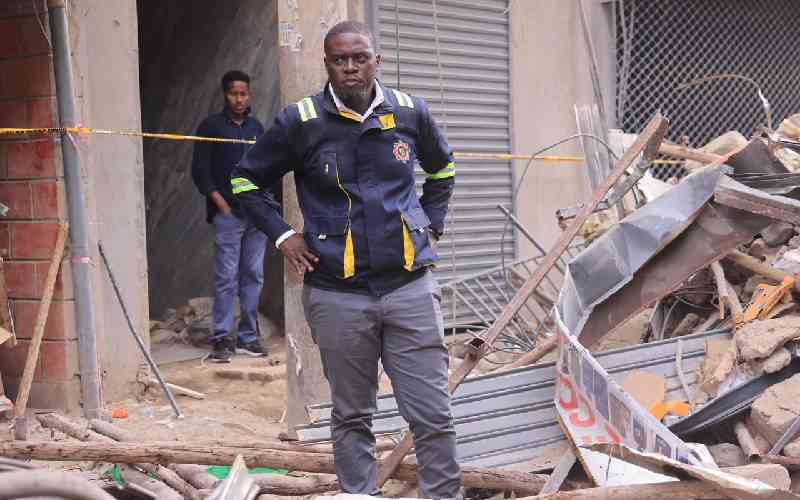
Governor Sakaja: Protests Kamukunji Police Release of Eastleigh Suspects
Summary
- Nairobi Governor Johnson Sakaja protested the release of suspects linked to an Eastleigh building collapse, who were freed on Sh50,000 bail without charges.
- County officers arrested the suspects for unapproved architectural plans and illegal change of property use, but handed them to Kamukunji Police due to lacking prosecutorial powers.
- An official police record shows 14 suspects booked on June 17, 2026, for city planning violations, though only 10 were recorded as released on bail that same day.
- Sakaja demands the reinstatement of prosecutorial powers for county governments, which were removed in 2024, citing ineffective enforcement and minimal penalties for serious infractions.
- The governor views the current system as undermining efforts to combat illegal construction and ensure compliance with city planning laws.
Governor Sakaja's Outcry Over Suspects' Release
When suspects in cases of Eastleigh illegal construction enforcement are released without charges, it can undermine the deterrent effect of county-led enforcement actions and potentially encourage further non-compliance.
Nairobi Governor Johnson Sakaja has publicly voiced strong objections regarding the release of individuals implicated in the collapse of a building in Eastleigh. The governor specifically demanded clarification from Kamukunji Police concerning the circumstances under which these suspects, arrested in June 2026, were subsequently released on a cash bail of Sh50,000 without facing charges in court. This protest was articulated by Sakaja through a statement posted on his official X account on October 25, 2026, highlighting a significant point of contention between the county government's enforcement efforts and the police's handling of such cases.
City Hall had previously initiated enforcement actions against those involved in the Eastleigh incident. Investigations by county authorities revealed that the property's use had been illicitly changed from residential to commercial, and crucial architectural plans required for construction had not received the necessary approvals. Following these findings, county officers proceeded to arrest the suspects. However, due to the county government's lack of prosecutorial powers, these individuals were handed over to the Kamukunji Police Station for further action. An occurrence book entry from Kamukunji Police Station, specifically OB No. 98/17/06/2026, confirms that 14 suspects were booked into custody on June 17, 2026, in connection with alleged contraventions of city planning laws. These arrests by county officials were not isolated, with similar enforcement actions and arrests occurring "severally," including a recent instance in July after non-compliance with an earlier enforcement order.
Despite being booked, the suspects were reportedly released on Sh50,000 bail at Kamukunji Police Station on the very day of their arrest, with prosecution subsequently denied. A separate Kenya Police Service record indicates that 10 suspects were released on this cash bail at 9:44 PM, under the instructions of the Officer Commanding Station (OCS), C.I. Onyapidi, conveyed through Corporal Awadh, referencing receipt number 2039434. The official documents, however, do not explicitly detail the specific charges against the suspects, the legal rationale for the bail arrangement, or whether they were ever presented before a court. Furthermore, a discrepancy exists between the 14 suspects initially recorded as booked and the 10 named in the release entry, raising questions about the status of the remaining individuals. Governor Sakaja also questioned why construction was permitted to continue despite the identified violations.
Jurisdictional Clash Over Prosecutorial Powers
At the heart of Governor Sakaja's protest is the ongoing jurisdictional friction concerning prosecutorial powers, particularly for violations of city planning laws. Sakaja emphasized that county governments, including Nairobi County, no longer possess the prosecutorial authority they held prior to 2024. This change means that while county officers can enforce laws and make arrests for infractions like illegal construction, they must then hand over suspects to the police and the Directorate of Public Prosecutions (DPP) for formal charges and court proceedings.
The governor highlighted that this shift has created a significant challenge for effective enforcement. He pointed out that since the transfer of these powers, numerous cases initiated by the county have either been rejected by prosecutors, dismissed by the justice system, or resulted in minimal fines that do not reflect the severity of the offenses. Sakaja specifically cited the example of a Sh50,000 fine for an illegal development potentially worth hundreds of millions, without accompanying orders to halt or remove the offending structure, as "completely unreasonable." He has repeatedly advocated for the reinstatement of these prosecutorial powers for county governments, even sending a letter to the office of the DPP on the matter.
Implications for City Planning and Enforcement
The release of suspects in the Eastleigh building collapse case, coupled with the broader issue of Nairobi County's limited prosecutorial powers, carries significant implications for urban development and the enforcement of Kenya city planning law violations. Governor Sakaja's concerns underscore a potential weakening of the county's ability to curb illegal construction and ensure compliance with building codes. When suspects in cases of Eastleigh illegal construction enforcement are released without charges, it can undermine the deterrent effect of county-led enforcement actions and potentially encourage further non-compliance.
Sakaja's statement on the Johnson Sakaja statement building collapse also revealed his commitment to transparency regarding these challenges. He announced that all instances where county enforcement actions have been curtailed, blocked, or interfered with will be made public. This move aims to draw attention to the systemic issues hindering effective regulation in Nairobi's rapidly developing urban landscape. The governor had also raised this critical issue in the Senate a fortnight before his public statement, indicating a sustained effort to advocate for a review of the current legal framework governing prosecutorial powers for county-level offenses, which he believes is essential for robust city planning and public safety.
Practical Implications
Lawyers advising clients on construction and development in Nairobi should note the ongoing jurisdictional friction between Nairobi County and the police/DPP regarding prosecutorial powers for city planning violations. This case highlights the risk that suspects in illegal construction cases may be released without charges, potentially undermining county enforcement actions. Compliance officers should be aware of the county's push for greater prosecutorial authority, which could lead to more stringent enforcement and prosecution of building code infractions in the future.
Source
How does this affect you?
Get an AI analysis of this article grounded in your jurisdictions, practice areas, and any policy documents you've uploaded to Wansom.
Finish Reading the Full Story and the Expert Analysis.
Get the latest legal & regulatory intelligence in Kenya
Wansom is AI and can make mistakes.