
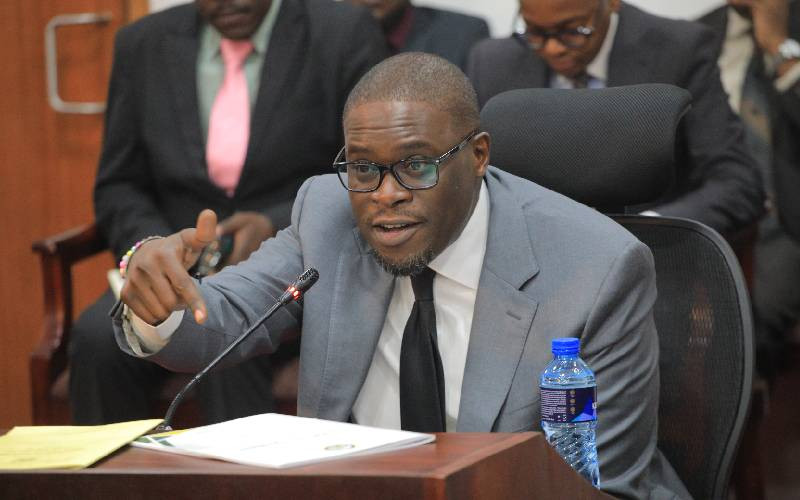
Sakaja Nairobi County Pending Bills: Senate Hears Sh43.73 Billion Reduction
Summary
- Nairobi Governor Johnson Sakaja reported a Sh43.73 billion reduction in the county's pending bills, bringing the total from Sh118.79 billion to Sh75.07 billion.
- This reduction stemmed from a combination of legal assessments, suspended government-guaranteed loans, court-ordered adjustments, and verification of disputed claims, not just cash payments.
- A court consent significantly lowered Sh19.2 billion in LAPFUND interest and penalties to approximately Sh8.2 billion.
- The county's strengthened in-house legal department saved an estimated Sh8.48 billion in legal costs over two financial years by reducing reliance on external counsel.
- The Senate County Public Accounts Committee, while commending the reduction, has requested additional documentation to clarify the verification process and adjustments made.
What Happened
The Sh43.73 billion reduction in Nairobi County's pending bills was not achieved entirely through cash payments but also involved adjustments arising from legal assessments, suspended government-guaranteed loans, court-ordered reductions and disputed claims.
Nairobi Governor Johnson Sakaja recently informed the Senate County Public Accounts Committee that the capital city has significantly decreased its outstanding financial obligations. The total pending bills, which previously stood at Sh118.79 billion, have now been brought down to Sh75.07 billion. This represents a substantial reduction of Sh43.73 billion.
Governor Sakaja, appearing at Parliament Buildings in Nairobi, clarified that this considerable decrease was not achieved solely through direct cash payments. Instead, the administration employed a multi-faceted approach involving thorough internal verification processes, legal assessments of claims, and adjustments mandated by court decisions, alongside the careful scrutiny of disputed claims. The governor emphasized that the initial Sh118 billion debt was an inherited burden from previous administrations, prompting the establishment of a dedicated committee to meticulously examine the validity of each outstanding claim before any disbursements were made.
Unpacking the Debt Reduction
The Sh43.73 billion reduction in Nairobi County's pending bills was not achieved entirely through cash payments but also involved adjustments arising from legal assessments, suspended government-guaranteed loans, court-ordered reductions and disputed claims. A detailed schedule outlining these adjustments and reconciliations was presented to the Senators. Of this amount, Sh1.63 billion was attributed to legal assessments, while a significant Sh19.14 billion pertained to government-guaranteed loans. Servicing of these loans had been suspended due to a lack of proper supporting documentation and loan schedules.
A notable component of the reduction involved Sh19.2 billion related to interest and penalties owed to LAPFUND. Following a court consent, this substantial claim was successfully negotiated down to approximately Sh8.2 billion. Furthermore, the county provided a signed indemnity form, adhering to County Treasury regulations for misplaced payment documents, along with a financial memo confirming that the relevant works had been completed and payment processed. The audit also highlighted concerns regarding Sh16.04 million in receivables from non-exchange transactions, which lacked sufficient supporting documentation.
Strategic Legal Reforms and Savings
Beyond the rigorous verification of pending bills, Governor Sakaja's administration has also undertaken significant reforms to bolster the county's internal legal capabilities. This strategic move was aimed at curbing expenditure on external legal services and safeguarding public resources. Through these comprehensive reforms, Nairobi County successfully saved an estimated Sh8.48 billion in legal costs over a span of two financial years.
These substantial savings were realized by expanding the in-house legal department's capacity, enabling it to handle a greater volume of litigation internally. The county also actively negotiated reductions in legal fees claimed by private advocates. Data from the County Assembly’s Justice and Legal Affairs Committee indicates that out of 174 court cases concluded during the review period, 84 were managed by the county’s own legal team, with 47 of these cases being decided in Nairobi’s favor, reflecting a 56 percent success rate.
Senate's Call for Further Clarity
While commending Nairobi County for its efforts in reducing the substantial pending bills, the Senate County Public Accounts Committee, chaired by Homa Bay Senator Moses Kajwang, requested additional documentation. Senator Kajwang specifically asked Governor Sakaja to provide further evidence supporting the payments made and the processes undertaken to account for the Sh43.73 billion in reductions.
The committee emphasized its need for more detailed clarification regarding the verification exercise and the various adjustments applied to the outstanding debt.
Practical Implications
Lawyers advising clients with outstanding claims against Nairobi County should be aware of the county's multi-faceted approach to reducing liabilities, which includes internal verification, legal assessments, and court-ordered adjustments, not solely cash payments. This also signals a trend of counties strengthening in-house legal teams to reduce reliance on external counsel, impacting private legal practitioners.
Source
How does this affect you?
Get an AI analysis of this article grounded in your jurisdictions, practice areas, and any policy documents you've uploaded to Wansom.
Finish Reading the Full Story and the Expert Analysis.
Get the latest legal & regulatory intelligence in Kenya
Wansom is AI and can make mistakes.