
DCI Crackdown Drug Financiers Kenya: New Strategy Targets Assets
Summary
- The Directorate of Criminal Investigations (DCI) in Kenya is intensifying its efforts to target drug financiers and organizers.
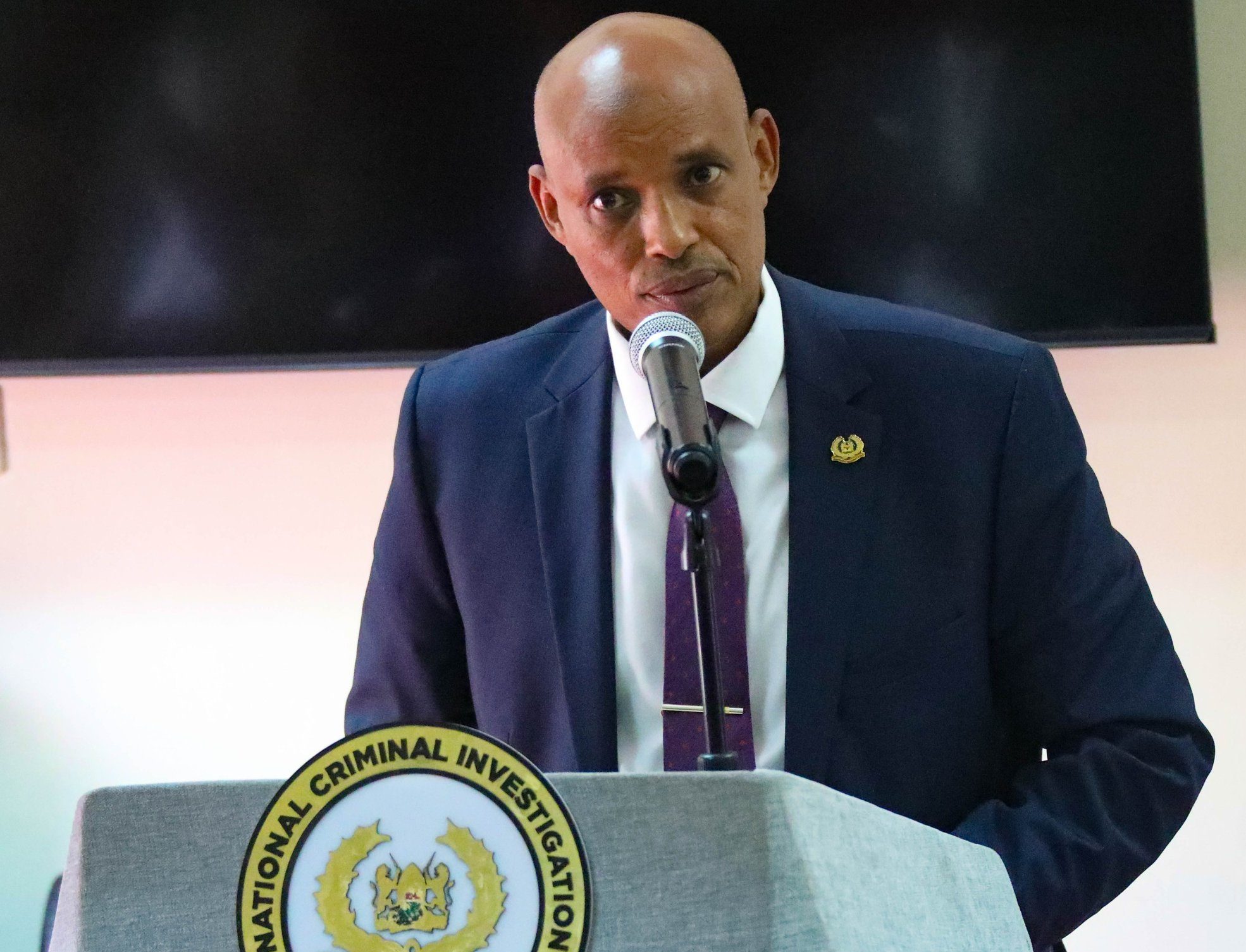
- DCI Director Mohamed Amin announced a strategic shift towards asset-centred investigations to recover proceeds of crime.
- Recent operations led to the seizure of 454 kg of methamphetamine worth Ksh3.6 billion and a record 1,036 kg worth Ksh8.2 billion.
- The DCI transformed its Anti-Narcotics Unit into NANIB, recruiting 208 officers and establishing 40 new stations.
- Between January and October 2026, NANIB arrested 1,631 suspects and recovered narcotics valued at Ksh779.6 million.
Intensified Anti-Narcotics Campaign Targets Financiers
The DCI's emphasis is not merely on intercepting drug couriers but on dismantling the entire organizational and financial structure of these criminal enterprises.
The Directorate of Criminal Investigations (DCI) in Kenya has significantly escalated its efforts to dismantle drug trafficking networks, shifting its primary focus to the financial architects and organizers behind the illicit trade. DCI Director Mohamed Amin recently affirmed this strategic pivot, indicating that investigators are now prioritizing asset-centred inquiries to identify and reclaim criminal proceeds linked to narcotics. These assets encompass a wide range, including cash, vehicles, real estate, land, and various business enterprises. This robust DCI crackdown drug financiers Kenya initiative underscores a comprehensive approach aimed at crippling the economic infrastructure supporting drug operations.
This renewed campaign has already yielded substantial results, highlighted by the recent seizure of 454 kilograms of suspected methamphetamine in Kwale County on November 7. This haul, valued at an estimated Ksh3.6 billion, led to the arrest of three individuals following an intelligence-led operation. The success of this particular action was attributed to collaborative intelligence sharing between Kenyan and Tanzanian authorities, targeting cross-border trafficking networks. Weeks prior to this, Kenyan authorities intercepted 1,036 kilograms of methamphetamine, estimated at Ksh8.2 billion, from the vessel MV Mashaallah in the Indian Ocean, an event Director Amin characterized as the largest methamphetamine seizure in Kenya’s history.
Strategic Enhancements and Legal Framework
Underpinning the DCI's intensified anti-narcotics drive is a strategic overhaul of its investigative capabilities and a strengthened focus on financial accountability. Director Amin confirmed that the DCI is actively collaborating with the Asset Recovery Agency and other relevant institutions to meticulously trace the complex financial networks that sustain the drug trade. This partnership is crucial for effective Kenya asset forfeiture drug proceeds operations, ensuring that ill-gotten gains are systematically identified and recovered. The DCI's emphasis is not merely on intercepting drug couriers but on dismantling the entire organizational and financial structure of these criminal enterprises.
Further bolstering its operational capacity, the DCI has transformed its former Anti-Narcotics Unit into the National Anti-Narcotics Investigations Bureau (NANIB). This restructuring included a significant expansion of personnel, with 208 additional officers recruited specifically for anti-narcotics duties. The bureau also established 40 new stations and provided specialized training to 314 officers in advanced anti-narcotics investigation techniques. These enhancements reflect a dedicated commitment to improving the effectiveness of Kenya DCI anti-narcotics operations. Between January and October 2026, NANIB reported the arrest of 1,631 suspects and the recovery of various narcotics with an approximate value of Ksh779.6 million, demonstrating the early impact of these strategic changes.
Broader Implications for Drug Trafficking
The strategic direction articulated by Mohamed Amin DCI strategy signifies a profound shift in how Kenya confronts drug trafficking, moving beyond street-level interdictions to target the sophisticated financial mechanisms that enable large-scale operations. By focusing on financiers and organizers, the DCI aims to disrupt the drug trade at its most vulnerable point – its funding. This approach is designed to have a far more lasting impact than simply seizing contraband or arresting low-level operatives. The collaboration with regional and international law enforcement agencies, a key aspect of NANIB's mandate, further enhances intelligence sharing and strengthens efforts to disrupt cross-border trafficking networks, which are inherently transnational.
The substantial seizures, particularly the record-breaking methamphetamine haul, underscore both the scale of the drug problem in Kenya and the increasing effectiveness of the DCI's enhanced capabilities. These operations, driven by improved intelligence and specialized units, send a clear message to those involved in drug trafficking that their financial assets are now squarely in the crosshairs of Kenyan law enforcement. The comprehensive nature of this DCI crackdown drug financiers Kenya initiative, combining organizational restructuring, increased personnel, specialized training, and inter-agency cooperation, positions Kenya to more effectively combat the pervasive threat of narcotics and their associated criminal economies.
Practical Implications
Lawyers should advise clients on the heightened risk of asset forfeiture and intensified financial scrutiny due to the DCI's strengthened focus on drug financiers and asset recovery. Compliance officers must review and bolster anti-money laundering and counter-financing of terrorism protocols to mitigate exposure to illicit financial flows.
Source
How does this affect you?
Get an AI analysis of this article grounded in your jurisdictions, practice areas, and any policy documents you've uploaded to Wansom.
Finish Reading the Full Story and the Expert Analysis.
Get the latest legal & regulatory intelligence in Kenya
Wansom is AI and can make mistakes.