
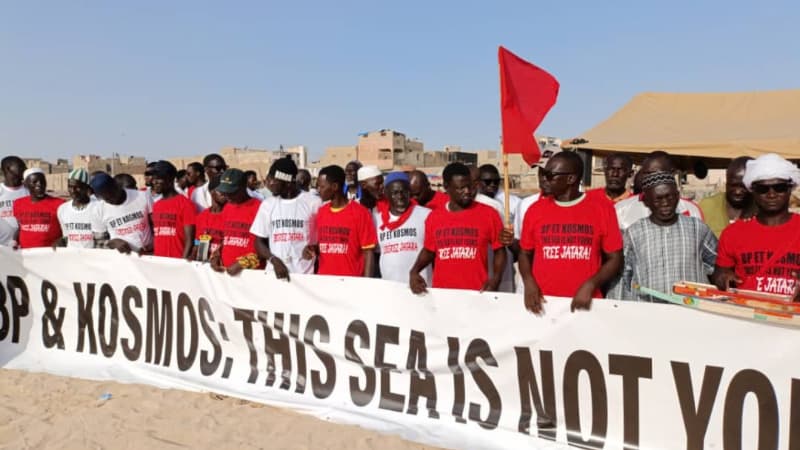
Saint-Louis Fishermen: New Campaign in BP GTA Dispute Targets Reef
Summary
- Artisanal fishermen in Saint-Louis, Senegal, have launched a campaign to protect the Diattara reef from offshore gas activities.
- They claim gas production, particularly from the BP-involved Grand Tortue Ahmeyim (GTA) project, restricts access to their traditional fishing grounds.
- Over 400 pirogues and nearly 1,700 people are directly affected by these access restrictions.
- The fishermen's association previously filed grievances against BP with the UK National Contact Point, which were formally recognized.
- Advocacy groups like SynDev and Greenpeace Africa are supporting the communities in documenting impacts and demanding reparations from companies and state intervention.
Saint-Louis Fishermen Mobilize Against Offshore Gas Impacts
The recognition of these grievances underscores the legal and reputational challenges faced by multinational energy companies operating in sensitive ecological and social environments.
A new campaign has been launched in Dakar by the civil society organization SynDev and artisanal line fishermen from Saint-Louis, Senegal, to protect the vital Diattara reef. This initiative, titled "Our sea, our rights, our future," seeks to preserve the reef and ensure continued access for local fishermen, who contend that their traditional fishing grounds are being negatively affected by offshore gas activities. The mobilization specifically targets the environmental consequences stemming from gas production near the city, particularly those associated with the Grand Tortue Ahmeyim (GTA) project, which involves BP. This collective action represents a broader effort by Saint-Louis's fishing communities to voice their concerns regarding the expanding gas operations in the region.
Recognized Grievance and Sustained Advocacy
The current campaign builds upon previous efforts by the Saint-Louis artisanal line fishermen's association, which had already filed grievances against BP concerning the GTA gas project with the UK National Contact Point. These grievances were formally recognized, as confirmed by Aladji Dousse Fall, president of the Saint-Louis artisanal line fishermen. The recognition of these grievances underscores the legal and reputational challenges faced by multinational energy companies operating in sensitive ecological and social environments. In support of these communities, Greenpeace Africa recently conducted an "Advocacy Tour," including a workshop on September 9 and 10, where fishermen, fish processors, and community representatives were trained on documenting incidents at sea and formulating precise demands for authorities and relevant stakeholders. SynDev's executive director, Aly Sagne, has also urged companies to address and repair the impacts of their activities on local communities.
Profound Community Impact and Calls for Reparation
The restrictions on access to the Diattara reef, a naturally fish-rich rock formation located offshore from the Senegal River near Saint-Louis, directly impact more than 400 pirogues and approximately 1,700 individuals. Aladji Dousse Fall questioned why the multinational company operating in the area has not prioritized genuine cohabitation with the fishing communities. He also called upon the Senegalese state to compel the involved companies to fully consider the effects of their gas activities on local populations. Aly Sagne further emphasized the Diattara reef's significance as a social and cultural heritage, asserting that any negative impacts must be rectified. The campaign aims to establish a unified platform for these community demands.
Broader Implications for Corporate Responsibility
This Saint-Louis fishermen BP GTA dispute highlights the increasing scrutiny on corporate human rights due diligence in Africa, particularly within the context of large-scale energy projects like the Grand Tortue Ahmeyim project in Senegal. The launch of the "Our sea, our rights, our future" campaign occurred alongside a strategic meeting of the African Business and Human Rights Forum, which focused on the critical role of civil society organizations and affected communities in holding corporations accountable. The case serves as a potent example of the complex challenges arising when industrial development intersects with traditional livelihoods and environmental preservation, underscoring the imperative for companies to engage meaningfully with local communities and mitigate adverse impacts on Senegal offshore gas community rights.
Practical Implications
This case demonstrates the increasing legal and reputational risks for multinational energy companies operating in Africa, particularly concerning environmental and social impact assessments and community engagement. Lawyers should advise clients on robust grievance mechanisms and compliance with international human rights and business conduct standards to mitigate similar disputes, especially given the precedent of a recognized grievance at the UK National Contact Point.
Source
Source: Original reporting via Ndarinfo
How does this affect you?
Get an AI analysis of this article grounded in your jurisdictions, practice areas, and any policy documents you've uploaded to Wansom.
Finish Reading the Full Story and the Expert Analysis.
Get the latest legal & regulatory intelligence in Senegal
Wansom is AI and can make mistakes.