
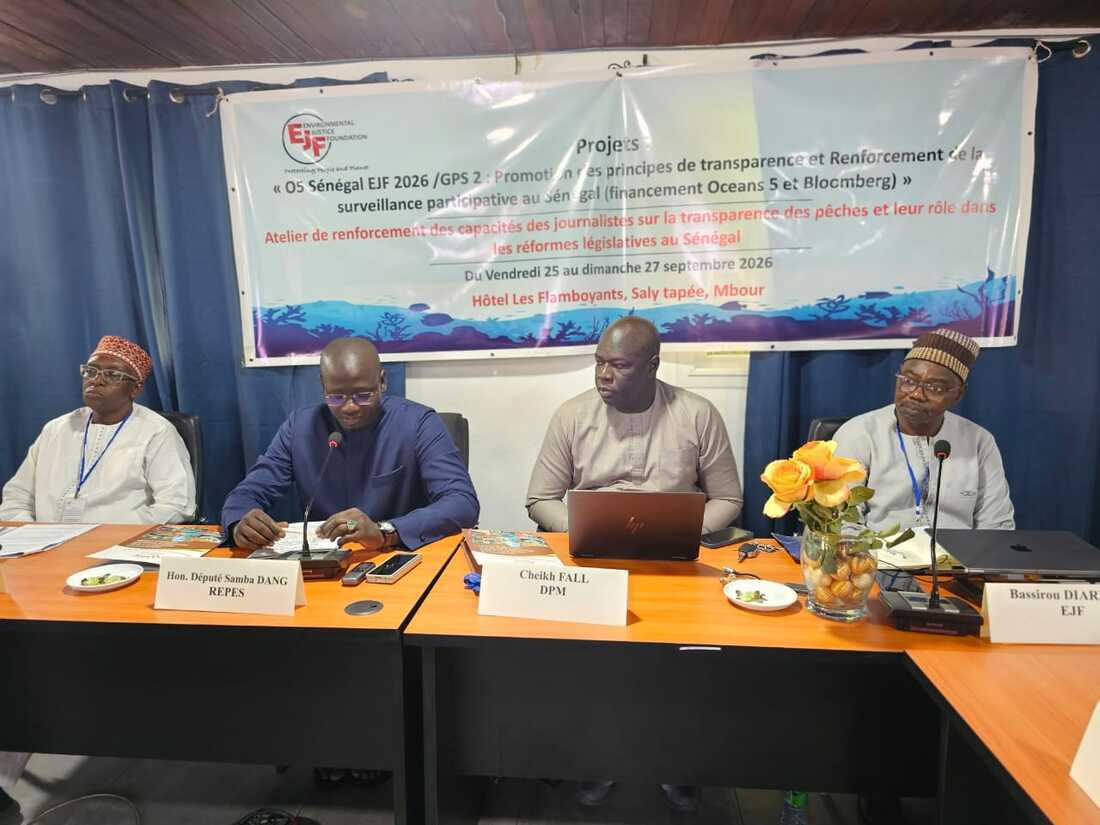
Sénégal: Révision Code Pêche Maritime Offers Transparency Opportunity
Summary
- Bassirou Diarra, Ocean Campaigner and head of the Environmental Justice Foundation (EJF) Dakar office, reported that the CSRP zone sees approximately 2.5 million tonnes of fish captured annually, with artisanal fishing contributing 800,000 tonnes.
- Diarra identified overcapacity, overfishing, and illegal, unreported, and unregulated (IUU) fishing as major challenges, exacerbated by a lack of transparency in the gestion ressources halieutiques.
- The ongoing Sénégal révision Code pêche maritime is viewed by participants as a key opportunity to enhance transparency and participation in resource management.
- Cheikh Fall, Director of Maritime Fisheries, advocated for reliable data, effective surveillance, and improved access to information on fishing authorizations and activities.
- A workshop funded by Oceans 5 and Bloomberg emphasized collaboration among diverse stakeholders to promote transparency and participatory surveillance in Senegal's fishing sector.
The Scale of Senegal's Fisheries and Identified Challenges
The ongoing Sénégal révision Code pêche maritime represents a pivotal opportunity for comprehensive reform.
Senegal's vital fishing sector, particularly within the sub-regional zone overseen by the Commission sous-régionale des pêches (CSRP), faces significant challenges despite its substantial output. Annually, approximately 2.5 million tonnes of fish are captured across this West African region. Artisanal fishing alone accounts for a considerable portion, contributing nearly 800,000 tonnes to the yearly catch. These figures were highlighted by Bassirou Diarra, the Ocean Campaigner and head of the Environmental Justice Foundation (EJF) Dakar office in Senegal and a former fisheries inspector, during the opening of a recent workshop.
Mr. Diarra, whose insights were reported by Apanews, underscored the immense scale of the regional fishing fleet, which comprises roughly 50,000 pirogues and 1,000 industrial vessels. A notable concern is that around 600 of these industrial vessels are foreign-owned. He pointed to a confluence of critical issues plaguing the CSRP zone, including pervasive overcapacity, widespread overfishing, and the persistent problem of illegal, unreported, and unregulated (IUU) fishing. These factors collectively threaten the sustainability of marine resources.
Crucially, Bassirou Diarra emphasized that a fundamental lack of transparency significantly impedes effective control and management of these valuable resources. He advocated strongly for enhanced access to comprehensive data concerning fishing activities and called for greater openness in public policy formulation related to the sector. This call for transparency is a critical component for any future reforms aimed at safeguarding Senegal's marine environment and ensuring equitable resource distribution.
Legislative Reform and the Push for Transparency
Against this backdrop of environmental and management concerns, the ongoing Sénégal révision Code pêche maritime represents a pivotal opportunity for comprehensive reform. Participants at the workshop identified this legislative overhaul as a crucial moment to bolster transparency and foster greater participation in the management of marine resources. This reform is anticipated to introduce new frameworks that could significantly alter operational requirements for fishing entities.
Cheikh Fall, the Director of Maritime Fisheries, articulated specific recommendations to support these reforms. He stressed the necessity of reliable data, the implementation of effective surveillance mechanisms, and improved public access to information regarding fishing authorizations and activities. Such measures are vital for creating a more accountable and sustainable fishing environment. For legal professionals and compliance officers, this signals potential new reporting obligations and stricter enforcement protocols that will require close monitoring.
The reformative efforts aim to address the systemic issues that have historically hindered effective resource governance. By enhancing data reliability and accessibility, the revised Code de la pêche maritime could establish a more robust regulatory landscape, demanding greater diligence from all stakeholders in adhering to new environmental and operational standards. This focus on transparency in the gestion ressources halieutiques is designed to combat the very challenges of overfishing and IUU fishing that Bassirou Diarra highlighted.
Collaborative Efforts and the Path Forward
The workshop, held on September 26 and 27, was organized under the project "Promotion des principes de transparence et renforcement de la surveillance participative au Sénégal," receiving funding from Oceans 5 and Bloomberg. This initiative underscores a broader commitment to fostering a more open and accountable fishing sector. Bassirou Diarra further urged journalists to meticulously examine existing laws, decrees, and particularly the implementing orders (arrêtés d’application), as these documents provide the daily operational framework for fishing policies. Understanding these detailed regulations will be crucial for interpreting the practical impact of any réforme législative pêche Sénégal.
Reinforcing the call for a unified approach, Member of Parliament Samba Dang, who chairs the Network of Parliamentarians for Environmental Protection in Senegal (REPES), advocated for extensive collaboration. He specifically called for synergy among parliamentarians, journalists, administrative bodies, industry professionals, researchers, and civil society organizations. This multi-stakeholder engagement is considered essential for successfully navigating the complexities of marine resource management and ensuring that the revised Code de la pêche maritime is both effective and widely supported.
The collective efforts highlighted at this workshop point towards a future where the management of Senegal's fisheries is characterized by greater transparency and accountability. The emphasis on reliable data, effective surveillance, and broad participation aims to create a more resilient framework for the sector. For businesses operating in the region, this signifies an evolving regulatory landscape where adherence to new standards and proactive engagement with transparency initiatives will be paramount for sustainable operations.
Practical Implications
Lawyers and compliance officers advising clients in Senegal's fishing sector should closely monitor the ongoing revision of the Maritime Fisheries Code. This legislative reform is expected to enhance transparency and address issues like overfishing and IUU fishing, potentially introducing new compliance requirements, reporting obligations, and enforcement mechanisms for fishing operations and related businesses.
Source
Source: Original reporting via Apanews
How does this affect you?
Get an AI analysis of this article grounded in your jurisdictions, practice areas, and any policy documents you've uploaded to Wansom.
Finish Reading the Full Story and the Expert Analysis.
Get the latest legal & regulatory intelligence in Senegal
Wansom is AI and can make mistakes.