
FMI Sénégal: Hidden Debt, State Failures Spark Reforms
Summary
- Senegal and the FMI are concluding a two-year dispute over public finance misreporting and hidden debt, agreeing on a new 1,243 billion FCFA program.
- The FMI clarified its role, stating it is not an audit firm but collaborates with authorities using technical assistance and data cross-referencing.
- Several disbursements between 2019 and 2023 were not properly accounted for in Senegal's public finance statistics due to "institutional reasons."
- To prevent recurrence, reforms include centralizing debt management functions into a new Directorate General.
- Senegal's public debt is projected to reach 132% of GDP by end-2024, subsequently decreasing to 125% in 2025.
Unraveling Senegal's Hidden Debt
The FMI emphasized that its role is not to act as an auditing firm, but rather to collaborate with national authorities, employing technical assistance and data cross-referencing to verify the quality of information provided.
After two years of intense negotiations concerning the "misreporting" of public finances and the issue of "dette cachée" (hidden debt), Senegal and the FMI are moving forward with a new agreement. This accord paves the way for a significant program valued at 1,243 billion FCFA. During this period, the FMI has taken steps to clarify its position regarding the hidden debt, explicitly disclaiming responsibility for the situation.
The institution emphasized that its role is not to act as an auditing firm, but rather to collaborate with national authorities, employing technical assistance and data cross-referencing to verify the quality of information provided.
FMI Clarifies Its Role Amidst Accounting Lapses
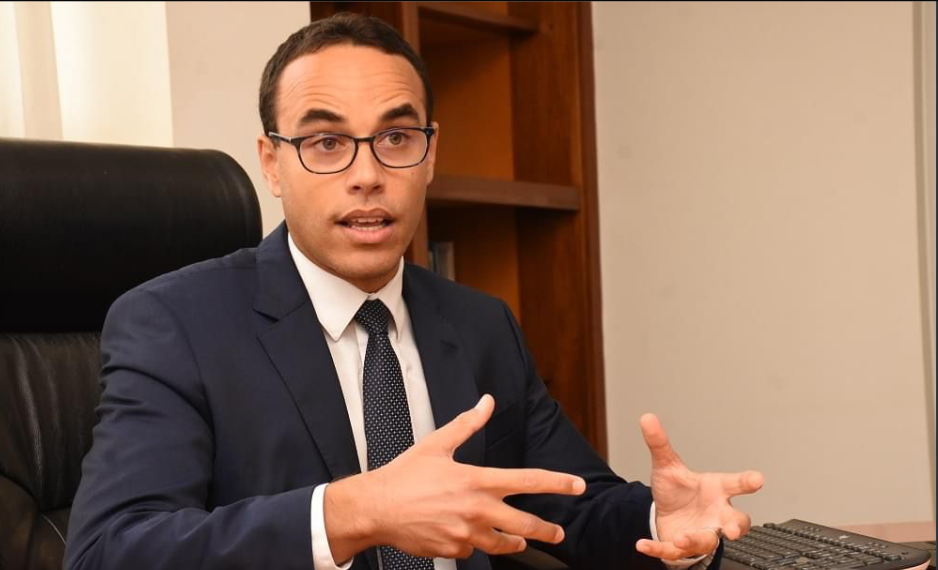
Majdi Debbich, the FMI Resident Representative in Senegal, addressed concerns about the institution's potential culpability in the issues uncovered by an audit of public finances. Speaking in L'Obs, Debbich firmly stated that the FMI does not function as an audit cabinet. He explained that the FMI operates in partnership with government bodies, relying on various checks and technical support to ensure the accuracy of data submitted.
According to Debbich, a key factor in the "défaillances État" (state failures) was the improper accounting of several disbursements within public finance statistics between 2019 and 2023, a problem he attributed primarily to "institutional reasons."
Strategic Reforms for Debt Management and Fiscal Transparency
To prevent a recurrence of such accounting discrepancies, the FMI and Senegalese authorities have jointly committed to implementing several crucial reforms. A cornerstone of these changes is the centralization of all debt management functions under a newly established Directorate General of Financing and Debt. Majdi Debbich highlighted this as an "obviously decisive step," noting that the management of Senegal's public debt was previously fragmented across numerous ministries and departments. This restructuring aims to streamline processes and enhance oversight of the "gestion dette publique Sénégal."
The FMI has also adopted a new baseline for assessing Senegal's debt situation. Based on this updated framework, the nation's public debt is projected to reach approximately 132% of its GDP by the close of 2024. However, forecasts indicate a subsequent slight reduction, with the debt-to-PIB ratio expected to settle around 125% in 2025. These figures underscore the ongoing efforts to stabilize the nation's financial health following the revelations of hidden debt.
Broader Implications for Senegal's Financial Governance
The comprehensive reforms agreed upon between the FMI and Senegal signal a significant push towards greater accountability and transparency in the nation's financial governance. The move to centralize debt management, coupled with a renewed focus on accurate financial reporting, directly addresses the "défaillances État" that led to the hidden debt issue. This strategic shift is designed to bolster confidence in Senegal's fiscal data and improve the overall "audit finances publiques Sénégal."
By consolidating responsibilities and enhancing data verification, the government aims to ensure that all financial commitments are properly recorded and managed, thereby strengthening the integrity of its public finances.
Practical Implications
Lawyers advising clients on financial dealings, investments, or public contracts with the Senegalese government should note the FMI's emphasis on centralized debt management and improved financial reporting. This indicates a push for greater transparency and accountability, which could impact due diligence requirements, contractual terms, and risk assessments related to the state's financial health and commitments.
Source
Source: Original reporting via L'Obs
How does this affect you?
Get an AI analysis of this article grounded in your jurisdictions, practice areas, and any policy documents you've uploaded to Wansom.
Finish Reading the Full Story and the Expert Analysis.
Wansom is AI and can make mistakes.