
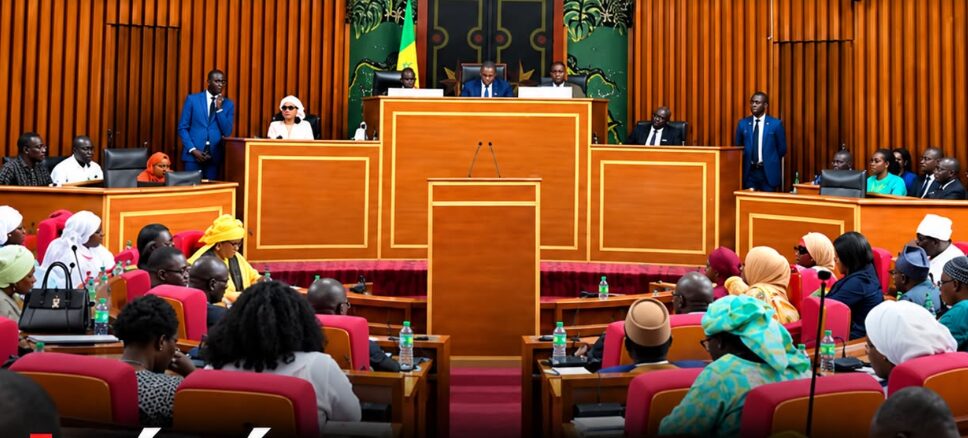
Sénégal PLFR 2026 Assemblée Nationale: Bill Faces Rejection, Article 86 Looms
Summary
- Sénégal's Projet de loi de finances rectificative (PLFR) 2026 has advanced to the National Assembly's plenary session after two rejections in committee.
- The legislative process is marked by strong tensions and a standoff with Pastef deputies.
- The government is threatening to invoke Article 86 of the Constitution to pass the bill.
- This legislative deadlock risks undermining confidence among Sénégal's financial partners.
- The situation signals significant uncertainty for the nation's financial regulatory landscape.
Legislative Standoff Over PLFR 2026
The inability to smoothly pass key financial legislation like the Projet de loi de finances rectificative 2026 sends a signal of political and economic instability to global markets and lending institutions.
The Projet de loi de finances rectificative (PLFR) 2026 for Sénégal is currently facing significant hurdles as it advances to a plenary session within the National Assembly. This crucial financial legislation arrives amidst an atmosphere of palpable tension, following its rejection twice in committee. The ongoing legislative process for the Sénégal PLFR 2026 Assemblée nationale is marked by a contentious struggle between the government and opposition factions, particularly as the bill seeks final approval.
Specifically, a notable standoff has emerged with deputies from the Pastef party, contributing to the highly charged environment surrounding the bill's consideration. This persistent disagreement underscores the challenges in securing parliamentary consensus for the proposed financial adjustments, which are designed to modify the existing national budget. The repeated failure to pass the measure at the committee stage highlights deep divisions within the legislative body regarding the government's fiscal proposals and its approach to national economic management. The current political climate suggests that the path to enacting the Projet de loi de finances rectificative 2026 will remain fraught with difficulty.
Constitutional Powers and Financial Legislation
Adding to the complexity of the parliamentary debate, there is a looming threat that the government may invoke Article 86 of the Constitution of Sénégal. This constitutional provision grants the executive branch specific powers to bypass traditional parliamentary approval under certain exceptional conditions, a move that would undoubtedly escalate the current political friction. The potential application of Article 86 Constitution Sénégal underscores the gravity of the legislative deadlock concerning the PLFR 2026 Sénégal and the executive's determination to push through its agenda.
Such a constitutional maneuver, while legally permissible, could have profound implications for the democratic process and the established balance of power between the legislative and executive branches. It signifies the extent of the government's resolve to enact the Projet de loi de finances rectificative 2026, even in the face of strong parliamentary opposition and repeated rejections. The débat parlementaire Sénégal is therefore not merely about the specifics of the budget itself, but also about the procedural integrity of lawmaking and the limits of executive authority in a democratic system. This potential recourse highlights the high stakes involved in the current legislative impasse.
Economic Repercussions and Investor Confidence
Beyond the domestic political arena, the protracted dispute over the PLFR 2026 Sénégal carries substantial risks for the nation's international financial standing and economic stability. There is a tangible concern that the ongoing legislative uncertainty and the contentious nature of the bill's passage could lead to a significant loss of confidence among key financial partners. Such a scenario could potentially jeopardize future funding, impact credit ratings, and deter foreign direct investment, all critical components for Sénégal's economic growth.
The inability to smoothly pass key financial legislation like the Projet de loi de finances rectificative 2026 sends a signal of political and economic instability to global markets and lending institutions. This could translate into more stringent conditions for sovereign loans, increased borrowing costs, or a general reluctance to engage in new investment projects within the country. The broader implications for législation financière Sénégal are significant, as delays or contentious passages of such critical bills can undermine the predictability and reliability of the country's fiscal framework, affecting everything from public procurement processes to long-term national development strategies. The government's ability to maintain trust with its financial allies is paramount, and the current situation poses a clear challenge to this relationship.
Practical Implications
The ongoing legislative deadlock and potential invocation of Article 86 regarding the PLFR 2026 signal significant uncertainty in Senegal's financial regulatory landscape. Lawyers should monitor these developments closely to advise clients on potential impacts on fiscal obligations, public procurement, and investment strategies, particularly if the final version of the law differs substantially or its passage is delayed.
Source
How does this affect you?
Get an AI analysis of this article grounded in your jurisdictions, practice areas, and any policy documents you've uploaded to Wansom.
Wansom is AI and can make mistakes.