
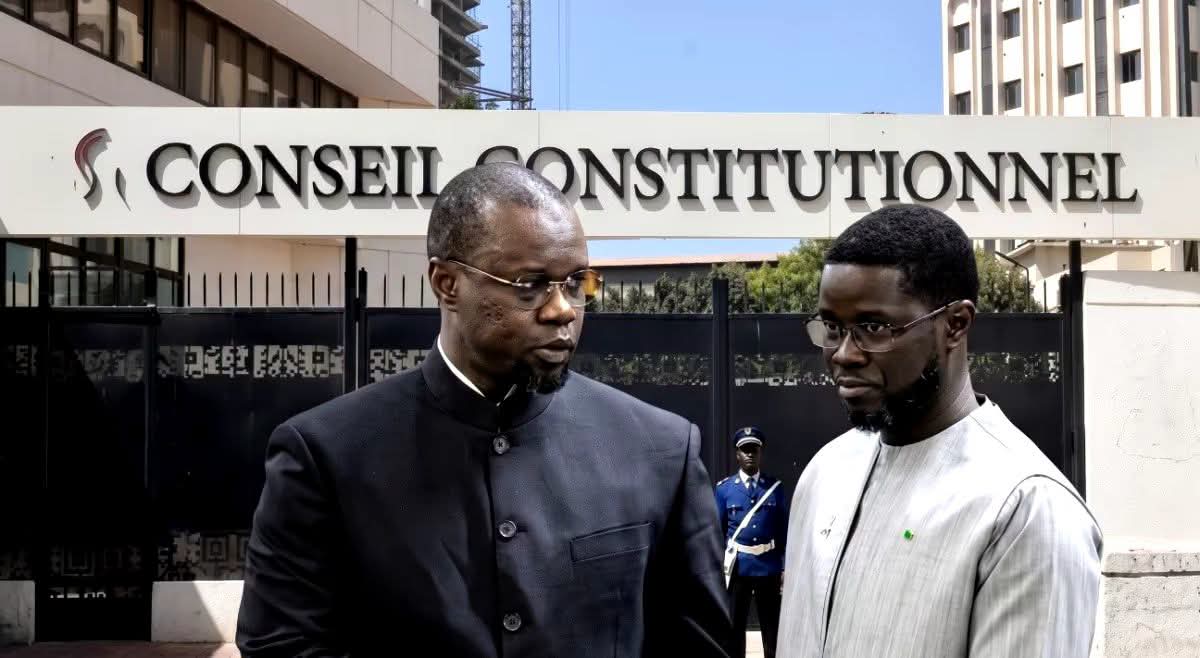
Sénégal Conseil Constitutionnel: Déchéance Députés Absences Unconstitutional
Summary
- Sénégal's Constitutional Council censored a provision allowing for the forfeiture of a deputy's mandate due to ten consecutive absences.
- The Council ruled that the National Assembly's internal rules cannot create new grounds for déchéance, as these must be constitutionally defined.
- The decision, issued on September 7, followed a referral by the President of the Republic on August 27, 2026.
- Existing constitutional grounds for mandate loss include party resignation or a final criminal conviction.
- Other aspects of the internal rules reform were deemed constitutional, with a reservation concerning deputies elected abroad.
Constitutional Council Rejects Absenteeism Sanction
The déchéance of deputies cannot be instituted by the sole Règlement intérieur de l’Assemblée nationale, according to the decision.
Sénégal's Constitutional Council has struck down a provision within the National Assembly's internal rules that sought to impose the forfeiture (déchéance) of a parliamentary mandate for deputies accumulating ten consecutive absences from plenary sessions. This significant ruling, issued on Monday, September 7, followed a referral by the President of the Republic on August 27, 2026. The Council's decision specifically targeted the proposed amendment to Article 118 of the Règlement intérieur de l’Assemblée nationale.
The contested measure was designed to address issues of absenteeism among deputies, establishing a progressive system of sanctions that would commence after three unjustified absences. However, the ultimate penalty of déchéance des députés for repeated non-attendance was deemed unconstitutional by the Council. While the regularity of the referral and the procedure for adopting the internal rules reform were validated, the specific mechanism for sanctioning absences was rejected.
Crucially, the passages outlining this particular sanction, along with any references to an automatic resignation or forfeiture of office, were also censored. This ruling clarifies the limits of the National Assembly's power to define grounds for the loss of a legislative seat, emphasizing that such fundamental changes must align with the nation's supreme law.
Legal Basis for the Ruling
The core of the Constitutional Council's decision rests on the principle that the déchéance of deputies cannot be established solely through the internal rules of the National Assembly. The Council affirmed that the Constitution itself enumerates the permissible causes for the loss of a parliamentary mandate. These constitutionally enshrined grounds include, notably, a deputy's resignation from their political party during the legislative term or a definitive criminal conviction.
By attempting to introduce a new ground for déchéance via the Règlement intérieur, the National Assembly's reform was judged to be in contravention of the Constitution. This underscores the importance of conformité constitutionnelle mandat député, ensuring that any conditions affecting a legislator's tenure are rooted in the foundational legal text. The Council's intervention reinforces the hierarchy of norms in Sénégal droit parlementaire déchéance, where constitutional provisions take precedence over internal parliamentary regulations.
The ruling effectively prevents the Assemblée nationale from unilaterally expanding the conditions under which a deputy can lose their seat. It delineates a clear boundary, asserting that while the Assembly can regulate its internal functioning, it cannot create new categories for the forfeiture of a national mandate without a corresponding constitutional basis. This interpretation of the Conseil constitutionnel Sénégal mandat parlementaire has significant implications for future legislative efforts.
Broader Implications and Procedural Context
Despite the censorship of the absenteeism provision, other aspects of the organic law reforming the internal rules were declared compliant with the Constitution. This indicates that the Council's review was precise, targeting only the specific unconstitutional elements rather than invalidating the entire reform package. A notable reservation, however, was attached to the rules applicable to deputies elected abroad, suggesting further scrutiny or clarification may be needed for this particular group.
The legislative process leading to this review involved a report by Youngare Dione on the law pertaining to the internal rules, which was examined in plenary session. However, the parliamentary vote alone was insufficient to render the reform applicable; its promulgation by the President of the Republic represented a critical final step. The Conseil constitutionnel's censure of the Règlement intérieur Assemblée nationale provision highlights that even after parliamentary approval, proposed changes must withstand constitutional scrutiny before becoming law.
This ruling clarifies the constitutional limits on the Senegalese National Assembly's power to define grounds for parliamentary mandate forfeiture. Lawyers advising political parties or parliamentarians should note that new grounds for déchéance must be constitutionally enshrined, not merely enacted through internal regulations, impacting future legislative efforts to address absenteeism.
Source
Source: Original reporting via EMedia
How does this affect you?
Get an AI analysis of this article grounded in your jurisdictions, practice areas, and any policy documents you've uploaded to Wansom.
Finish Reading the Full Story and the Expert Analysis.
Wansom is AI and can make mistakes.