
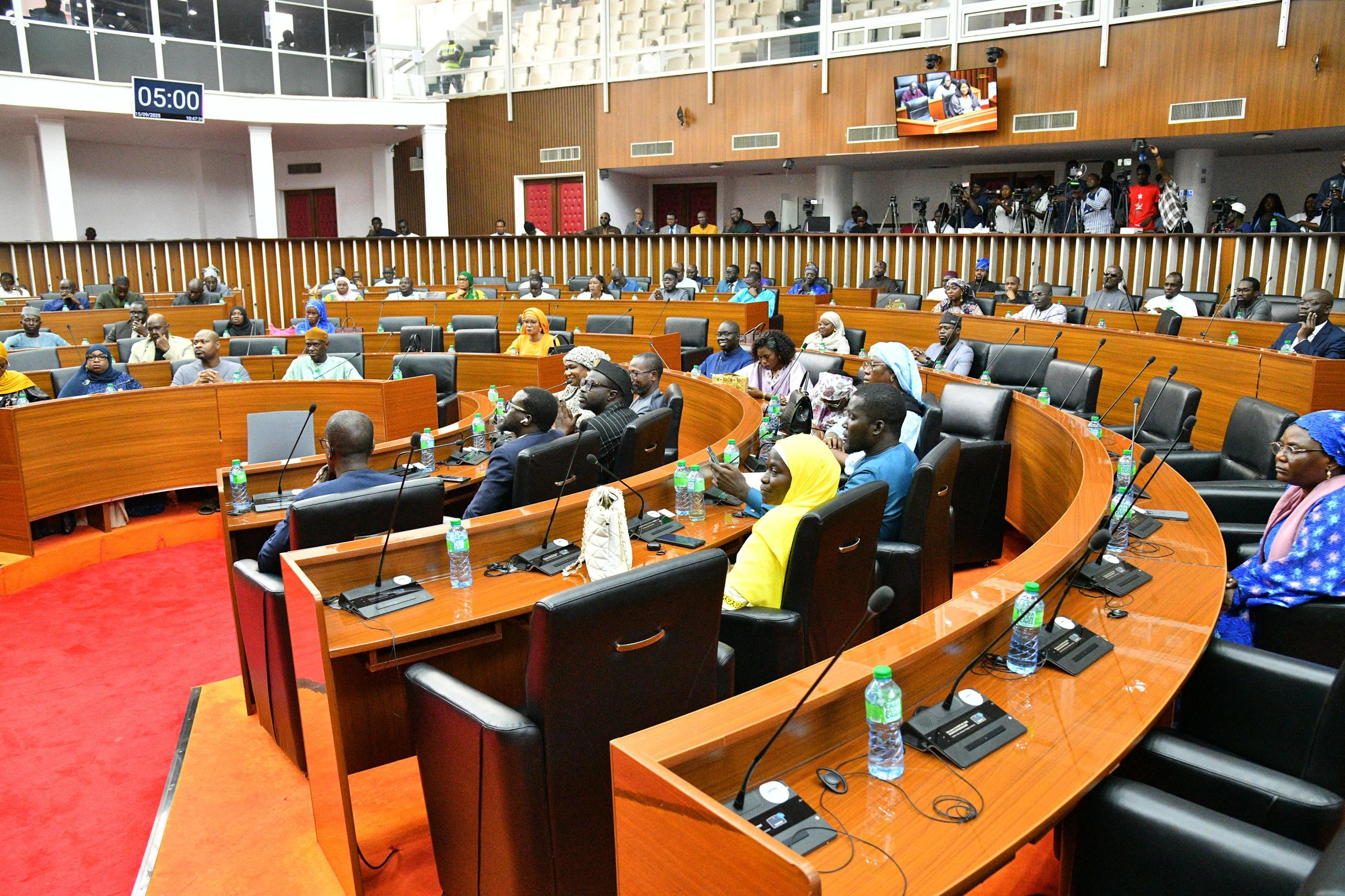
Sénégal Budgets Ministères Bloqués Commission: Assemblée Nationale Rejette Projets
Summary
- The Senegalese National Assembly is facing an impasse over the 2027 budget after commissions rejected revenue forecasts and budgets for 26 ministries.
- Key institutions like the Presidency and Supreme Court, along with the public debt, saw their budgets rejected in commission on November 7.
- Pastef party members argue that without validated revenues, expenditures cannot be approved, citing a proposed 4.7% deficit for 2027.
- This current tension follows the Assembly's rejection of the 2026 rectified finance law on November 3, driven by concerns over a 7.6% deficit and debt sustainability.
- A plenary session is scheduled for November 18 to address revenues, expenditures, and public debt, with the possibility of budget application by decree if disagreements persist.
Parliamentary Budgetary Impasse
This established distrust concerning budgetary figures now significantly influences the ongoing examination of the 2027 finance text, contributing to the current challenges in approving the rejet budget ministériel Sénégal.
The Senegalese National Assembly is currently navigating a complex review of the 2027 national budget, following significant setbacks in commission-level voting. Preliminary votes by the Finance and Budget Control Commission resulted in the rejection of revenue forecasts and the proposed budgets for several key state institutions, including the Presidency, the National Assembly itself, the Supreme Court, the Constitutional Council, and the Court of Accounts. This initial rejection, which also encompassed the public debt, has led to a broader impasse.
Subsequently, the budgets for 26 ministries were blocked during commission deliberations, impacting a total announced envelope of 5,572 billion CFA francs, according to Tribune. Among the specific ministerial budgets recalibrated on November 11 were those for Energy, Mines, and Education. While these commission votes are not definitive, they signal a deep disagreement that the full Assembly must now address as it continues its examination of the finance law.
Core Disagreements on Fiscal Projections
At the heart of the current budgetary dispute lies a fundamental disagreement over both the state's projected revenues and its planned expenditures. Members of the Pastef party have articulated a position that without validated revenue streams, the proposed expenditures cannot legitimately be approved. The draft law for 2027 outlines anticipated revenues of 6,012.1 billion CFA francs against projected expenditures of 7,363.7 billion CFA francs, which would result in an expected deficit of 4.7%.
The ongoing discussions in the Assemblée nationale Sénégal budget process must therefore reconcile the resources the state expects to mobilize with the financial commitments it intends to undertake. The rejection of the public debt in commission further underscores the depth of the fiscal concerns raised by parliamentarians, particularly regarding the sustainability of the nation's financial obligations.
Broader Political and Fiscal Tensions
This current budgetary standoff for the Sénégal loi de finances 2027 unfolds within an already strained political and fiscal environment. Just prior to these developments, on November 3, the Assembly rejected the rectified finance law for 2026. That rejection occurred with a decisive vote of 109 against, 20 for, and 3 abstentions, following the adoption of a preliminary question that bypassed a debate on the substance of the bill.
During the 2026 budget review, Pastef deputies voiced strong objections, characterizing the forecasts as insincere. Their concerns specifically highlighted a projected deficit of 7.6% of GDP and a perceived lack of transparency regarding the sustainability of the national debt. This established distrust concerning budgetary figures now significantly influences the ongoing examination of the 2027 finance text, contributing to the current challenges in approving the rejet budget ministériel Sénégal.
The Path Forward
The National Assembly is scheduled to convene a plenary session on November 18, as reported by xalimasn, to deliberate on the proposed revenues, expenditures, and borrowing operations associated with the public debt. This session will be crucial for resolving the disagreements that led to the Sénégal budgets ministères bloqués commission.
Should persistent disagreements prevent a parliamentary resolution, the application of the budget by decree remains a potential, albeit less preferred, alternative. However, it is important to note that the votes cast within the commission, while indicative of legislative sentiment, are not sufficient on their own to determine the final fate of the finance law. The full Assembly must ultimately decide on the comprehensive budget proposal.
Practical Implications
Lawyers and compliance officers in Senegal should closely monitor the parliamentary process for the 2027 finance law, particularly the resolution of blocked ministry budgets and revenue forecasts. This political uncertainty could impact the stability of government contracts, public procurement processes, and the operational capacity of regulatory bodies, necessitating a proactive review of client engagements with the state and potential financial exposures.
Source
How does this affect you?
Get an AI analysis of this article grounded in your jurisdictions, practice areas, and any policy documents you've uploaded to Wansom.
Finish Reading the Full Story and the Expert Analysis.
Get the latest legal & regulatory intelligence in Senegal
Wansom is AI and can make mistakes.