
Sénégal Assemblée Nationale: Rejette Budget Enseignement Supérieur 2027
Summary
- Senegal's National Assembly finance commission rejected the 2027 budget for the Ministry of Higher Education, Research, and Innovation.
- The proposed budget of 303.7 billion CFA francs for payment credits represented a 0.9% increase over the previous year.
- Deputies cited inconsistencies in figures and questioned the reliability of financial forecasts as reasons for the rejection.
- This decision follows earlier rejections of other 2027 budget proposals, including those for revenue, public debt, the Presidency, and the Prime Minister's Office.
- The series of rejections highlights a period of significant legislative scrutiny over government financial planning.
Legislative Setback for Higher Education Funding
The repeated rejection of key budgetary proposals, including the 2027 higher education budget, by the Senegalese National Assembly signals potential legislative instability and could lead to significant delays in the government's financial planning.
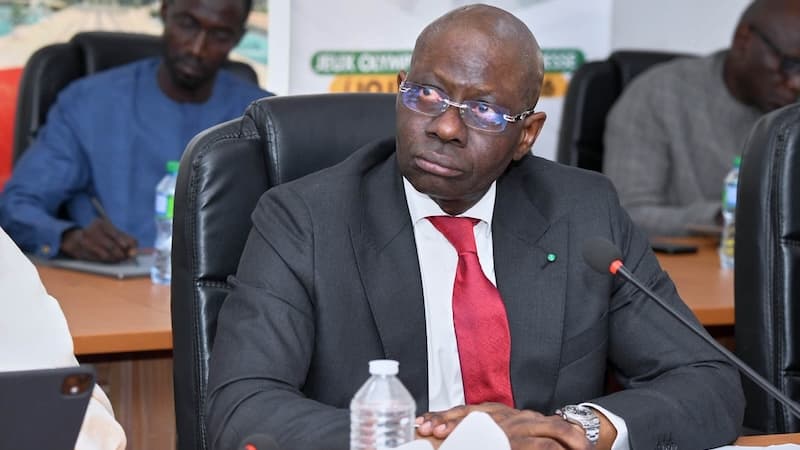
The National Assembly in Senegal recently delivered a significant blow to the government's financial plans for higher education, as its finance and budgetary control commission, working alongside the education commission, rejected the proposed 2027 budget for the Ministry of Higher Education, Research, and Innovation. This decision, which saw a majority vote against the proposals, came after Minister Boubacar Camara presented the financial blueprint. The rejection of the budget for the Ministry of Higher Education, Research, and Innovation marks a notable legislative setback.
The proposed financial allocation for 2027 outlined 303.7 billion CFA francs in payment credits, which are funds designated for expenditure within the budget year. This figure represented a modest increase of 2.7 billion CFA francs, or 0.9%, compared to the 301 billion CFA francs allocated in payment credits under the initial 2026 finance law. Furthermore, the budget included 344.6 billion CFA francs in engagement authorizations, which permit the government to commit to future spending.
Proposed Allocations and Government Ambitions
The rejected 2027 budget for the Ministry of Higher Education, Research, and Innovation aimed to address several critical areas within Senegal's educational landscape. Key funding priorities included the development of new infrastructure, the provision of student scholarships, and the recruitment of additional teaching staff. A significant component of the plan involved the establishment of two new academic institutions: the Souleymane Niang University in Matam and the University of Oriental Senegal in Tambacounda, reflecting a push for expanded access to higher learning.
Minister Camara, during his presentation, also acknowledged existing challenges such as persistent delays in the academic calendar and ongoing tensions related to social welfare provisions for students. These issues, he noted, continue to impact the overall conditions for study and the operational efficiency of university campuses across the nation. For context, the 2026 budget had set engagement authorizations at 316.4 billion CFA francs and payment credits at 301 billion CFA francs, with 166.9 billion CFA francs specifically directed towards the "Higher Education" program, primarily supporting public university operations and infrastructure modernization. The government's stated priorities for 2026 included stabilizing the academic calendar, enhancing study conditions, and revitalizing research efforts.
Legislative Scrutiny and Pattern of Rejections
The decision by the parliamentary commission to reject the higher education budget was not an isolated incident, but rather part of a broader pattern of rigorous legislative scrutiny. Deputies specifically raised concerns regarding perceived inconsistencies within the presented figures and expressed doubts about the veracity and reliability of the financial forecasts provided. According to reports from Ndarinfo, the vote against the proposals was decisive, indicating widespread dissatisfaction among the parliamentarians.
This particular rejection follows closely on the heels of similar actions taken by the same Commission finances contrôle budgétaire Sénégal just the day before. On that occasion, several other initial proposals for the 2027 budget were also turned down, including those pertaining to government revenues, public debt, the Presidency, and the Prime Minister's Office. During those earlier deliberations, commissioners highlighted the absence of crucial supporting documentation, notably the 2025 settlement law, which further fueled their skepticism.
This series of parliamentary setbacks also comes after the plenary rejection of the 2026 rectifying finance law on November 3, underscoring a period of significant legislative pushback against government financial proposals. The Loi de finances 2027 Sénégal rejet was formally submitted on October 12, and the Assemblée nationale Sénégal budget 2027 is constitutionally mandated to render its decision within sixty days.
Why It Matters
The repeated rejection of key budgetary proposals, including the 2027 higher education budget, by the Senegalese National Assembly signals potential legislative instability and could lead to significant delays in the government's financial planning. This sequence of events, where multiple budget components have faced parliamentary disapproval, suggests a challenging environment for the executive branch to secure approval for its fiscal agenda. Such persistent legislative hurdles may complicate the implementation of critical government programs and initiatives, particularly those reliant on timely funding.
The ongoing parliamentary scrutiny, marked by questions of sincerity and reliability in financial forecasts, underscores a demand for greater transparency and accountability in public spending. This situation could necessitate a re-evaluation of budgetary strategies and a more robust engagement between the executive and legislative branches to ensure the smooth functioning of government. The National Assembly's firm stance on these budget proposals highlights its role in controlling public finances and ensuring that allocations align with national priorities and fiscal prudence.
Practical Implications
The repeated rejection of key budget proposals, including the 2027 higher education budget, signals potential legislative instability and delays in government financial planning in Senegal. Lawyers advising clients on public contracts, educational sector investments, or regulatory compliance should closely monitor the budget approval process for impacts on project timelines and funding availability, and anticipate potential shifts in government priorities or spending.
Source
How does this affect you?
Get an AI analysis of this article grounded in your jurisdictions, practice areas, and any policy documents you've uploaded to Wansom.
Finish Reading the Full Story and the Expert Analysis.
Get the latest legal & regulatory intelligence in Senegal
Wansom is AI and can make mistakes.