
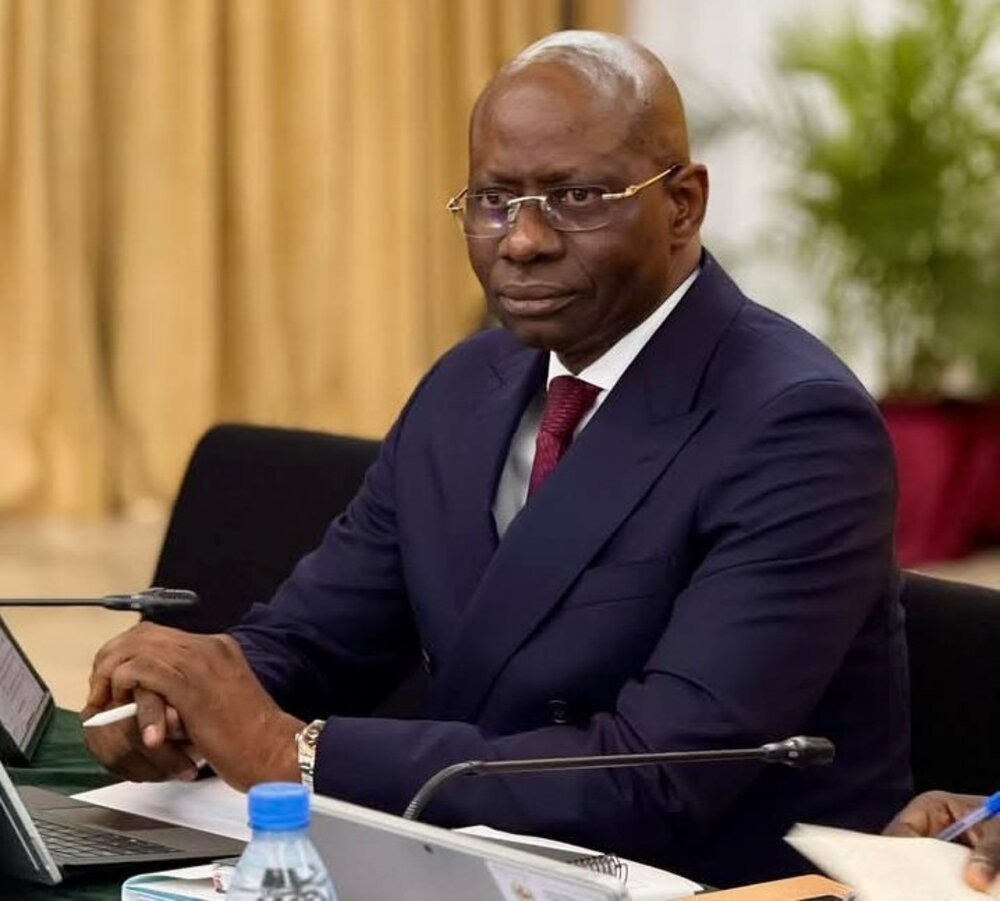
Boubacar Camara: Presents 303.7 Billion FCFA Budget for Enseignement Supérieur 2027
Summary
- Minister Boubacar Camara defended a 2027 budget of 303.7 billion FCFA for higher education, an increase of 0.9% from 2026.
- The budget allocates 79.1 billion FCFA for scholarships and 52.7 billion FCFA for university social welfare centers.
- Two new universities, Université Souleymane Niang Matam and Université du Sénégal oriental Tambacounda, are scheduled to open in 2027.
- Scholarship allocation reforms will integrate university and scholarship directorate files and progressively eliminate non-compliant grants.
- The ministry aims to normalize the academic calendar by 2027-2028 and achieve a 75% bachelor's degree success rate by 2029.
Funding Higher Education in Senegal
A primary objective is to overhaul the allocation of scholarships by integrating university student records with those maintained by the Scholarship Directorate, while concurrently planning to gradually eliminate scholarships that have been granted outside the established legal framework.
Boubacar Camara, the Minister of Higher Education, Research, and Innovation, recently presented a proposed budget of 303.7 billion FCFA for 2027 to the National Assembly's Finance Commission. This allocation for "enseignement supérieur" in "Sénégal" marks a modest increase of 2.7 billion FCFA, or 0.9%, compared to the previous year's budget. The substantial "303,7 milliards FCFA éducation" is designated to address several critical areas within the sector, including the development of new infrastructure, the provision of student scholarships, the recruitment of teaching staff, and the establishment of new "universités".
The minister highlighted that this financial plan is designed to tackle persistent issues such as delays in the academic calendar and ongoing tensions related to social welfare services for students. A significant portion of the budget, 21.6 billion FCFA, is earmarked for the continued construction of eight Professional Higher Education Institutes (ISEP) under the ESPOIR-Jeunes project, with 2 billion FCFA specifically allocated for the ISEP in Mbacké. These investments underscore the government's commitment to expanding access and improving the quality of higher education across the nation.
Expanding University Access and Student Support
A key component of the "Sénégal budget 2027 universités" is the planned opening of two new institutions in 2027: the "Université Souleymane Niang Matam" and the "Université du Sénégal oriental Tambacounda". An initial sum of 4.7 billion FCFA has been allocated to cover their operational costs, alongside those of two new regional university social welfare centers. This expansion aims to decentralize higher education opportunities and cater to a broader student population.
Student support remains a significant expenditure, with 79.1 billion FCFA dedicated to scholarships and an additional 52.7 billion FCFA allocated as subsidies for university social welfare centers (CROU). The substantial financial commitment to student welfare is evident in the average annual cost per student for the state, which stood at 1,178,742 FCFA in 2024. This figure comprised 542,702 FCFA for pedagogical expenses and 636,040 FCFA for social costs, with scholarships alone accounting for over 76.8 billion FCFA annually that year. The 2027 scholarship allocation of 79.1 billion FCFA is consistent with these prior levels of investment. Furthermore, 3 billion FCFA is earmarked to partially settle a debt of 19.9 billion FCFA owed to catering service providers as of the end of 2025.
Reforms in Scholarship Allocation and Academic Calendars
The "Ministère Enseignement Supérieur Sénégal" is set to implement crucial reforms concerning student financial aid. A primary objective is to overhaul the allocation of scholarships by integrating university student records with those maintained by the Scholarship Directorate, while concurrently planning to gradually eliminate scholarships that have been granted outside the established legal framework. This initiative aims to enhance transparency and efficiency, signaling a tightening of regulatory oversight. This "réforme bourses universitaires Sénégal" is projected to reduce the proportion of social welfare services within the sectoral budget from 46% to 41.5%.
Addressing the persistent issue of academic calendar delays is another major undertaking. The minister noted that despite a decade-long reform effort initiated in 2014, which saw 95% of its eleven decisions in progress three years later, only 49% were fully executed. This has resulted in bachelor's degree programs, typically designed for three years, frequently extending to four years or more. The ministry is targeting a return to a normalized academic schedule by the 2027-2028 academic year, relying on catch-up calendars adopted by the eight affected universities.
Advancing Research, Innovation, and Future Vision
Beyond infrastructure and student welfare, the 2027 budget includes 6.9 billion FCFA for research and innovation, representing approximately 2% of the department's total allocation. Minister Boubacar Camara advocated for increased resources to support key initiatives, including the SENSAT spatial program, funds for research impetus and publication, and national structures dedicated to fostering innovation. Senegal is actively preparing for the launch of its second satellite and the Ninki Nanka constellation, highlighting its ambitions in space technology.
Looking ahead, the "Ministère Enseignement Supérieur Sénégal" is committed to further governance reforms and the digitization of administrative procedures. The establishment of the National Council for Research and Innovation is also on the agenda. These strategic moves are part of a broader vision to elevate the quality and efficiency of higher education, with a specific target of achieving a 75% success rate for bachelor's degrees by 2029.
Practical Implications
Lawyers advising educational institutions or students in Senegal should monitor the planned reforms in scholarship allocation, including the linking of university and scholarship directorate files, and the elimination of non-compliant scholarships. This signals a tightening of regulatory oversight and potential changes in eligibility criteria and compliance requirements for institutions and beneficiaries.
Source
Source: Original reporting via Apanews
How does this affect you?
Get an AI analysis of this article grounded in your jurisdictions, practice areas, and any policy documents you've uploaded to Wansom.
Finish Reading the Full Story and the Expert Analysis.
Get the latest legal & regulatory intelligence in Senegal
Wansom is AI and can make mistakes.