
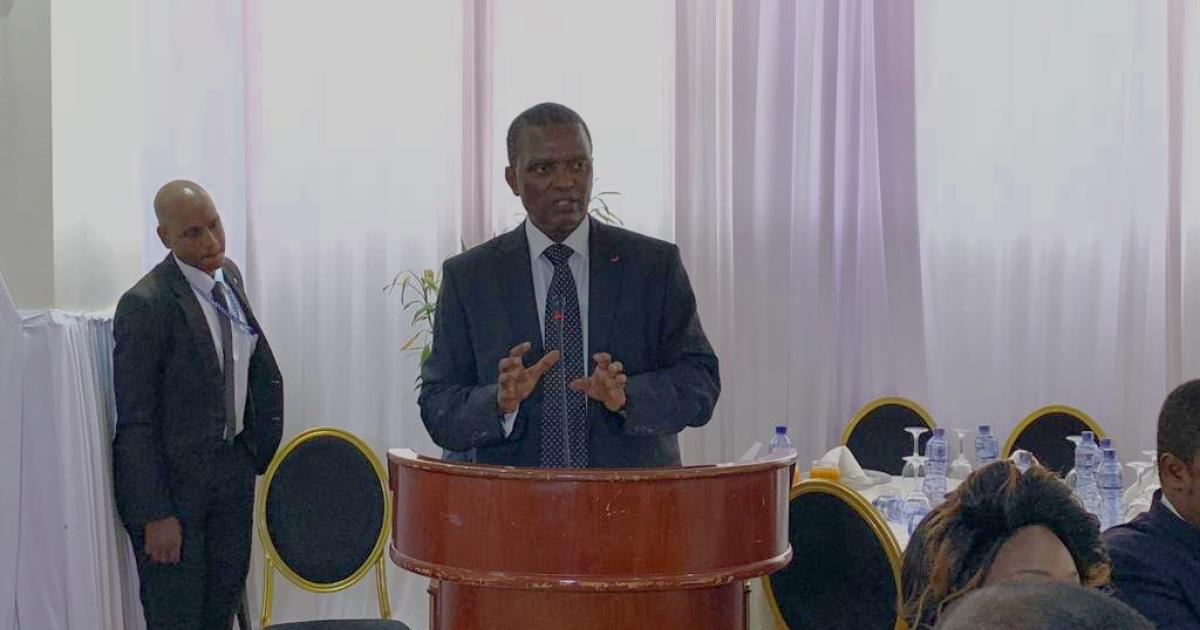
Azarias Ruberwa: Condemns DRC Constitution 'Foreign Origin' Claims
Summary
- Azarias Ruberwa recently condemned narratives questioning the national origin of the Democratic Republic of Congo's 2006 Constitution.
- He specifically refuted claims that the Constitution was "made by foreigners" during a Space live event on August 23, 2026, organized by journalist Stanis Bujakera Tshiamala.
- Ruberwa denounced efforts to disqualify architects of the 2006 Constitution by labeling them as "foreigners."
- To support his argument, Ruberwa cited Jean-Pierre Bemba as a counterpoint to the "foreign origin" idea.
Recent Developments
Ruberwa's public stand against these narratives highlights a deeper struggle over who defines Congolese nationhood and who is considered a legitimate contributor to its future and foundational laws.
Azarias Ruberwa, a prominent political figure in the Democratic Republic of Congo, recently addressed contentious claims regarding the nation's foundational legal document, the 2006 Constitution. On a Thursday evening, specifically August 23, 2026, Ruberwa participated in a live online discussion, known as a "Space live," which was organized by journalist Stanis Bujakera Tshiamala. During this public forum, Ruberwa took the opportunity to strongly condemn narratives that seek to undermine the legitimacy and national character of the 2006 Constitution. His intervention was specifically aimed at countering the assertion that the DRC Constitution has a "foreign origin" or was "made by foreigners," a sentiment that has gained traction in certain political circles.
Ruberwa's remarks highlighted a growing concern within Congolese political discourse about the perceived external influence on national sovereignty and the authenticity of its legal instruments. He directly challenged those who propagate the idea that the country's supreme law is not authentically Congolese, emphasizing the critical importance of national ownership and internal authorship over such a pivotal document. This public refutation underscores the ongoing sensitivity surrounding the origins and legitimacy of key state structures in the Democratic Republic of Congo.
The Constitutional Debate
Central to Ruberwa's argument was his explicit denunciation of specific discourses that attempt to discredit individuals involved in the drafting and establishment of the 2006 Constitution. These narratives, according to Ruberwa, aim to disqualify certain architects and contributors to the constitutional framework by pejoratively labeling them as "foreigners." This tactic, he suggested, is designed to delegitimize their contributions and, by extension, cast doubt upon the entire constitutional document itself, implying it lacks genuine Congolese roots.
In a notable move to bolster his refutation of the "foreign origin" claim, Ruberwa invoked the name of Jean-Pierre Bemba. By citing Bemba, Ruberwa sought to provide a powerful counter-example or a significant point of reference against the notion that the 2006 Constitution was an external imposition. The act of citing Bemba underscores the complex internal political dynamics and the diverse array of figures, many with deep national ties, who were involved in shaping the Democratic Republic of Congo's legal landscape, thereby directly challenging the narrative of foreign influence.
Implications for National Identity
The ongoing debate surrounding the "foreign origin" of the Democratic Republic of Congo's 2006 Constitution carries significant implications for national identity, political cohesion, and the stability of the state. Ruberwa's public stand against these narratives highlights a deeper struggle over who defines Congolese nationhood and who is considered a legitimate contributor to its future and foundational laws. The attempt to brand constitutional framers as "foreigners" can sow deep divisions within society and undermine public trust in governmental institutions and the rule of law.
Such discourses, which Ruberwa explicitly denounced, risk fostering an environment where political opponents or those with differing views can be easily marginalized by questioning their national allegiance and their right to participate in national affairs. Ensuring the perceived authenticity and internal ownership of the DRC Constitution is crucial for its enduring authority and for fostering a sense of collective national purpose and unity among the citizenry. Ruberwa's intervention serves as a timely reminder of the persistent challenges in solidifying a shared understanding of national heritage and constitutional legitimacy in the Democratic Republic of Congo.
Source
Source: Original reporting via PMaki
How does this affect you?
Get an AI analysis of this article grounded in your jurisdictions, practice areas, and any policy documents you've uploaded to Wansom.
Wansom is AI and can make mistakes.