
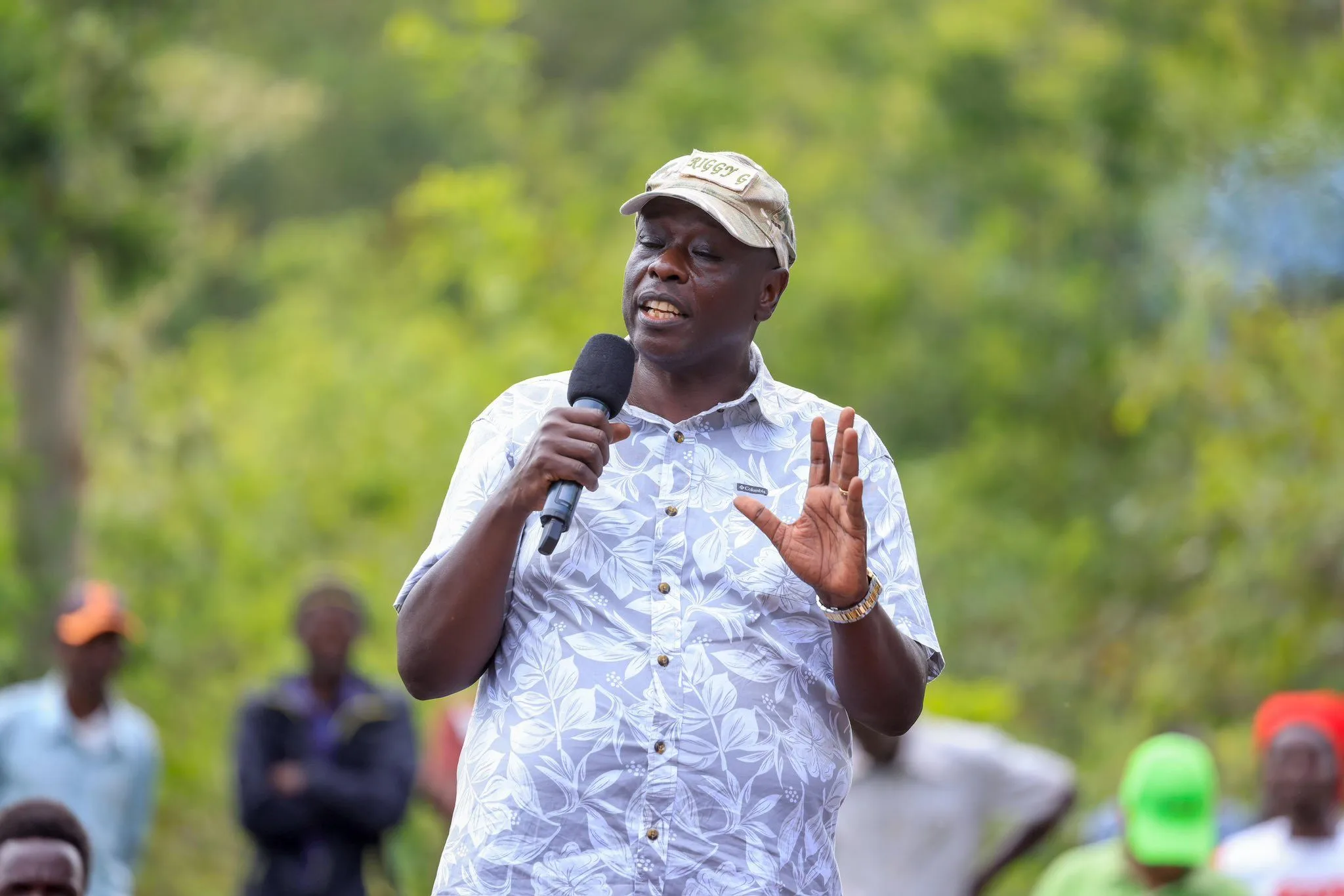
Rigathi Gachagua: Pursues 2027 Presidential Eligibility Appeal
Summary
- Former Deputy President Rigathi Gachagua intends to run for president in Kenya's 2027 General Election, despite his impeachment.
- Gachagua argues his eligibility remains intact while his appeals against the impeachment are pending in court.
- The High Court upheld his impeachment but awarded him Sh50 million for a fair hearing violation during Senate proceedings.
- Gachagua has appealed to the Court of Appeal, calling the High Court's decision a "constitutional absurdity" for allowing an unconstitutional process's outcome to stand.
- Senior lawyers Charles Kanjama and Nelson Havi support Gachagua's eligibility, citing Article 99(3) and the need to exhaust all legal remedies.
Gachagua's 2027 Presidential Ambitions Spark Legal Battle
He argues that it is illogical for a court to declare a process unconstitutional due to a fair hearing violation, yet allow the product of that unconstitutional process to stand.
Former Deputy President Rigathi Gachagua has firmly declared his intention to contest the presidency in Kenya's 2027 General Election, asserting that his prior impeachment does not automatically disqualify him from seeking public office. This stance comes as his legal challenges against the impeachment remain active, forming the core of his argument for continued eligibility. Gachagua made these remarks on August 24, amidst a backdrop of opposition parties convening to forge a united front against President William Ruto, an event where the Democracy for Citizens Party (DCP) Deputy Leader Cleophas Malala represented the party.
Gachagua's determination to pursue his presidential bid highlights a growing political tension, as he positions himself as a potential candidate while intensifying his opposition to the current administration. His declaration follows closely on the heels of his appeal challenging a High Court judgment that, while upholding his impeachment, also acknowledged a significant violation of his right to a fair hearing during the Senate proceedings. This complex legal situation underscores the ongoing debate surrounding his Rigathi Gachagua presidential eligibility appeal 2027.
The former Deputy President has committed to exhausting all available legal avenues, including the Court of Appeal and, if necessary, the Supreme Court. He maintains that the Kenyan Constitution mandates the completion of all legal remedies before an individual facing integrity questions can be barred from electoral participation. Gachagua explicitly dismissed notions that his removal from office inherently precludes him from running, emphasizing that relevant constitutional provisions must be interpreted holistically.
High Court's Mixed Ruling and 'Constitutional Absurdity'
The High Court's June 8 judgment presented a nuanced outcome, upholding Gachagua's impeachment by the Senate but simultaneously finding that his fundamental right to a fair hearing had been infringed. This violation stemmed from the Senate proceeding with his case despite his being unwell and requesting an adjournment. As a result of this constitutional breach, the High Court awarded Gachagua Sh50 million in constitutional damages, acknowledging the procedural injustice he endured.
Despite recognizing the violation, the three-judge bench declined to overturn the impeachment itself. The court reasoned that the removal process had been completed, and Gachagua's successor, Kithure Kindiki, had been lawfully appointed, making a reversal impractical. Gachagua has vehemently criticized this outcome, labeling it a "constitutional absurdity." He argues that it is illogical for a court to declare a process unconstitutional due to a fair hearing violation, yet allow the product of that unconstitutional process to stand.
This perceived inconsistency forms the basis of his appeal to the Court of Appeal, where he seeks to overturn the High Court's decision. Gachagua expressed confidence that the appellate court would rectify what he views as an illogical ruling. He further indicated his readiness to escalate the matter to the Supreme Court should the Court of Appeal's decision not align with his interpretation of justice, ensuring he exhausts all avenues of redress.
Legal Interpretations and Precedent Setting
Gachagua's interpretation of the law, particularly concerning the exhaustion of legal remedies and the impact of fair hearing violations on eligibility, has garnered support from prominent legal figures. Law Society of Kenya President Charles Kanjama has publicly stated that Gachagua remains eligible to contest for public office while his appeal process is ongoing, specifically referencing Article 99(3) of the Constitution. Similarly, Senior Counsel Nelson Havi has affirmed Gachagua's continued eligibility until all available avenues of redress, including an appeal to the Supreme Court, have been fully exhausted.
This high-profile case is poised to establish a critical precedent for the interpretation of constitutional provisions governing eligibility for public office in Kenya, particularly in the aftermath of impeachment proceedings. The ongoing legal contestation surrounding Gachagua's eligibility is expected to intensify as the 2027 elections draw nearer, shaping future electoral law and constitutional jurisprudence. The outcomes from the Court of Appeal and potentially the Supreme Court will provide definitive legal clarity on the standing of individuals whose rights were violated during impeachment but whose removal from office was upheld.
Beyond the legal intricacies, Gachagua has also rejected attempts by some opposition factions to cast him as a mere "kingmaker" whose role should be limited to uniting the opposition behind another presidential candidate. He firmly asserts his own presidential aspirations, underscoring his commitment to directly participate in the 2027 race rather than simply facilitating another candidate's bid.
Practical Implications
This ongoing high-profile case will establish a critical precedent for the interpretation of constitutional provisions governing eligibility for public office in Kenya following impeachment, particularly concerning the requirement to exhaust all legal remedies and the impact of fair hearing violations. Lawyers advising on electoral law, constitutional law, or public service ethics should closely monitor the Court of Appeal and Supreme Court decisions to understand the definitive legal position on candidate eligibility post-impeachment.
Source
How does this affect you?
Get an AI analysis of this article grounded in your jurisdictions, practice areas, and any policy documents you've uploaded to Wansom.
Wansom is AI and can make mistakes.