
Kenya Magistrate Martin Mutegi: Charged With Bribery, Pleads Not Guilty
Summary
- Suspended Kangema Senior Principal Magistrate Martin Kinyua Mutegi has been charged with receiving a bribe.
- He pleaded not guilty to charges under the Anti-Bribery Act Kenya Section 6(1) at the Milimani Anti-Corruption Court.
- The charges stem from a July EACC operation where Mutegi and Senior Probation Officer Julius Irungu Njogu were allegedly caught receiving Sh150,000 in marked money.
- The High Court declined to grant further conservatory orders, clearing the way for the DPP prosecution of the judicial officer.
- Mutegi faces both criminal proceedings and internal disciplinary action, with the next court mention set for September 7, 2026.
Charges Filed Against Senior Magistrate
This High Court decision highlights the robust enforcement environment for anti-bribery laws, demonstrating that attempts to block prosecution through conservatory orders are not guaranteed to succeed, even for high-profile individuals.
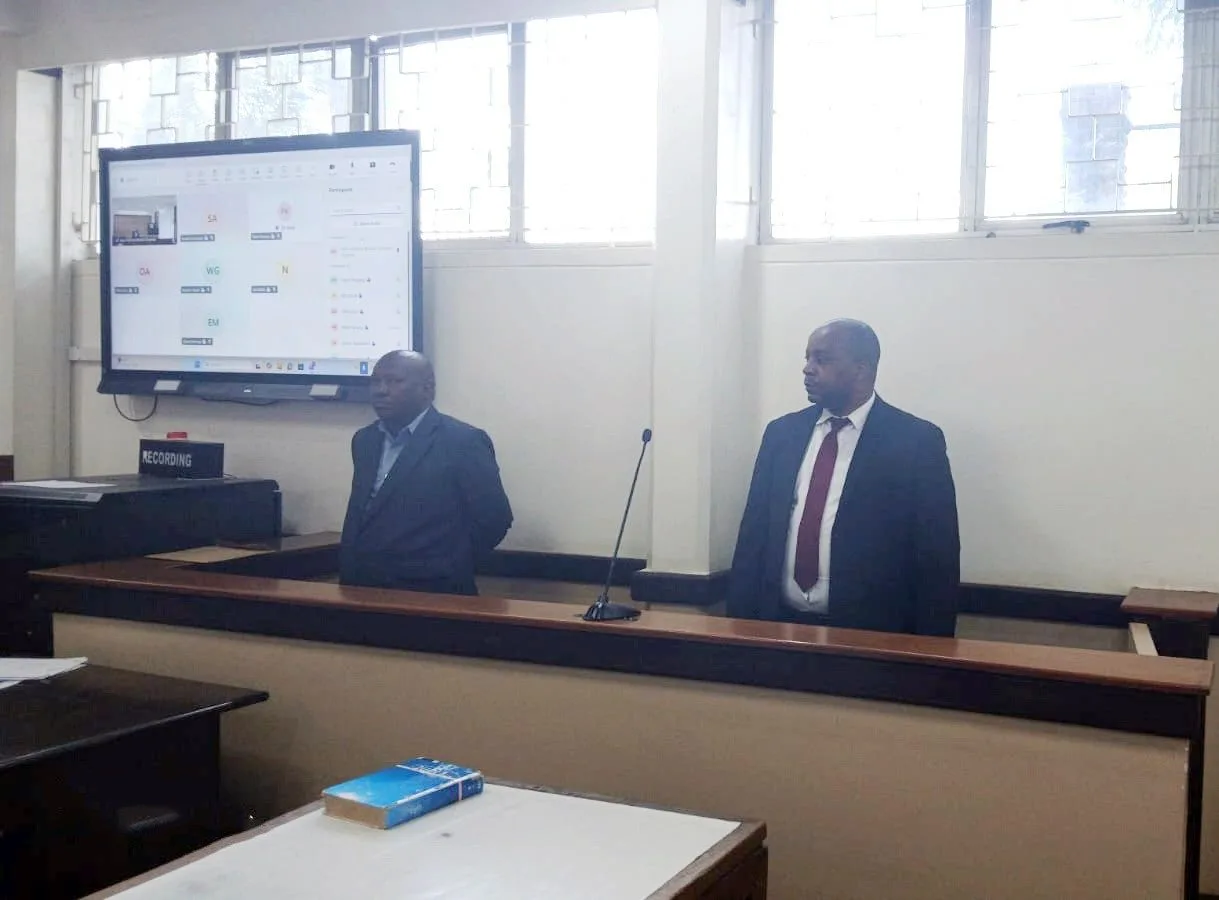
Suspended Kangema Senior Principal Magistrate Martin Kinyua Mutegi has been formally charged in connection with alleged bribery, marking a significant development in a corruption case that has drawn attention to judicial accountability in Kenya. The charges against Mutegi were presented before the Milimani Anti-Corruption Court on August 24, where he appeared alongside Senior Probation Officer Julius Irungu Njogu. Mutegi entered a plea of not guilty to the accusations, which specifically include receiving a bribe, a contravention of Section 6(1) as read with Section 18(1) of the Anti-Bribery Act.
Chief Magistrate Harrison Barasa Omwima presided over the arraignment, granting Mutegi bond set at Sh800,000 with a surety of an equivalent amount, or an alternative cash bail of Sh400,000. The prosecution did not raise objections to these bail conditions. Additionally, the court issued a directive prohibiting Mutegi from interfering with any witnesses as the criminal proceedings advance. This development underscores the ongoing efforts to address Kenya magistrate Martin Mutegi bribery charges within the judicial system.
The Undercover Operation and Allegations
The charges against Martin Kinyua Mutegi stem from an operation conducted by the Ethics and Anti-Corruption Commission (EACC) in July. Investigators from the anti-graft agency arrested Mutegi and Njogu at a restaurant located in Kangema Township, Murang’a County, after they were allegedly observed receiving Sh150,000 in marked currency. This sting operation was initiated following a complaint lodged by a Murang’a businessman.
According to the prosecution's account, the businessman, who had been convicted of obtaining money by false pretenses and was awaiting sentencing, was allegedly solicited for Sh170,000. This sum was purportedly requested in exchange for securing a favorable sentence in his criminal matter. Prosecutors contend that Njogu acted as an intermediary, seeking the money on behalf of Mutegi. The businessman's conviction occurred on July 2, and his sentencing was originally scheduled for July 22, the same day the EACC publicly announced the arrests.
Legal Hurdles and Judicial Accountability
The path to prosecution for the Kenya magistrate Martin Mutegi bribery charges was not without legal challenges. Mutegi had previously sought intervention from the High Court, petitioning to halt both his arrest and the subsequent prosecution. Initially, Justice Richard Mwongo issued conservatory orders, temporarily suspending the criminal proceedings after Mutegi contested the decisions by the EACC and the Office of the Director of Public Prosecutions (ODPP) to charge him.
However, the High Court later declined to issue further orders that would have permanently stopped the prosecution, thereby clearing the way for the DPP to proceed with the case. Mutegi's legal team had also attempted to defer his plea until his High Court application could be fully heard and determined, arguing that proceeding earlier would prejudice their client. The prosecution countered this, stating that no stay order had been presented to prevent the lower court from taking the plea. This High Court decision highlights the robust enforcement environment for anti-bribery laws, demonstrating that attempts to block prosecution through conservatory orders are not guaranteed to succeed, even for high-profile individuals.
The Judiciary itself has taken a firm stance on the matter, suspending Mutegi from his judicial duties pending the conclusion of both disciplinary and criminal proceedings. Chief Justice Martha Koome publicly affirmed the Judiciary's zero-tolerance policy towards corruption and unethical conduct, while also emphasizing Mutegi's entitlement to due process. This commitment to internal accountability is a key aspect of addressing Judiciary corruption Kenya.
Broader Implications and Next Steps
The prosecution of a judicial officer like Martin Kinyua Mutegi by the DPP underscores the EACC's active role in combating corruption across all sectors, including the judiciary. The Director of Public Prosecutions approved the charges against both Mutegi and Njogu after a thorough review of the EACC's inquiry file, concluding that there was sufficient evidence to sustain a prosecution.
Njogu, the co-accused, had already been charged earlier with requesting a financial advantage, also contrary to the Anti-Bribery Act. Prosecutors allege that on July 16, he requested Sh170,000 from businessman Peter Njihia Njuguna, acting on behalf of Mutegi, in exchange for a favorable sentence. With the High Court's refusal to block the proceedings, Mutegi will now face these criminal charges concurrently with the internal disciplinary process initiated by the Judiciary. The case is scheduled for its next mention on September 7, 2026.
Practical Implications
This case demonstrates the Kenyan Judiciary's commitment to internal accountability and the EACC's active role in prosecuting corruption, even against judicial officers. Lawyers should note that attempts to block prosecution through conservatory orders, even for high-profile individuals, are not guaranteed to succeed, reinforcing the robust enforcement environment for anti-bribery laws.
Source
How does this affect you?
Get an AI analysis of this article grounded in your jurisdictions, practice areas, and any policy documents you've uploaded to Wansom.
Wansom is AI and can make mistakes.