
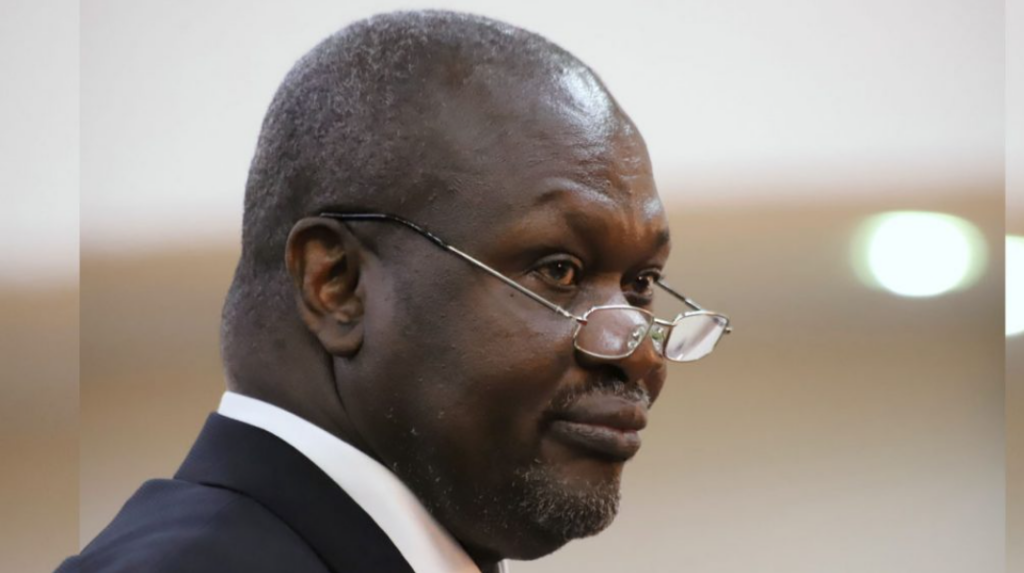
SS Special Court: Riek Machar Trial Testimony Rules Challenged
Summary
- Defence lawyers for Dr. Riek Machar and seven co-defendants argued against questioning the accused during their testimony, advocating for written defence statements.
- Prosecutors sought to question defendants on evidence before they submit written defence statements, prompting a procedural dispute.
- Dr. Geri Raimondo Legge, Machar's lead defence lawyer, urged the court to maintain its prior procedure, noting four defendants had already submitted written testimonies.
- The court adjourned proceedings until August 26 to allow the prosecution to prepare a written response to the defence's submissions.
- Machar and his co-defendants face charges including treason and crimes against humanity related to violence in Nasir in March 2025, which they deny.
What Happened: The Testimony Dispute
The ongoing deliberations regarding the Riek Machar trial testimony rules are poised to establish a significant precedent for the South Sudan special court procedure.
The 112th session of the special court at Freedom Hall in Juba recently saw a significant procedural clash concerning the Riek Machar trial testimony rules. Lawyers representing suspended First Vice President Dr. Riek Machar and seven co-defendants argued that allowing questioning of the accused during their testimony could unduly restrict their ability to fully explain the evidence before the court. This argument was presented days after prosecutors submitted a counter-application, seeking to question the defendants on prosecution evidence before they are permitted to submit written defence statements.
Dr. Geri Raimondo Legge, lead defence lawyer for Dr. Machar, addressed the three-judge panel, asserting that the accused must be afforded ample opportunity to present and elaborate on their evidence without being subjected to questioning that might prevent them from providing complete context. Legge advocated for the court to maintain its established procedural approach, highlighting that four of the defendants—Puot Kang Chuol, Mam Pal Dhuor, Gatwech Lam Puoch, and Lt. Gen. Gabriel Duop Lam—had already provided their defence testimonies in written form. He urged the court to reject the prosecution’s counter-application and permit the remaining defendants to proceed with written defence statements.
Lead prosecutor Ajo Onyi’ Ohisa acknowledged receipt of the defence's comments on its application and its response to the prosecution’s counter-application. Ohisa requested additional time from the court to prepare a written response to the defence submissions, indicating it would be presented at the subsequent session. In response, Judge Stephen Simon Binjigwa, one of the three judges on the panel, adjourned the proceedings until Wednesday, August 26, to facilitate the prosecution's preparation.
Legal Context: Broader Procedural Concerns and Charges
Beyond the immediate dispute over the Machar defence testimony procedure, Dr. Legge also addressed earlier comments from the prosecution regarding a separate defence application. This prior application had sought clarification and safeguards for what the lawyers described as the constitutional right of the accused to legal representation. Legge clarified that the prosecution had misinterpreted the intent of this application, emphasizing that it was not designed to challenge or undermine the court's authority.
Instead, Legge explained that the application, filed in good faith on behalf of all eight defendants, aimed to clarify issues impacting the relationship between the defendants and their legal counsel, thereby preventing mistrust. He stated that such clarification would bolster confidence and trust in the judicial proceedings, rather than diminish the court's authority. The prosecution's response, according to Legge, had failed to adequately address the concerns raised by the defence in this regard.
The procedural arguments unfold within the context of a high-stakes trial where Dr. Machar and his seven co-defendants face grave charges, including treason, murder, conspiracy, terrorism, destruction of public property, and crimes against humanity. These charges stem from violence that occurred in Nasir, Upper Nile State, in March 2025. Prosecutors allege that forces allied with Machar’s Sudan People’s Liberation Army in Opposition (SPLA-IO), alongside the White Army militia, were responsible for the deaths of 257 South Sudan Peoples Defence Forces (SSPDF) soldiers, including military commander General David Majur Dak, during an assault on a military garrison in Nasir. Furthermore, the prosecution claims that military equipment valued at approximately $58 million was either destroyed or seized during the fighting, which also resulted in heavy casualties for government forces. All defendants have denied these charges.
Why It Matters: Precedent for South Sudan's Special Court
The ongoing deliberations regarding the Riek Machar trial testimony rules are poised to establish a significant precedent for the South Sudan special court procedure. The court's ultimate decision on whether defendants can present written statements without prior questioning on prosecution evidence, or if they must first face such questioning, will profoundly influence how accused individuals present their defence in future cases. This ruling directly impacts the defendant right to testify effectively and shapes the strategic approaches legal teams will adopt.
For lawyers practicing within this jurisdiction, the outcome of this procedural battle is crucial. It will define the parameters for due process and the presentation of evidence, particularly in high-profile cases like the Nasir violence trial. The court’s stance on Dr. Geri Raimondo Legge arguments regarding the autonomy of defence testimony will not only affect the current proceedings but also set a benchmark for fairness and the protection of constitutional rights within the special court system. The clarification sought by the defence on legal representation also underscores the broader importance of ensuring trust and clarity in the relationship between accused individuals and their counsel, which is fundamental to the integrity of any judicial process.
Practical Implications
Lawyers practicing in South Sudan's special court should closely follow the court's decision on defendant testimony procedures, as it will set a significant precedent for how accused individuals present their defence and are questioned. This ruling will directly impact trial strategy and due process considerations in future high-profile cases before this court.
Source
How does this affect you?
Get an AI analysis of this article grounded in your jurisdictions, practice areas, and any policy documents you've uploaded to Wansom.
Wansom is AI and can make mistakes.