
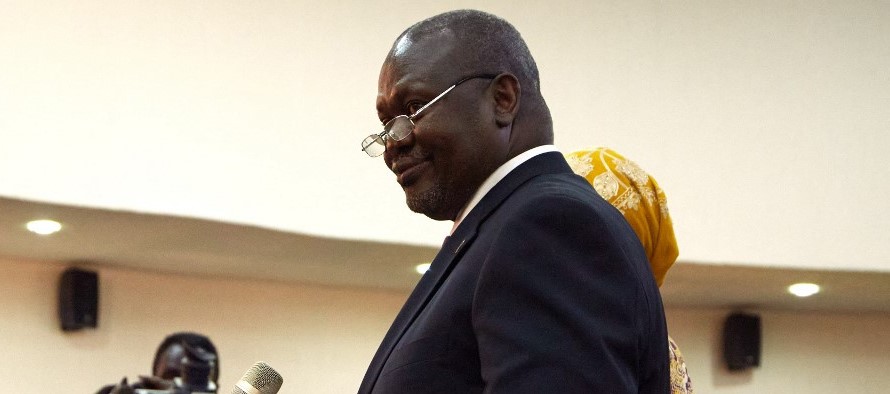
South Sudan Special Court: Riek Machar Trial Statutory Procedure Clarified in Juba
Summary
- Prosecutors at the Special Court in Juba filed a counter-application to clarify statutory procedure for examining defendants, denying any intent to single out Dr. Riek Machar.
- The application seeks prospective application of Section 197(1) and Section 224(2)(e) South Sudan, which govern court-controlled questioning of the accused.
- Dr. Machar and seven co-defendants are on trial for charges including treason and murder, stemming from alleged violence in Nasir in March 2025.
- The court is set to rule on September 7, 2026, on both the prosecution's procedural application and the defence's request for clarification on accused legal representation rights.
- The underlying case involves allegations of 257 SSPDF soldiers killed and $58 million in military equipment destroyed or seized during an attack on a Nasir garrison.
Court Addresses Procedural Application in Juba
The court is scheduled to deliver its decision on the defence's application, which seeks clarification regarding the defendants' constitutional right to legal representation.
Proceedings at the Special Court in Juba recently focused on a procedural counter-application filed by prosecutors, who asserted their request was not intended to single out suspended First Vice President Dr. Riek Machar, the fifth accused in the ongoing trial. During the 113th session held at Freedom Hall, lead prosecutor Ajo Ony’Ohisa clarified that the prosecution's aim was to ensure the correct statutory procedure is applied uniformly and prospectively to all remaining defendants, rather than to treat Dr. Machar differently or to invalidate any examinations of defendants already completed.
The prosecution emphasized that its application sought to clarify and implement the appropriate legal framework for defendants who have yet to undergo the relevant stage of the proceedings. Ohisa argued that the principle at stake was "equality under the law, not equality in the repetition of an error," underscoring the importance of adhering to established legal protocols. The defence, led by Dr. Geri Raimondo Legge, acknowledged receipt of the prosecution's counter-application but raised objections to its use of a rejoinder, which they characterized as misleading.
Dispute Over Statutory Examination Procedure
At the heart of the prosecution's argument is the interpretation and application of specific provisions governing the examination of accused persons within the South Sudan Special Court procedure. Prosecutors cited Section 197(1) of the relevant statute, which empowers the court to question an accused at any stage of a trial, without prior warning, to enable them to explain circumstances appearing in the evidence against them. This section allows the court to pose questions it deems necessary for this purpose.
Furthermore, the prosecution referenced a provision mandating the court to question the accused generally on the case after prosecution witnesses have been examined and before the defence is called upon to present its arguments. Ohisa contended that the examination envisioned by Section 197(1), when read in conjunction with Section 224(2)(e) South Sudan, constitutes a court-controlled process. In this process, the court presents the accused with material circumstances arising from the prosecution's evidence. The prosecution requested the court to direct that all remaining defendants be examined prospectively in accordance with these sections, and to issue any other just and appropriate orders.
Background to the Nasir Violence Trial Charges
The procedural dispute unfolds within the broader context of a significant criminal trial involving Dr. Riek Machar and seven other defendants. They stand accused in connection with violence that occurred in Nasir, Upper Nile State, in March 2025, an incident during which government forces reportedly sustained heavy casualties. The defendants face a range of serious charges, including treason, murder, conspiracy, terrorism, destruction of public property, and crimes against humanity.
Prosecutors allege that forces aligned with Machar's Sudan Peoples Liberation Army in Opposition (SPLA-IO), in collaboration with the White Army militia, were responsible for the deaths of 257 South Sudan Peoples Defence Forces (SSPDF) soldiers. Among the casualties was military commander General David Majur Dak, who was killed during an attack on a military garrison in Nasir. Additionally, the prosecution claims that military equipment valued at approximately $58 million was either destroyed or seized during the fighting. All defendants, including Dr. Machar, have denied these charges.
Critical Rulings Expected on Legal Representation and Procedure
The Special Court's Judge Stephen Simon has adjourned the proceedings until Monday, September 7, 2026, when crucial rulings are anticipated. The court is scheduled to deliver its decision on the defence's application, which seeks clarification regarding the defendants' constitutional right to legal representation. Simultaneously, the court will rule on the prosecution's counter-application concerning the Riek Machar trial statutory procedure Juba, specifically the application of Sections 197(1) and 224(2)(e) to the examination of accused persons.
These upcoming decisions are poised to establish significant precedents for the South Sudan Special Court procedure, particularly impacting the Riek Machar criminal trial and future high-profile cases. The rulings will clarify the scope of court-controlled questioning and reinforce the accused legal representation rights, directly influencing trial strategies and legal advice for practitioners in South Sudan.
Practical Implications
Lawyers practicing criminal law in South Sudan, especially those before the Special Court, should closely monitor the upcoming ruling on the application of Sections 197(1) and 224(2)(e) for examining accused persons, as well as the constitutional right to legal representation. This decision will clarify critical procedural precedents regarding court-controlled questioning and defence rights, directly impacting trial strategy and client advice in high-profile cases.
Source
Source: Original reporting via {source}
How does this affect you?
Get an AI analysis of this article grounded in your jurisdictions, practice areas, and any policy documents you've uploaded to Wansom.
Finish Reading the Full Expert Analysis.
Wansom is AI and can make mistakes.