
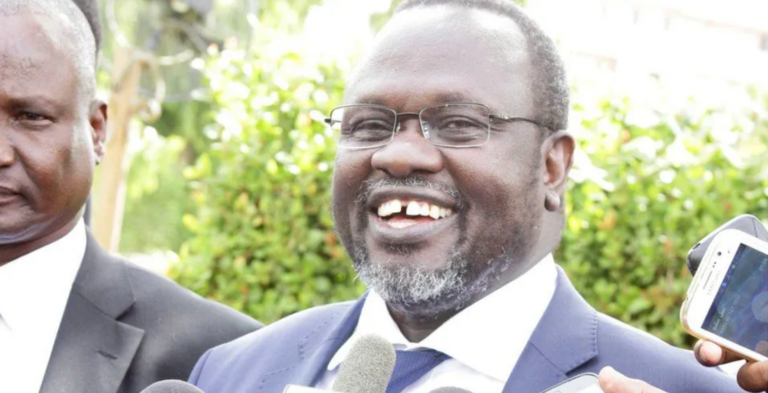
SS Court: Riek Machar Defense Files Trial Recording Request
Summary
- Lawyers for Dr. Riek Machar and seven co-accused requested permission to make their own audio and video recordings of their trial.
- The defence argued that independent recording would ensure equal treatment, citing the presence of other cameras in the courtroom.
- The prosecution acknowledged the request but disputed claims of new issues and denied having its own camera.
- The trial, concerning violence in Nasir in March 2025, involves charges including treason, murder, and crimes against humanity.
- The court is expected to rule on the defence's recording application on Monday, August 17.
Defense Seeks Independent Recording Access
The Riek Machar defense trial recording request carries significant weight for the future of legal proceedings in South Sudan, particularly in high-profile or politically sensitive cases.
The legal team representing Dr. Riek Machar, the suspended First Vice President of South Sudan, and his seven co-accused, has formally petitioned the court for permission to conduct their own audio and video recordings of the ongoing trial proceedings. This request, articulated by lead defence lawyer Dr. Geri Raimondo Legge during the 107th session held at Freedom Hall in Juba on Wednesday, aims to ensure equitable treatment for all parties involved. Legge presented the defence's written response to an earlier objection from the prosecution regarding their initial application for recording access.
Dr. Legge emphasized the defence's desire to operate its own camera to guarantee an independent record of the proceedings. He specifically highlighted the presence of what he identified as two cameras operated by the South Sudan Broadcasting Corporation (SSBC) and a third camera that the defence believes is controlled by the prosecution. Legge asserted that allowing the defence to record would uphold principles of equal protection and treatment, submitting the original copy of their response to both the court and the prosecution.
In response, lead prosecutor Ajo Ony’Ohisa acknowledged receiving the defence’s submission but contended that it introduced new issues not previously brought before the court. Ohisa also explicitly refuted the defence's claim that the prosecution maintained its own camera within the courtroom. He stated that the matter of the recording application would be left for the court's determination. The court subsequently adjourned the proceedings, with a ruling on the defence's application for independent audio and video recording expected on Monday, August 17.
Grave Charges in High-Profile Trial
Dr. Riek Machar, who is the fifth individual named in the indictment, stands trial alongside seven other defendants. The charges stem from an outbreak of violence in Nasir, located in Upper Nile State, which reportedly occurred in March 2025. This incident resulted in significant casualties among government forces. The defendants collectively face a litany of serious charges, including treason, murder, conspiracy, terrorism, a second count of treason, destruction of public property, and crimes against humanity.
Prosecutors have alleged that forces affiliated with Machar’s Sudan Peoples Liberation Army in Opposition (SPLA-IO) and the White Army were responsible for the deaths of 257 soldiers from the South Sudan Peoples Defence Forces (SSPDF). Among those killed was commander General David Majur Dak, during an attack on a military garrison situated in Nasir. Furthermore, the prosecution claims that military equipment valued at approximately $58 million was either destroyed or seized during the confrontation. All defendants, including Dr. Machar, have entered pleas of not guilty to these accusations.
Legal Implications for Transparency and Due Process
The Riek Machar defense trial recording request carries significant weight for the future of legal proceedings in South Sudan, particularly in high-profile or politically sensitive cases. The defence's core argument for "equal protection and treatment" underscores a fundamental aspect of due process: ensuring all parties have fair access to and control over the evidentiary record of a trial. Should the court grant the South Sudan court recording application, it could establish a crucial precedent affirming parties' rights to independently document proceedings.
Such a ruling on Machar trial camera access could enhance transparency and accountability within the judicial system, providing an independent means to verify the accuracy of official transcripts and potentially aiding in the preparation of appeals or reviews. Conversely, a denial might raise concerns about equitable access to information and the integrity of the trial record, particularly when other entities, like the SSBC, are permitted to record. The court's decision, anticipated on August 17, will therefore be closely watched by legal practitioners, as it could redefine standards for trial recording and access to evidence in the nation's courts. The outcome of this defence request audio video trial will shape future expectations regarding the recording of proceedings at Freedom Hall Juba trial recording.
Practical Implications
Lawyers involved in South Sudanese litigation, particularly high-profile or politically sensitive cases, should monitor the court's ruling on this application. It could set a precedent for parties' rights to independently record proceedings, impacting due process arguments, the integrity of trial records, and access to evidence for appeal or review.
Source
How does this affect you?
Get an AI analysis of this article grounded in your jurisdictions, practice areas, and any policy documents you've uploaded to Wansom.
Wansom is AI and can make mistakes.