
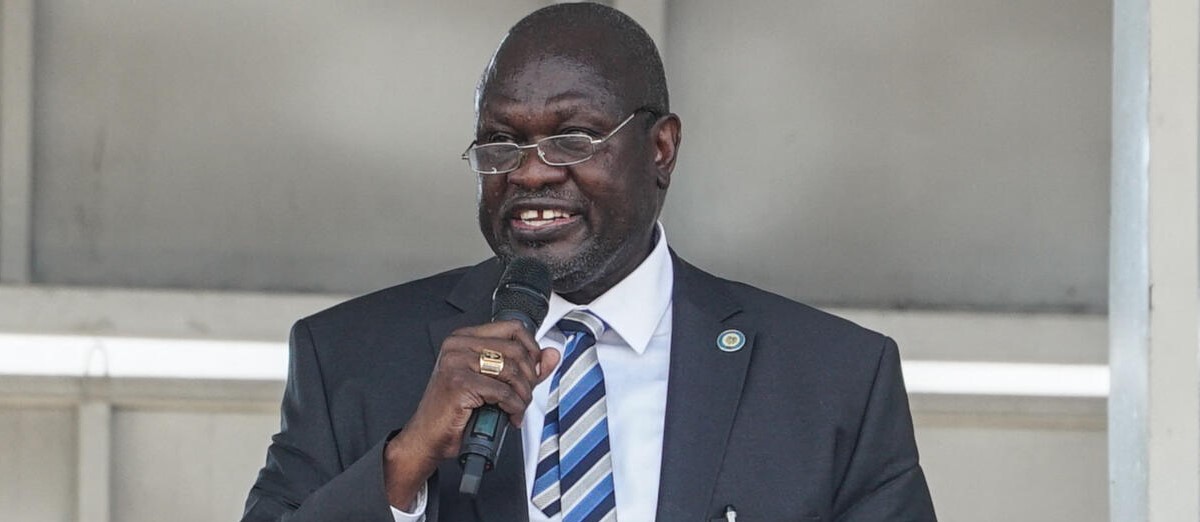
South Sudan Court: Riek Machar Requests Testimony Audio Video Recording
Summary
- Dr. Riek Machar, South Sudan's suspended First Vice President, has requested that his court testimony be recorded in audio and video due to the country's unstable environment.
- Machar argued that a digital record would preserve the truth for the public, provide material for future institutions, and safeguard proceedings against political or security disruptions.
- The defense team formally filed the application after an initial objection from the prosecution, citing benefits for verifying transcripts and preparing legal submissions.
- The court ruled that Machar's testimony would continue while awaiting the prosecution's written response to the digital recording request.
- Machar and seven co-defendants face charges including murder and conspiracy related to a March 2025 attack in Nasir, which they deny.
The Request for Digital Testimony
Should the court grant permission for a South Sudan Machar trial digital record, it could establish a crucial precedent for the integration of Freedom Hall Juba court technology and broader South Sudan judiciary digitisation efforts.
Dr. Riek Machar, currently the suspended First Vice President of South Sudan and the fifth defendant in a high-profile case, has formally requested that his ongoing testimony be preserved through Riek Machar testimony audio video recording. Machar presented this plea on Friday while giving evidence before a three-judge panel convened at Freedom Hall in Juba. His primary rationale for seeking a South Sudan Machar trial digital record stems from the nation's volatile political and security landscape, which he argues necessitates a robust method for safeguarding court proceedings.
Machar emphasized that a digital record would serve multiple critical functions: it would uphold what he considers the "truth of the case" for the South Sudanese populace, furnish valuable material for future legal and academic institutions, and act as a bulwark against potential political or security disruptions that could impede access to official court documents. He also advocated for increased Freedom Hall Juba court technology adoption, highlighting a donation of computers by the United Nations Mission in South Sudan (UNMISS) aimed at supporting South Sudan judiciary digitisation. The 74-year-old defendant further noted the physical strain of producing extensive handwritten statements, a difficulty he had previously raised in court, making a digital format particularly appealing.
In a related application, Machar sought the court's permission to admit his pre-prepared written statements as evidence. This, he contended, would not only reduce the burden on judges who currently transcribe lengthy testimonies but also significantly expedite the overall proceedings. He referenced an earlier hearing in June where Presiding Judge James Alala Deng openly acknowledged the fatigue from extensive note-taking, underscoring the practical challenges of the current system.
Legal Maneuvering and Court's Response
The request for Riek Machar testimony audio video recording initially encountered a procedural challenge from lead prosecutor Ajo OnyOhisa. OnyOhisa argued that an accused party, being represented by legal counsel, should submit such applications through their defense team rather than directly. Following this objection, the defense, led by lawyer Geri Raimondo Legge, formally filed a written application seeking permission for the audio and video recording of Machar's testimony.
The defense team articulated several benefits of securing a South Sudan Machar trial digital record. They contended that access to such recordings would empower lawyers to meticulously verify the accuracy of the official transcript, identify any discrepancies between the oral testimony delivered and the written record, and consequently, enhance their ability to prepare robust legal submissions. This move underscores a push for greater South Sudan court proceedings transparency and precision in high-stakes trials.
Upon receiving the defense's formal application, the prosecution acknowledged its receipt but requested additional time to prepare and submit a written response. Prosecutor OnyOhisa specifically asked for the court's permission to file their detailed reply at the subsequent session. The defense indicated no objection to this request from the prosecution. In light of these developments, Judge Stephen Simon Binjigwa ruled that the court would proceed with hearing Machar's testimony as scheduled, pending the prosecution's written response. The trial was subsequently adjourned until Monday, August 10, when Machar is slated to continue providing his evidence.
The Broader Case and its Significance
Dr. Riek Machar stands accused alongside seven co-defendants in a trial that carries profound historical and legal weight for South Sudan. The other individuals facing charges are Puot Kang Chuol, Mam Pal Dhuor, Gatwech Lam Puoch, Lt. Gen. Gabriel Duop Lam, Camilo Gatmai Kel, Mading Yak Riek, and Dominic Gatgok Riek. Together, they face a litany of serious allegations, including murder, conspiracy, terrorism, treason, destruction of public property, and crimes against humanity, collectively known as the Machar murder conspiracy charges.
Prosecutors assert that forces affiliated with the SPLA-IO, allegedly allied with the White Army, were responsible for a deadly assault on the military garrison in Nasir in March 2025. This SPLA-IO Nasir attack trial centers on claims that 257 soldiers from the South Sudan Peoples Defence Forces (SSPDF) were killed, among them Commander Gen. David Majur Dak. Furthermore, the prosecution alleges that military equipment valued at approximately $58 million was either destroyed or seized during the incident. All defendants have vehemently denied these charges.
The request for a Riek Machar testimony audio video recording in such a significant case highlights a potential turning point for South Sudan's judicial system. Should the court grant permission for a South Sudan Machar trial digital record, it could establish a crucial precedent for the integration of Freedom Hall Juba court technology and broader South Sudan judiciary digitisation efforts. This development signals a potential shift towards greater South Sudan court proceedings transparency, offering a more verifiable and accessible record for future legal scrutiny and public understanding.
Practical Implications
This development signals a potential shift towards greater transparency and technological integration in South Sudanese court proceedings, particularly for high-profile cases. Lawyers should monitor the court's decision as it could establish a precedent for digital record-keeping, impacting evidence verification and future legal strategy in the jurisdiction.
Source
How does this affect your business?
Get an AI analysis of this article grounded in your jurisdictions, practice areas, and any policy documents you've uploaded to Wansom.
Wansom is AI and can make mistakes.