
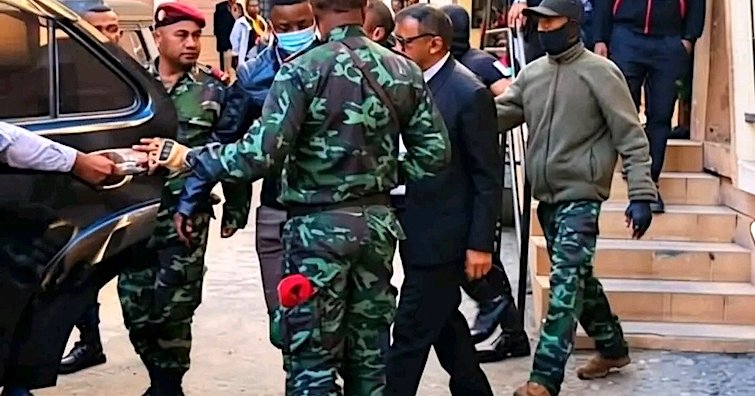
Madagascar: Richard Ravalomanana Files Pourvoi Cassation After 10-Year Sentence
Summary
- Former Senate President General Richard Ravalomanana has been sentenced to ten years of forced labor.
- The conviction is linked to violence during demonstrations in Antananarivo in September and October 2025.
- His lawyer disputes the evidence presented against him and has filed a `pourvoi en cassation`.
- This appeal challenges the legal application and procedural regularity of the lower court's ruling, not the factual findings.
- The case represents a significant test for Madagascar's judicial review process concerning prominent political figures.
High-Profile Conviction and Appeal
The subsequent decision by his defense team to pursue a `pourvoi en cassation` transforms this individual case into a critical barometer for the robustness and impartiality of Madagascar's judicial system.
General Richard Ravalomanana, who previously served as President of the Senate, has received a significant criminal sentence following legal proceedings related to public unrest. He was condemned to ten years of forced labor, a severe penalty that underscores the gravity with which the authorities are treating the events in question. This conviction is directly linked to the violent demonstrations that occurred in Antananarivo during September and October of 2025.
His legal counsel has publicly expressed strong disagreement with the evidence and specific elements that formed the basis of the judgment against his client, asserting that the case presented by the prosecution was flawed. In response to this adverse ruling, a formal `pourvoi en cassation` has been initiated. This action signals a determined effort to challenge the decision through the highest judicial review process available within Madagascar's legal framework.
Understanding the `Pourvoi en Cassation`
The `pourvoi en cassation` is a fundamental component of the Malagasy legal system, which, like many civil law jurisdictions, draws heavily from French legal principles. It is crucial to understand that this legal recourse is distinctly different from an appeal on the merits, where a higher court re-examines both the factual findings and the legal interpretations of a lower court. Instead, the Court of Cassation, as the supreme judicial body, focuses exclusively on questions of law.
Its primary function is to ascertain whether the lower courts correctly applied legal statutes, adhered to proper procedural rules, and interpreted legal principles without error. The court does not re-evaluate the factual evidence or the guilt or innocence of the accused. Its role is to ensure the consistent and correct application of the law across the judicial system, thereby safeguarding legal certainty and uniformity in jurisprudence. Should the Court find a legal error, it typically quashes the previous judgment and remits the case to another court of appeal for a new trial, ensuring the legal process is correctly followed.
Implications for Justice and Political Scrutiny
The legal proceedings against General Richard Ravalomanana, a figure of considerable political stature having served as Senate President, are of immense national significance. His conviction for ten years of forced labor, directly linked to the `violences Antananarivo 2025`, places this case squarely in the public eye and under intense scrutiny from both domestic and international observers. The subsequent decision by his defense team to pursue a `pourvoi en cassation` transforms this individual case into a critical barometer for the robustness and impartiality of Madagascar's judicial system.
It will test the judiciary's capacity to conduct fair and independent reviews, particularly when high-profile political figures are involved. For legal practitioners advising clients on political risk or navigating complex criminal defense cases within Madagascar, the outcome of this `pourvoi en cassation` will provide invaluable clarification. It will illuminate the prevailing standards for the application of criminal law in contexts involving political unrest and demonstrate the true extent of judicial oversight available to prominent individuals facing serious charges. The resolution of this appeal will undoubtedly shape perceptions of justice and accountability in the nation.
Practical Implications
Lawyers advising on political risk or criminal defense in high-profile cases in Madagascar should closely follow the 'pourvoi en cassation' in this case, as its outcome will clarify the application of criminal law to political violence and test the robustness of the judicial review process for prominent figures.
Source
How does this affect you?
Get an AI analysis of this article grounded in your jurisdictions, practice areas, and any policy documents you've uploaded to Wansom.
Finish Reading the Full Story and the Expert Analysis.
Wansom is AI and can make mistakes.