
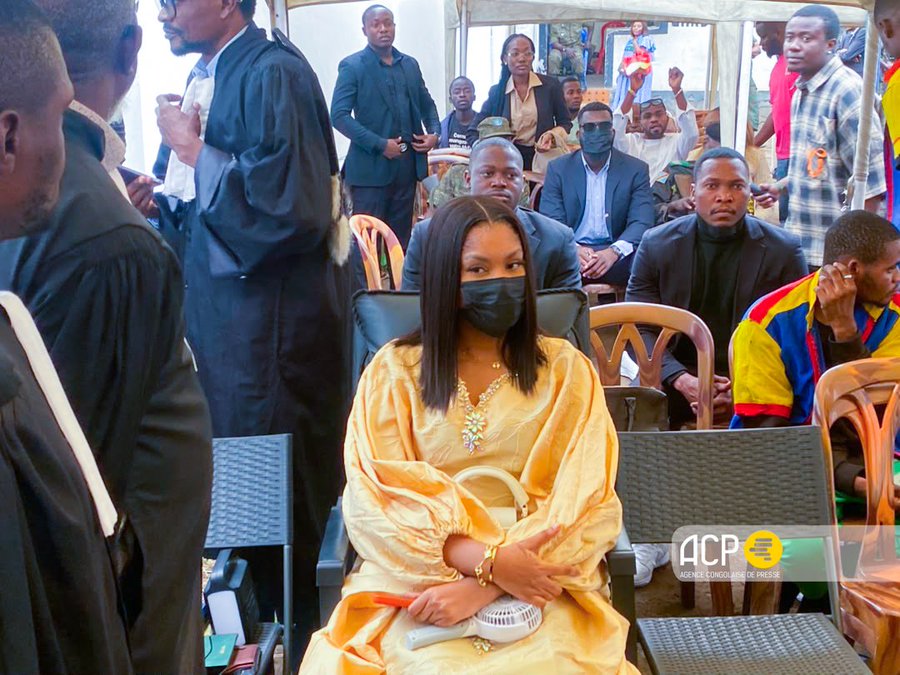
RDC: Rebo Tchulo Évite la Prison, Servitude Pénale Avec Sursis
Summary
- Singer Rebo Tchulo was convicted by the Kinshasa-Ngaliema Military Garrison Tribunal on August 27, 2026.
- She received a 12-month servitude pénale sentence, fully suspended for 24 months, meaning she will not be imprisoned.
- The conviction was for inciting military personnel to commit illegal acts against FARDC discipline, with no fine imposed.
- A military prosecutor's travel ban against her was lifted, and she was absolved from paying $250,000 in civil damages.
- The Republic of Congo was ordered to pay $20,000 USD in damages to the civil party.
Verdict Rendered
Lawyers should observe this case as a precedent for how military tribunals in the DRC may apply suspended sentences to civilians accused of inciting military personnel, even for serious offenses.
On Thursday, August 27, 2026, the Kinshasa-Ngaliema Military Garrison Tribunal delivered its verdict in the high-profile case involving singer Déborah Tshimpaka Mulanga, widely known as Rebo Tchulo. The court found her guilty of inciting military personnel to commit acts contrary to the law and discipline governing the Armed Forces of the Democratic Republic of Congo (FARDC). This conviction resulted in a principal sentence of 12 months of servitude pénale, a form of penal servitude.
Crucially, the tribunal stipulated that this 12-month sentence would be entirely suspended for a period of 24 months. This means that despite the conviction, Rebo Tchulo will not face incarceration. Furthermore, the court explicitly stated that no monetary fine was imposed on the artist as part of her criminal conviction. The decision marks a significant outcome, allowing the prominent figure to avoid imprisonment.
Civil Claims and State Responsibility
Beyond the criminal conviction, the tribunal also addressed the civil action brought against Rebo Tchulo. The civil party had sought a substantial sum of $250,000 USD in damages and interest. However, the court ruled unequivocally that Rebo Tchulo was not liable for this payment. This aspect of the Déborah Tshimpaka Mulanga verdict highlights a critical distinction between criminal culpability and civil financial responsibility in this specific case.
Instead, the Tribunal militaire Kinshasa-Ngaliema determined that the Republic itself was responsible for compensating the civil party. The court ordered the state to pay $20,000 USD in damages. This allocation of civil liability away from the convicted individual and onto the state represents a notable element of the judgment, potentially setting a precedent for similar cases involving high-profile defendants.
Immediate Freedoms and Legal Context
The immediate consequence of the verdict for Rebo Tchulo is the restoration of her full liberty. The tribunal specifically ordered the lifting of a prior measure imposed by the military prosecutor, which had prohibited the singer from leaving Congolese national territory. This decision effectively grants her complete freedom of movement, enabling her to resume all her artistic activities without restriction.
Her lawyer, Jean-Marie Kabengela Ilunga, expressed satisfaction with the outcome, emphasizing that his client could now fully re-engage with her career. The application of a suspended sentence for Rebo Tchulo servitude pénale sursis RDC, particularly for an offense involving incitation militaires FARDC peine, demonstrates the discretion available to military tribunals in the DRC. This Rebo Tchulo condamnation non-incarcération scenario provides a relevant example of droit pénal militaire RDC sursis being applied to a civilian.
Broader Implications for Legal Practice
This ruling offers significant insights for legal practitioners, particularly those navigating the complexities of droit pénal militaire RDC sursis and civil claims within military justice. The decision to impose Rebo Tchulo servitude pénale sursis RDC rather than immediate imprisonment, despite a conviction for inciting military personnel, underscores the potential for non-custodial sentences even in serious cases. Lawyers should observe this case as a precedent for how military tribunals in the DRC may apply suspended sentences to civilians accused of inciting military personnel, even for serious offenses.
Furthermore, the tribunal's decision to shift the burden of civil damages from the convicted individual to the state, albeit for a reduced amount, is a crucial point. It highlights the tribunal's discretion in allocating civil damages, potentially shifting the burden to the state, which could be a crucial point for defense strategies in similar high-profile cases. This aspect of the Déborah Tshimpaka Mulanga verdict could influence future defense strategies, particularly in cases where the state's role or responsibility might be argued.
Practical Implications
Lawyers should observe this case as a precedent for how military tribunals in the DRC may apply suspended sentences to civilians accused of inciting military personnel, even for serious offenses. It also highlights the tribunal's discretion in allocating civil damages, potentially shifting the burden to the state, which could be a crucial point for defense strategies in similar high-profile cases.
Source
How does this affect you?
Get an AI analysis of this article grounded in your jurisdictions, practice areas, and any policy documents you've uploaded to Wansom.
Finish this article free. Just your email for instant unlock.
Wansom is AI and can make mistakes.